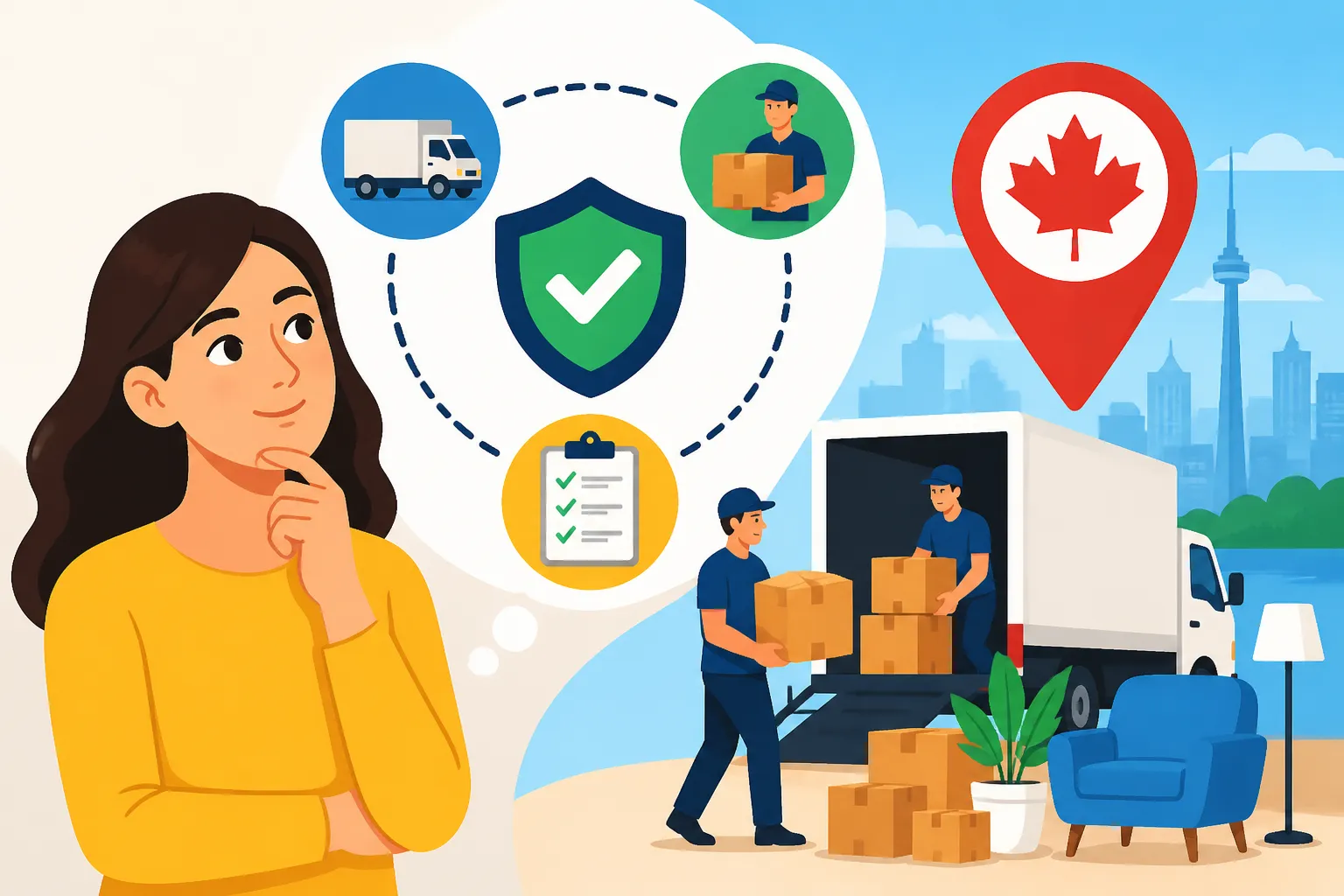
How Do I Find a Reliable Moving Company to Canada?
Oh, the big move! I remember that feeling of excitement mixed with pure dread at the logistics of it all. Packing up your entire life, crossing borders, and landing in a new country like Canada is no small feat. One of the biggest hurdles, and frankly, one of the most stressful, is figuring out how to get all your precious belongings from your old home to your new one. Finding a truly reliable moving company to Canada can feel like searching for a needle in a haystack, especially when you’re dealing with international complexities. This guide is here to walk you through exactly how to do just that, helping you avoid common pitfalls and ensuring your move is as smooth as possible.
The Crucial First Step: Why a Reliable Mover Matters (and How to Spot the Bad Apples)
When you're embarking on an international move, the stakes are incredibly high. It’s not just about getting your couch from A to B; it's about entrusting a company with your entire life's possessions – sentimental items, crucial documents, and expensive electronics. A reliable moving company isn't just a convenience; it's an absolute necessity for your peace of mind and the successful start of your new life in Canada.
The Pitfalls of Unreliable Movers
Horror stories are not uncommon, and many expats have run into less-than-stellar companies over the years. Imagine your shipment being held hostage for more money upon arrival, or your carefully packed boxes showing up drenched or completely mangled. What about items going missing, or a delivery timeline that stretches from weeks into months? These aren’t just minor inconveniences; they can cause immense stress, financial strain, and leave you feeling utterly helpless in a new country. Some fly-by-night operations might give you a suspiciously low quote, only to pile on hidden fees later, or they might not be properly insured, leaving you with no recourse if your goods are damaged. It's a Wild West out there sometimes, and as a newcomer, you're particularly vulnerable.
Spotting Red Flags and Understanding the Players
To protect yourself, you need to be a bit of a detective. Here are some glaring red flags to watch out for:
- Unrealistic Low Quotes: If a quote seems too good to be true, it almost certainly is. Legitimate international moving costs include insurance, customs brokerage, fuel, labour, and transport across vast distances. A super-low price often means corners are being cut, or hidden fees are lurking.
- Lack of Physical Address or Online Presence: Reputable companies have a verifiable office, a professional website, and a history. Be wary of companies that only operate via mobile phone or have a generic online presence with little detail.
- Pushy Sales Tactics: High-pressure sales, demanding immediate decisions, or refusing to provide a detailed, written estimate are all warning signs. Take your time to compare and research.
- Demanding Large Upfront Deposits: While a deposit is normal, asking for 50% or more upfront is risky. You should typically pay a portion at booking, another upon pickup, and the final balance upon delivery, not before.
- No Clear Insurance Information: This is non-negotiable. If they can’t clearly explain their insurance options, coverage limits, and how to file a claim, walk away.
- Brokers vs. Actual Movers: Understand the difference. A moving broker sells your job to an actual moving company. This isn't inherently bad, but it adds a layer of complexity and a potential disconnect. If you're dealing with a broker, make sure they clearly state this and can provide details about the actual mover who will be handling your shipment. When you use platforms like Sirelo, you're often getting direct quotes from vetted moving companies, which can save you this confusion.
Your Action Plan: How to Research and Vet Moving Companies for Your Canadian Move
Now that you know what to avoid, let's talk about how to find a moving company that will treat your possessions with the care they deserve as you make your way to Canada. This isn't a process you want to rush.
Getting Detailed Quotes and In-Home Estimates
This is where the real work begins. You should aim to get at least three, preferably five, detailed quotes. For an international move, an in-home or virtual video estimate is absolutely crucial. Never rely on a quote based solely on a list you send them. A representative needs to see everything you plan to move to accurately assess the volume/weight, determine packing needs, and spot any difficult items (like grand pianos or intricate artwork). This visual assessment helps avoid nasty surprises on moving day. During the estimate, pay attention to the professionalism of the person visiting you. Are they knowledgeable? Do they answer your questions thoroughly? Do they provide a written, itemized quote?
When comparing quotes, don't just look at the bottom line. Scrutinize what's included: packing materials, labour for packing and unpacking, disassembly/assembly, customs clearance services, shuttle services (if needed for tight access), and insurance. Some companies might bundle everything, while others break it down into separate line items. This is also where services like Sirelo shine, as they can help you compare quotes from multiple international movers, making the process less overwhelming and more transparent.
Checking Credentials, Certifications, and Reviews
Reliability isn’t just a feeling; it’s backed by accreditation and reputation.
- Canadian Association of Movers (CAM): This is your gold standard for movers to Canada. CAM is a non-profit association representing moving companies across Canada and internationally. Members adhere to a strict code of ethics, and being a CAM member indicates a level of professionalism and accountability. Check their website for a list of accredited movers.
- Better Business Bureau (BBB): Check the company’s rating and read any complaints filed against them. While not perfect, it’s another data point for their track record.
- Online Reviews: Dive deep into Google Reviews, Yelp, and expat forums or Facebook groups specific to newcomers moving to Canada. Look for consistent themes – positive or negative. Pay particular attention to how companies respond to negative reviews; a thoughtful, professional response can be a good sign. Be wary of companies with only five-star reviews, as these can sometimes be fabricated. Look for a balanced view, and prioritize recent reviews. For example, if you're moving to Toronto, search for local expat groups and ask for recommendations or warnings about specific companies.
- Insurance and Liability: This is paramount. Understand the two main types of coverage:
- Basic Carrier Liability: This is the bare minimum, often calculated by weight (e.g., $0.60 per pound per article). For example, if your 50-pound flat-screen TV is damaged, you might only get $30 back. This is rarely enough.
- Full Value Protection (FVP): This is what you really want. With FVP, the mover is liable for the replacement value of any lost or damaged goods. You typically declare the total value of your shipment and pay a premium based on that. Make sure you understand the deductible and exclusions. Get this in writing. Don't assume anything. Remember, your regular home insurance policy likely won't cover items in transit internationally.
Asking the Right Questions (and Documenting Everything)
When you're talking to potential movers, be armed with questions:
- "Are you a mover or a broker?"
- "What insurance options do you offer, and can I see the policy details?"
- "What is your claim process, and what is the typical resolution time?"
- "Do you use subcontractors for any part of the journey (packing, loading, long-haul, customs, last-mile delivery)?" If so, ask about their vetting process for these subcontractors.
- "What exactly is included in the quote (e.g., packing materials, customs brokerage, port fees, delivery to residence, unpacking, debris removal)?"
- "What are the payment terms and schedule?"
- "How do you handle customs clearance for household goods moving to Canada? What documents will I need to provide?" This is critical, as Canadian customs rules for importing household goods and personal effects require specific forms and procedures.
- "What is your estimated transit time, and do you offer tracking?" Be realistic about international transit times; they can vary significantly.
Get everything in writing: the quote, the contract, the inventory list, and insurance details. If something isn't in writing, it doesn't exist. This due diligence will pay off significantly in the long run.
The Nitty-Gritty: Understanding the Moving Process and Costs
Moving to Canada is a journey, and the moving company is just one part of it. But understanding their specific role and what to expect financially and logistically is key.
Decoding Your Moving Quote and Avoiding Hidden Fees
Moving costs are rarely straightforward, especially for an international relocation. Your quote will likely be based on the volume (cubic feet) or weight of your shipment. It also includes the distance, the services you choose (e.g., full packing vs. self-pack), and any access challenges at either end (e.g., needing a smaller shuttle truck for a narrow street).
Here are some common items that can add to your final bill:
- Customs Duties and Taxes: While personal effects generally aren't taxed when moving to Canada, new items or items not declared properly can be. Your mover should guide you on this.
- Storage Fees: If there's a delay in you securing your new home, you might need temporary storage.
- Long Carry or Stair Fees: If the movers have to carry items an unusually long distance from the truck to your door, or up many flights of stairs without an elevator, extra charges can apply.
- Appliance Servicing: Disconnecting and reconnecting major appliances like washing machines can be an additional charge.
- Valuation Coverage/Insurance: As discussed, this is an extra cost but a necessary one.
- Fuel Surcharges: These can fluctuate.
Always ask for a binding estimate if possible, which means the price is guaranteed unless you change the inventory. If it's a non-binding estimate, they should explain how the final cost could change. Paying for your move usually involves an initial deposit, a payment at pickup, and the remainder upon delivery. Avoid any company demanding full payment before your goods are even picked up or delivered.
Packing Smart: DIY vs. Professional Services
You have options when it comes to packing.
- Full-Service Packing: The moving company packs everything. This is typically the most expensive but least stressful option, and it ensures items are packed to professional standards, often a requirement for full insurance coverage.
- Partial Packing: You pack most things, and the movers handle fragile items (e.g., artwork, electronics) or specific rooms.
- DIY Packing: You pack everything yourself. This is the cheapest option but also the most time-consuming and labor-intensive. If you go this route, ensure you use proper packing materials (new boxes, bubble wrap, packing paper) and techniques. Label boxes meticulously with contents and destination room.
Regardless of who packs, create a detailed inventory list with photos or videos of your items before they are loaded. This is your proof of condition and content.
Navigating Canadian Customs for Your Household Goods
This can feel like a bureaucratic labyrinth, but your moving company should be well-versed in Canadian customs regulations for household goods. You'll typically need to prepare a "Goods to Follow" list (Form BSF186, Personal Effects Accounting Document) which details all the items you are bringing into Canada, even those coming later. You'll present this to Canadian Border Services Agency (CBSA) officers when you first arrive. Ensure your moving company coordinates with you on this. They will usually handle the actual customs clearance process once your shipment arrives at the port of entry. It's important to remember that this process is separate from your personal immigration process, so ensure you have all your immigration documents in order too, such as your work permit, study permit, or permanent resident confirmation. For a smoother arrival, you might find our guide on The Complete Guide to Moving to Canada: Your First 90 Days helpful, as it covers initial steps for newcomers.
Making Your Move Smoother: Essential Tips for Expats
Even with a reliable moving company, an international move requires a lot of personal organization. Here are a few things I've learned that can make a huge difference.
Declutter Ruthlessly Before You Pack
Seriously, be brutal. Moving costs money, and moving things you no longer need or want is just throwing money away. Go through every cupboard, closet, and drawer. Donate, sell, or discard anything that doesn't spark joy or serve a practical purpose. Not only will this reduce your moving costs, but it also gives you a fresh start in your new Canadian home. If you're wondering about the overall expenses, checking out resources like The Complete Guide to Cost of Living in Canada for Newcomers can give you a clearer picture of typical costs, which might influence what you decide to bring.
The "Essentials" Box: Your Lifeline on Arrival
This is arguably the most important box you’ll pack. Don’t ship it with your main belongings. Instead, keep it with you or send it via air freight. This box should contain everything you need for the first few days or weeks in Canada before your main shipment arrives. Think about:
- Important Documents: Passports, visas, immigration papers, health records, school records, birth certificates, marriage certificates, driver's licenses, insurance policies, copies of your moving contract and inventory. Keep these in a separate, easily accessible bag.
- Basic Toiletries: Toothbrush, toothpaste, shampoo, soap, medications.
- Change of Clothes: A few outfits suitable for the Canadian weather upon your arrival.
- Small Comforts: A favourite mug, a special toy for children, a book.
- Adapters/Converters: Canada uses Type A and B plugs (same as the US), with 120V/60Hz electricity.
- Basic Tools: A small screwdriver, utility knife, or scissors can be surprisingly useful for unpacking.
- Snacks and Drinks: For when you're too exhausted to go out.
Staying Connected and Prepared
Before you even leave, make sure you have a plan for connectivity. Your phone plan from your home country likely won't work or will incur exorbitant roaming charges in Canada. Consider getting an eSIM for immediate data access upon arrival. Brands like Airalo offer convenient eSIM data plans for Canada that you can activate before you even land, ensuring you have GPS, communication, and access to essential apps from the moment you step off the plane. This is incredibly helpful for navigating unfamiliar streets or contacting your moving company with last-minute questions.
It's also a good idea to research things you'll need to set up once you arrive. For instance, knowing [How Do I Set Up Utilities (Hydro, Gas, Internet) in Your Canadian Home] will save you a lot of headache. Don't forget critical administrative tasks like applying for your Social Insurance Number (SIN) upon arrival, which is essential for working and accessing government services. You can find more details in our guide on How to Apply for a Social Insurance Number (SIN) in Canada.
Handling Unexpected Delays and Staying Flexible
International shipping isn't an exact science. Weather, customs inspections, port congestion, or even unforeseen events can cause delays. Build a buffer into your plans. Have backup accommodation arranged if your belongings might arrive after you do. Keep your "essentials" box well-stocked. A good moving company will keep you informed, but sometimes things are simply out of their control. Your ability to remain flexible and patient will be a huge asset.
Here's a quick comparison of common moving services:
| Service Type | Description | Pros | Cons |
|---|---|---|---|
| Full-Service Move | Movers handle everything: packing, loading, transport, customs clearance, unloading, and sometimes even unpacking and debris removal. Ideal for large households or those with limited time. | Maximum convenience, less stress, professional packing (often required for full insurance), usually includes customs brokerage. | Most expensive option, less control over packing details, may still require your presence for customs documentation. |
| Partial Pack Move | You pack non-fragile items, movers pack delicate items and load/transport everything. | Balances cost and convenience, ensures fragile items are professionally handled, still saves significant time. | Still relatively expensive, requires you to source and pack some items, insurance might vary for self-packed boxes. |
| Container/Pod Move | You rent a container, pack it yourself, and the company transports it. You load and unload. | More affordable than full-service, good for those who like to DIY packing, more control over timing. | Labor-intensive (you do all the heavy lifting), customs clearance is still complex and might require separate brokers, potential for damage if not packed well, limited availability for international. |
| Freight/Self-Service | You pack and arrange for freight shipment, possibly hiring local labour for loading/unloading. Cheapest option, but most DIY. | Most budget-friendly, maximum control over packing. | Most stressful, highest risk of damage, you're responsible for all logistics (customs, port handling, finding local labour), typically only suited for very few items or experienced movers. |
Ultimately, finding a reliable moving company to Canada is about doing your homework, asking the right questions, and trusting your gut. It's an investment in a smoother transition to your new home. Don't be afraid to take your time and choose wisely. Your sanity and your belongings will thank you for it!
Disclaimer
The information provided in this article is intended for general guidance and informational purposes only. While we strive to provide accurate and up-to-date content, immigration policies, moving regulations, and service offerings can change rapidly. It is always recommended to verify information with official government sources, professional immigration consultants, and individual service providers (like moving companies or insurance brokers) for the most current and personalized advice. We do not provide legal, financial, or immigration advice, and this content should not be considered a substitute for professional consultation.