How Do I Apply for a Private School Place in Canada?
Moving your family to a new country like Canada is exhilarating, but let's be real, it also comes with a tidal wave of choices and worries, especially when it comes to your children's education. Deciding where your kids will go to school is a monumental task, and for many newcomer families, the thought of private education often crosses their minds. This guide is here to demystify the process of applying for a private school place in Canada, covering everything from understanding your options to navigating the application hurdles and managing the costs involved.
Understanding Private Schools in Canada
When you first arrive in Canada, you'll quickly learn about the robust public school system, which is fantastic and free for residents. But for some families, private schools offer a different educational experience. These institutions operate independently of the public system, often providing unique academic approaches, specialized programs, or a particular ethos that aligns more closely with a family's values.
What Makes Private Schools Different?
Unlike public schools that are funded by the government and follow a standardized curriculum, private schools are typically funded through tuition fees, donations, and endowments. This independence gives them a lot of flexibility in how they operate. You’ll find a huge variety across Canada, each with its own flavour. For instance, some private schools might focus on a specific educational philosophy like Montessori, which emphasizes child-led learning and hands-on discovery, or Waldorf, known for its holistic approach integrating arts and practical skills with academics.
Others are affiliated with religious denominations, offering an education rooted in specific faith traditions—you'll find Catholic, Jewish, Islamic, and various Christian schools, to name a few. Then there are those that specialize in certain areas: think dedicated arts schools, sports academies, or institutions with an intense focus on STEM (Science, Technology, Engineering, and Math). Many also boast smaller class sizes, state-of-the-art facilities that might include advanced science labs, athletic complexes, or performing arts centres, and a broader range of extracurricular activities compared to their public counterparts. The aim is often to provide an enriched learning environment and foster a strong sense of community.
Types of Private Schools to Consider
The landscape of private education in Canada is incredibly diverse. Knowing the different types can help you narrow down your search.
First, you have day schools and boarding schools. Day schools are what most people imagine: students attend during the day and return home in the evening. Boarding schools, on the other hand, offer accommodation, providing a full-time residential experience. These are often chosen by families who live far from a preferred school or by parents seeking a more immersive, structured environment for their children. Prominent examples of boarding schools include institutions like Appleby College in Oakville, Ontario, or Shawnigan Lake School in British Columbia, which are known for their comprehensive programs and picturesque campuses.
Then there's the choice between co-educational (co-ed) and single-gender schools. Many private schools are co-ed, but a significant number maintain a tradition of educating boys and girls separately. Schools like Upper Canada College for boys in Toronto, or Havergal College for girls, often highlight research suggesting that single-gender environments can cater more effectively to specific learning styles and developmental stages.
You'll also encounter a plethora of religious schools, as mentioned earlier. These schools integrate faith-based instruction and values into their curriculum and daily life, which can be a vital consideration for families seeking to reinforce their cultural and religious heritage.
For students with specific learning requirements, there are special needs schools that offer tailored programs and support for children with various learning disabilities or exceptionalities. These schools often have smaller student-to-teacher ratios and specialized staff.
Finally, many private schools offer specialized curricula like the International Baccalaureate (IB) program, which is recognized globally for its rigorous academic standards and holistic development approach. Others might focus on advanced placement (AP) courses, providing university-level material in high school. When considering Schools and Education in Canada: A Complete Guide for Newcomer Families, understanding these nuances is crucial for making the right choice for your child.
The Application Process: A Step-by-Step Walkthrough
Alright, you've decided private school might be the route for your family. Now comes the nitty-gritty: the application itself. It can feel like a labyrinth, especially if you're new to the Canadian system, but breaking it down makes it manageable.
Initial Research and Shortlisting Schools
This is where your detective hat comes on. Before you even think about filling out a form, you need to identify what truly matters to your family and child. What kind of learning environment thrives for your child? Are you looking for academic rigor, a focus on arts, sports, or perhaps a strong community feel? Location is also key: are you eyeing specific cities like Toronto, Montreal, or Vancouver, and what neighbourhoods make sense given your commute or housing situation? Knowing The Best Cities to Live in Canada for Newcomers: A Complete Guide can really help here.
Start by diving deep into school websites. They are a treasure trove of information about their mission, values, academic programs, extracurriculars, and facilities. Look for specific curriculum details—does it align with your child’s learning style? Many schools host open houses, both in-person and virtually. Attending these events is invaluable; it gives you a feel for the school's atmosphere, allows you to meet teachers and administrators, and hear directly from current students and parents. Don’t shy away from reading online reviews and even reaching out to current parents if you have connections. This initial phase is about finding a handful of schools that genuinely resonate with your family's aspirations.
Admission Requirements and Documentation
Once you have your shortlist, prepare for a detailed application process. Private schools typically have comprehensive admission requirements designed to assess a student’s academic potential, character, and fit within the school community.
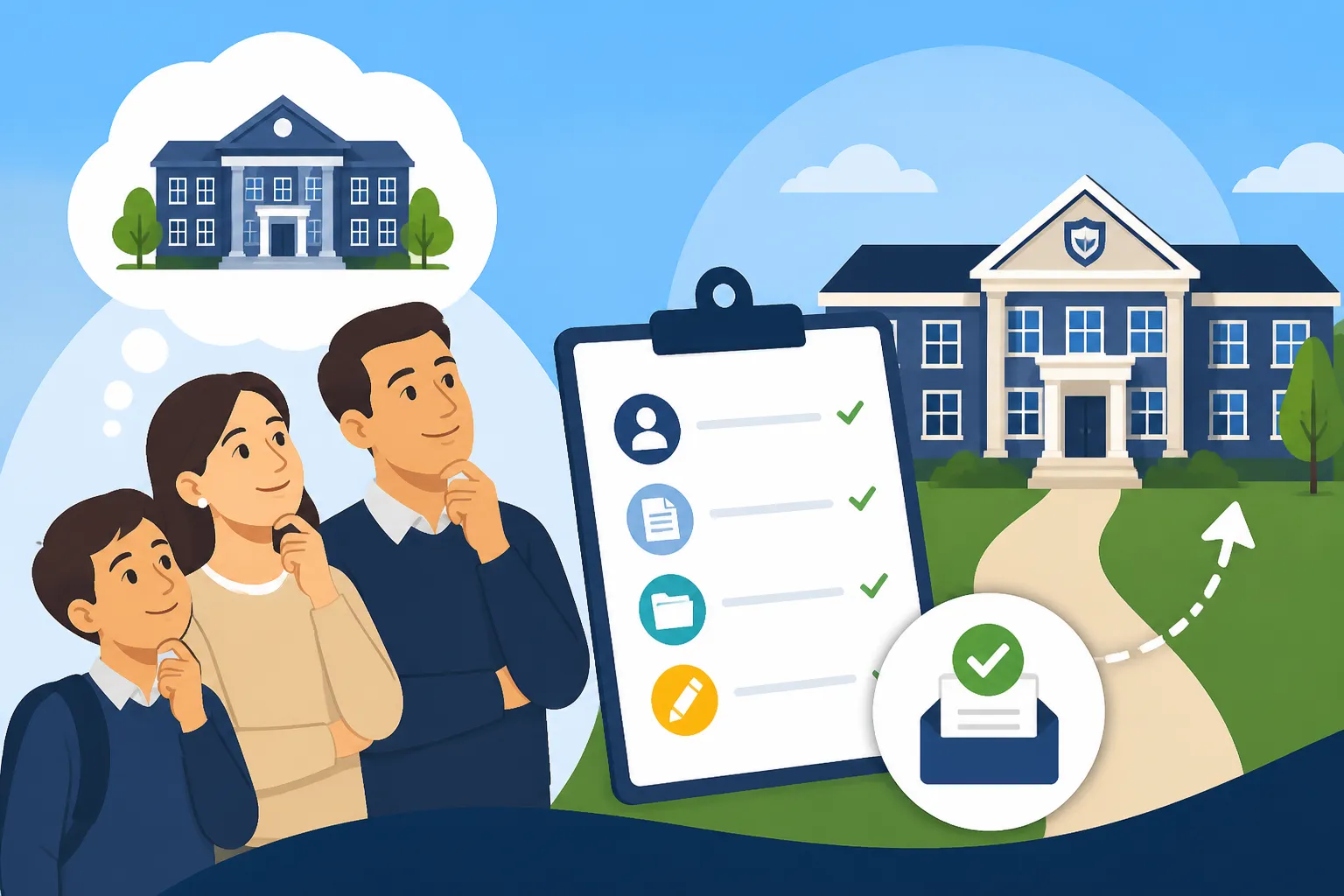
Here's a common checklist of what you'll usually need:
- Academic Records: This includes transcripts and report cards from your child's previous schools, often going back several years. For newcomers, ensure these documents are officially translated into English or French and, if required, notarized.
- Standardized Tests: Many selective private schools require applicants to take standardized admission tests. The most common is the Secondary School Admission Test (SSAT), but some schools administer their own entrance exams. These tests assess verbal, quantitative, and reading skills. It's wise to check each school's specific testing requirements and deadlines well in advance.
- Recommendation Letters: You'll typically need letters of recommendation from current teachers (e.g., a math teacher and an English teacher) and perhaps the school principal or a counselor. These letters provide insight into your child's academic abilities, classroom behaviour, and character.
- Essays or Personal Statements: For older students, an essay or personal statement is often a requirement. This is their chance to showcase their personality, interests, and why they want to attend that particular school. For younger children, this might be replaced by a creative task or drawing.
- Parent Statements: Most applications also include a section for parents to write a statement. This is your opportunity to share your family's values, your child’s strengths, and why you believe the school is a good match.
- Interviews: A crucial part of the process, interviews may be required for both the student and the parents. The student interview assesses maturity, communication skills, and genuine interest in the school. Parent interviews allow the admissions team to understand your family's expectations and commitment.
- Application Fees: Be prepared for non-refundable application fees, which can range from $100 to $300 per school.
For newcomer families, there are a few extra considerations. You might need to provide proof of your immigration status, and if English or French isn't your child's first language, the school may require language proficiency tests or have specific ESL (English as a Second Language) program entry requirements. It’s also a good idea to ensure all your documents are ready and easily accessible, perhaps in a digital format, especially if you've recently used a service like Sirelo to help with your move.
The Waiting Game and Acceptance
Private school admissions often operate on specific timelines, so staying organized is key. For many top schools, applications open in the fall for the following academic year, with deadlines typically in December or January. Decisions are usually sent out in February or March, allowing families time to consider offers before the new school year begins in September.
Once you submit your application and complete all the required steps, it’s a period of anxious waiting. When decisions are released, you might receive an acceptance letter, a waitlist notification, or, less fortunately, a rejection.
If you receive an acceptance, congratulations! You'll then usually have a deadline to accept the offer and submit an enrollment deposit, which secures your child's spot. This deposit is often a significant amount and may or may not be refundable, so read the contract carefully.
If your child is waitlisted, it means they meet the admission criteria but there isn't an immediate spot available. Schools will often move to their waitlist if accepted students decline offers. It’s important to understand the school's waitlist policy and decide if you want to remain on it. Sometimes, a polite follow-up expressing continued interest can help, but avoid excessive communication.
And if you receive a rejection, don't despair. It's a competitive process, and it doesn't diminish your child's potential. Use it as an opportunity to re-evaluate your priorities, explore other schools on your shortlist, or consider the excellent public school options available. Remember, How to Enrol Your Child in a Canadian School in the public system is a straightforward process and provides a high quality of education.
Costs, Financial Aid, and Making it Affordable
Let's talk money, because for many families, this is the elephant in the room when considering private education in Canada. While the quality of education can be exceptional, it comes with a price tag.
Understanding Tuition Fees and Other Expenses
The cost of private school in Canada varies wildly depending on the province, the school's prestige, its facilities, and whether it's a day or boarding school. Generally, for a day school, you can expect annual tuition fees to range from $15,000 to over $40,000 per year for elementary and secondary levels. Boarding schools are significantly more expensive, often exceeding $60,000 to $80,000 annually, as these fees include accommodation, meals, and extensive pastoral care.
Beyond tuition, there are many other expenses that can quickly add up. These "hidden costs" often catch newcomer families by surprise:
- Uniforms: Most private schools require specific uniforms, which can cost several hundred dollars per set, and often need to be purchased from designated suppliers.
- Textbooks and Supplies: While some schools include these, others charge extra.
- Technology: Laptops, tablets, and specific software might be required.
- Extracurricular Activities: While a broad range of activities is a perk of private schools, specialized clubs, sports teams (equipment, travel), music lessons, or drama productions often incur additional fees.
- Field Trips and International Travel: Educational trips, especially international ones, can add thousands of dollars to your annual expenses.
- Transportation: Unless you live within walking distance, daily transportation costs (school bus fees, public transit passes, or fuel) need to be factored in.
- Building Fund or Capital Levies: Some schools might ask for an annual contribution or a one-time charge to support facility upgrades.
When evaluating The Complete Guide to Cost of Living in Canada for Newcomers (2026), remember that private school costs are a significant addition that needs careful budgeting. It's crucial to ask prospective schools for a comprehensive breakdown of all potential fees beyond just tuition.
Scholarships, Bursaries, and Financial Assistance
Understanding the substantial costs, many private schools offer various forms of financial assistance to make education more accessible. These typically fall into two categories: scholarships and bursaries.
Scholarships are usually merit-based, awarded to students who demonstrate exceptional academic achievement, artistic talent, athletic prowess, or leadership potential. These are highly competitive and are often awarded based on entrance exam results, portfolios, auditions, or interviews. Some scholarships can cover a portion of tuition, while others might be full scholarships.
Bursaries, on the other hand, are need-based financial aid. They are awarded to families who demonstrate a genuine financial need to help cover tuition costs. The application process for bursaries is often quite rigorous, requiring families to submit detailed financial statements, including income, assets, and expenses. Schools typically use independent third-party services to assess financial need fairly and objectively.
Applying for financial aid is an entirely separate process from the admissions application, although they often run concurrently. It is absolutely critical to apply early and adhere strictly to all deadlines. Financial aid funds are limited, and late applications may not be considered. While Canadian citizens and permanent residents generally have more access to these programs, some schools might extend aid to international students, especially for merit-based scholarships. Always inquire directly with the admissions and financial aid offices of each school about their specific policies for newcomers. Looking into Understanding the Cost of Private and Public Schools in Canada can give you a broader perspective on the financial implications of your educational choices.
Key Considerations for Newcomer Families
Beyond the standard application hurdles, newcomer families often face unique challenges and considerations when navigating the Canadian private school system. It’s not just about getting in; it’s about thriving.
Cultural Integration and Support Systems
One of the biggest concerns for any expat family is ensuring their child integrates well into a new environment. Private schools in Canada, particularly those with a diverse student body or a history of enrolling international students, can offer invaluable support systems. Look for schools that explicitly mention programs for newcomers, such as:
- ESL/FSL (English as a Second Language / French as a Second Language) Support: If your child is still developing their language skills, this support can be crucial for academic success and social integration.
- Mentorship Programs: Some schools pair new students with older students or staff members who can help them navigate school life, understand Canadian customs, and settle in.
- Diversity and Inclusion Initiatives: A school that celebrates diversity and actively promotes an inclusive environment can make a huge difference in how quickly your child feels at home.
- Parent Associations and Community Events: Getting involved in the school community yourself can open doors, provide networking opportunities, and help you understand the local culture, which in turn supports your child's adjustment.
Ask about how the school supports new students and families. A proactive approach to cultural integration can significantly ease the transition, helping your child adapt to a new school system and culture rather than feeling isolated or overwhelmed. It's not just about academics; it's about building confidence and a sense of belonging.
Logistical Challenges and Planning Ahead
The application process for private schools often begins almost a year before the desired enrollment date. For newcomer families, this means planning needs to start even earlier, ideally before you even set foot in Canada. Think about The Complete Guide to Moving to Canada: Your First 90 Days (2027) and factor in the school application timeline.
Here are some logistical points to keep in mind:
- Document Translation and Verification: As mentioned, any academic records or other official documents not in English or French will need certified translation. Start this process early, as it can take time and requires official services.
- Standardized Testing Logistics: Registering for tests like the SSAT and finding testing centres that work with your international location can be tricky. Online proctoring options might be available, but confirm well in advance.
- Virtual Interviews: If you're applying from abroad, expect interviews to be conducted virtually. Ensure you have a stable internet connection (services like Airalo can be great for immediate connectivity upon arrival, but you'll need a robust home connection for important calls) and a quiet, professional environment for these important conversations.
- Visa Implications: If your child is coming to Canada solely for private school education and you are not moving as a family with permanent residency or a long-term work permit, you will need to understand the specifics of a study permit. While this article focuses on applying for a place, remember that admission to a school doesn't automatically grant a visa. You'll need to explore Canada's immigration website for up-to-date information on study permits.
- Accommodation: Your choice of school might influence where you decide to live. Researching How Much Does It Cost to Rent an Apartment in Toronto in 2026? or other cities, and finding How to Find a Home in a Good School District in Canada should be part of your overall relocation strategy. Also, consider services for setting up utilities like How to Set Up Internet and Cable in Canada early on to facilitate communication during the application period.
Proactive planning and understanding these logistical hurdles will go a long way in making the private school application process smoother for your newcomer family.
| Feature | Public Schools in Canada | Private Schools in Canada |
|---|---|---|
| Funding Source | Government (provincial/territorial) | Tuition fees, donations, endowments |
| Tuition Fees | Generally free for residents (K-12) | Significant, typically $15,000 – $80,000+ per year |
| Curriculum | Standardized provincial curriculum | Varies widely; can follow provincial, IB, Montessori, etc. |
| Class Size | Larger, varies by province and grade | Generally smaller, allowing for more individualized attention |
| Facilities | Good, but varies by school and district | Often state-of-the-art (labs, sports centres, arts studios) |
| Extracurriculars | Good range, often dependent on community resources | Extensive and diverse (specialized sports, arts, clubs, travel) |
| Admissions | Based on residential address (catchment area) | Competitive; requires application, tests, interviews, recommendations |
| Financial Aid | Limited (some specific programs) | Scholarships (merit-based) & Bursaries (need-based) available |
| Specialization | General, some specialized programs/schools of choice | Strong focus areas (arts, sports, STEM, religion, learning styles) |
| Teacher Ratio | Higher student-to-teacher ratio | Lower student-to-teacher ratio |
Disclaimer
The information provided in this guide is intended for general informational purposes only and does not constitute professional advice. While we strive to provide accurate and up-to-date information, the Canadian education system, immigration policies, and school admission requirements can change rapidly. We strongly recommend consulting official government websites, school admissions offices, and licensed professionals for personalized advice pertaining to your specific situation.