How Do I Open a Bank Account When I Arrive in Canada?
Oh, the infamous Canadian banking system for newcomers! I remember that feeling of bewilderment when I first arrived, clutching a stack of documents, wondering if they'd even be accepted. It's a common point of anxiety for many expats, trying to navigate a new financial landscape in a country that prides itself on stability but sometimes feels like a fortress to outsiders. This guide is here to demystify the process and give you a realistic, step-by-step roadmap to opening a bank account when you first land in Canada, helping you get your financial footing without the usual headaches.
Why Banking in Canada is Different (and Sometimes Tricky) for Newcomers
Let's be honest, you've probably heard that Canadian banks are big, reliable, and maybe a little bit… traditional. That's true, but for newcomers, it often means encountering processes and expectations that might be quite different from what you're used to back home. It's not just about opening an account; it's about integrating into a financial ecosystem that has its own rhythm and rules, and understanding these nuances from the get-go can save you a lot of frustration.
Understanding Canadian Banking Culture
Canadian banking culture, especially compared to some other parts of the world, tends to be quite conservative and focused on long-term relationships. Banks here prioritize security, compliance, and a steady, predictable approach. This means they are very thorough with identity verification and often have a keen interest in understanding your financial history, even if it's all from abroad. They're not just looking to give you an account; they're looking to establish a banking relationship that could evolve into mortgages, loans, and investments down the line.
This emphasis on relationships means that the personal touch can still be important. While online banking is prevalent, many newcomers find it beneficial to visit a branch in person, especially for that initial account setup. It allows you to ask questions, build a rapport with a banking advisor, and ensure all your documents are in order, reducing the chances of miscommunication. You'll find that branch staff are generally very helpful and accustomed to assisting new arrivals, particularly in major cities with diverse populations.
Another key aspect is the heavy reliance on credit history, which is almost non-existent for most newcomers. This lack of a Canadian credit history impacts everything from getting a credit card to renting an apartment. So, while opening a bank account is the first step, be aware that building your credit score will be an ongoing journey, and your bank can be a key partner in that. Don't be shy to ask about secured credit cards or credit-builder programs they might offer specifically for newcomers.
Initial Hurdles and Common Misconceptions
One of the biggest hurdles newcomers face is the initial chicken-and-egg problem: you need a Canadian address to open an account, but you might not have a permanent one yet. Or, you need a phone number, but you've just arrived and are still using a temporary SIM. Banks are aware of this, but it still requires some creative problem-solving on your part, like using a temporary residence address (if allowed) or getting your phone sorted first.
Another common misconception is that all your foreign documents will be immediately recognized and accepted. While Canadian banks are generally good with international identification, there are specific requirements for what constitutes "primary" and "secondary" ID, and these can vary slightly between institutions and even branches. Always bring originals, not copies, and be prepared for them to take extra time verifying foreign documents. It's a security measure, not personal scrutiny, so try to be patient!
Finally, many newcomers assume that "free banking" means entirely free. While some newcomer packages boast "no monthly fees," it's crucial to read the fine print. Often, these free periods are for a limited time (e.g., one year), or they come with certain conditions, like maintaining a minimum balance, or only covering a limited number of transactions. Understanding these terms upfront will prevent unexpected charges down the line.
Preparing Your Documents: What You Really Need to Bring
Okay, this is where the rubber meets the road. Canadian banks are meticulous about documentation, and rightly so. This isn't just about verifying who you are; it's about complying with anti-money laundering regulations and ensuring your identity is ironclad. Having the correct documents, in their original form, is the single most important step to a smooth account opening process. Think of it as your golden ticket to financial integration.
Primary vs. Secondary Identification
Canadian financial institutions operate on a "two-piece" ID rule. You'll need at least two valid pieces of identification, and they categorize these into "primary" and "secondary." Your primary ID usually needs to include your name, date of birth, photo, and signature. This is your cornerstone document.
For most newcomers, the go-to primary ID is your passport. It's internationally recognized, contains all the necessary biographical data, and is generally accepted without question. However, ensure it's valid and not expired. Some banks might also accept a Canadian permanent resident card or a Canadian provincial driver's licence as primary ID, but since you've just arrived, your passport is your safest bet.
Secondary identification is where things can get a bit more varied. It needs to support your primary ID and often helps confirm your address or other personal details. Common secondary IDs that newcomers can use include your work permit or study permit (your immigration document from IRCC), a valid Canadian provincial driver's licence (if you've managed to get one already), or even a credit card from a recognized Canadian issuer (though this is less likely for brand new arrivals). Another excellent option, if you've already applied for it, is your Social Insurance Number (SIN) confirmation letter. This is a crucial number for working and paying taxes in Canada, and it serves as strong secondary identification. It’s highly recommended to get your Social Insurance Number (SIN) as soon as possible after arriving.
It's critical to present original documents. Banks cannot accept photocopies or digital images for identity verification. They will often make their own copies for their records, but they need to see and verify the originals themselves. If you have any doubts about what IDs will be accepted, a quick call to the bank branch you plan to visit can save you a wasted trip.
Proof of Address and Immigration Status
Beyond your identification, proving your current address in Canada is absolutely essential. This can be a sticky point because, as mentioned, you might not have a long-term lease agreement yet. Banks need proof that you are physically residing in Canada and where you can receive official correspondence.
Accepted proofs of address often include a utility bill (hydro, gas, internet), a bank statement (from a different Canadian bank, if applicable), a rental agreement or lease, or a letter from a verifiable third party like an employer or educational institution confirming your residence. For brand-new arrivals, this can be tricky. Sometimes, banks will accept a letter from your temporary accommodation (like a hotel or Airbnb if it's a long-term booking) or a letter from a friend or family member if you're staying with them, accompanied by a utility bill in their name and an explanation. Be prepared to explain your living situation clearly.
Your immigration status is also paramount. You'll need to present your valid immigration documents such as your Confirmation of Permanent Residence (COPR), work permit, or study permit. These documents confirm your legal right to reside in Canada and your eligibility for banking services. For instance, if you're here on a temporary work permit, the bank will note the expiry date of that permit, as it dictates how long your status is valid in the country. It’s a good idea to understand How Your Immigration Status Affects Health Coverage in Canada and other services, not just banking.
Here’s a handy checklist of documents you should seriously consider bringing to your bank appointment:
| Document Type | Primary Use | Importance for Newcomers | Notes |
|---|---|---|---|
| Valid Passport | Primary ID | Almost universally accepted and crucial. | Must be original and current. |
| Permanent Resident Card | Primary ID (if applicable) | Excellent, direct proof of long-term status. | If you already have it. |
| Work Permit | Secondary ID / Immigration | Essential for those here for employment. | Confirms legal right to work and duration of stay. |
| Study Permit | Secondary ID / Immigration | Essential for international students. | Confirms legal right to study and duration of stay. |
| Confirmation of Permanent Residence (COPR) | Immigration Status | Key document for new permanent residents. | Keep this safe and bring it to all initial appointments. |
| Social Insurance Number (SIN) Confirmation Letter | Secondary ID / Tax ID | Crucial for tax and employment; strong secondary ID. | Apply for this as soon as you can after arrival. |
| Proof of Canadian Address | Address Verification | Utility bill, rental agreement, letter from employer/school. | This is often the trickiest part for brand new arrivals. |
| Foreign Bank Statements (recent) | Financial History | Can help establish financial stability, though not required. | Not always necessary, but good to have for reference. |
| Employment Letter/Offer | Income Verification | Useful if you're already employed. | Helps establish financial stability and income source. |
Choosing the Right Bank and Account for Your New Life in Canada
This isn't a "one size fits all" situation, my friend. What works for a student in Vancouver might not be ideal for a family starting fresh in Toronto. The Canadian banking landscape is dominated by a few major players, often called the "Big Five," but there are also fantastic alternatives. Your choice will depend on your specific needs, where you live, and what kind of services you prioritize.
Major Banks vs. Credit Unions
Canada's banking scene is primarily anchored by the "Big Five" banks: RBC, TD Canada Trust, Scotiabank, BMO (Bank of Montreal), and CIBC. These are household names, ubiquitous across the country, with extensive branch networks, ATMs everywhere, robust online and mobile banking platforms, and a full suite of financial products. They often have dedicated newcomer programs and staff trained to assist international arrivals, which can be a huge comfort when you're feeling a bit lost. Many newcomers find it easiest to stick with one of these institutions, and you can definitely open an RBC or TD Account in Canada as a newcomer.
However, don't overlook credit unions. These are member-owned financial cooperatives that operate on a not-for-profit basis. While they might not have the same national reach as the Big Five, they often offer more personalized service, potentially lower fees, and a strong community focus. They can be particularly appealing in smaller towns or specific regions where they have a dominant presence. For instance, in British Columbia, Coast Capital Savings is a major credit union known for its client-friendly approach. If you value a more local, community-oriented banking experience, exploring credit unions in your area could be a great choice. Just be aware that their ATM networks might be less extensive, though they often participate in inter-credit union networks.
The key difference often boils down to scale versus personal touch. The Big Five offer convenience and a vast array of services, while credit unions might offer a more tailored, often more flexible, approach to individual needs, sometimes making it easier to build a credit history or get specific advice.
Special Newcomer Banking Packages
Here’s where Canadian banks really shine for expats – almost all of the major banks, and even some credit unions, offer specialized newcomer banking packages. These are designed specifically to address the unique challenges you face when you first arrive, like the lack of a Canadian credit history or the immediate need for fee-waived accounts. These packages are often a godsend.
Typically, these packages waive monthly account fees for the first six months to a year, sometimes even longer. They often include unlimited debit transactions, free e-Transfers (Canada's popular inter-bank transfer system), and sometimes even a small, no-fee credit card or a secured credit card to help you start building your credit history. Some might also include perks like free safety deposit boxes for a period, or preferential rates on currency exchange.
It's absolutely crucial to ask about these specific newcomer packages when you speak to a banking advisor. Don't assume they'll offer it without prompting. Be upfront about your newcomer status and inquire about all available benefits. These packages can significantly reduce your initial banking costs and provide valuable tools for your financial integration. For a detailed comparison, check out guides on Understanding Newcomer Banking Packages and Free Accounts in Canada.
Understanding Account Fees and Services
Beyond the initial welcome offers, it's vital to understand the ongoing fees and services associated with your chosen account. Once the newcomer honeymoon period is over, monthly fees can range from $0 (if you maintain a minimum balance) to $30 or more for premium accounts. Make sure you know what triggers these fees and if they are avoidable. For example, many accounts will waive the monthly fee if you keep a minimum balance of, say, $3,000.
Also, look closely at transaction limits. While many accounts offer unlimited debit transactions, some basic accounts might have a cap, and going over it incurs a per-transaction fee. Interac e-Transfers, Canada's popular digital payment system, are usually free with most modern accounts, but confirm this. Online and mobile banking are standard, but check if there are any charges for specific services within those platforms. Learning How to Set Up Online and Mobile Banking in Canada is a must.
If you plan on sending or receiving money internationally frequently, inquire about international money transfer fees. Services like Wise are popular among expats for their competitive exchange rates and lower fees compared to traditional bank wire transfers, so it’s good to know your options beyond just your bank’s offerings. Having a clear understanding of these aspects upfront will help you choose an account that genuinely meets your needs and avoids unexpected costs.
The Step-by-Step Process to Open Your Account
Alright, you've done your homework, gathered your documents, and picked a bank. Now comes the actual account opening! This process, while seemingly daunting, is quite standardized across Canada. Knowing what to expect will help you approach it with confidence and ensure everything goes smoothly.
Making Your Appointment (or Walking In)
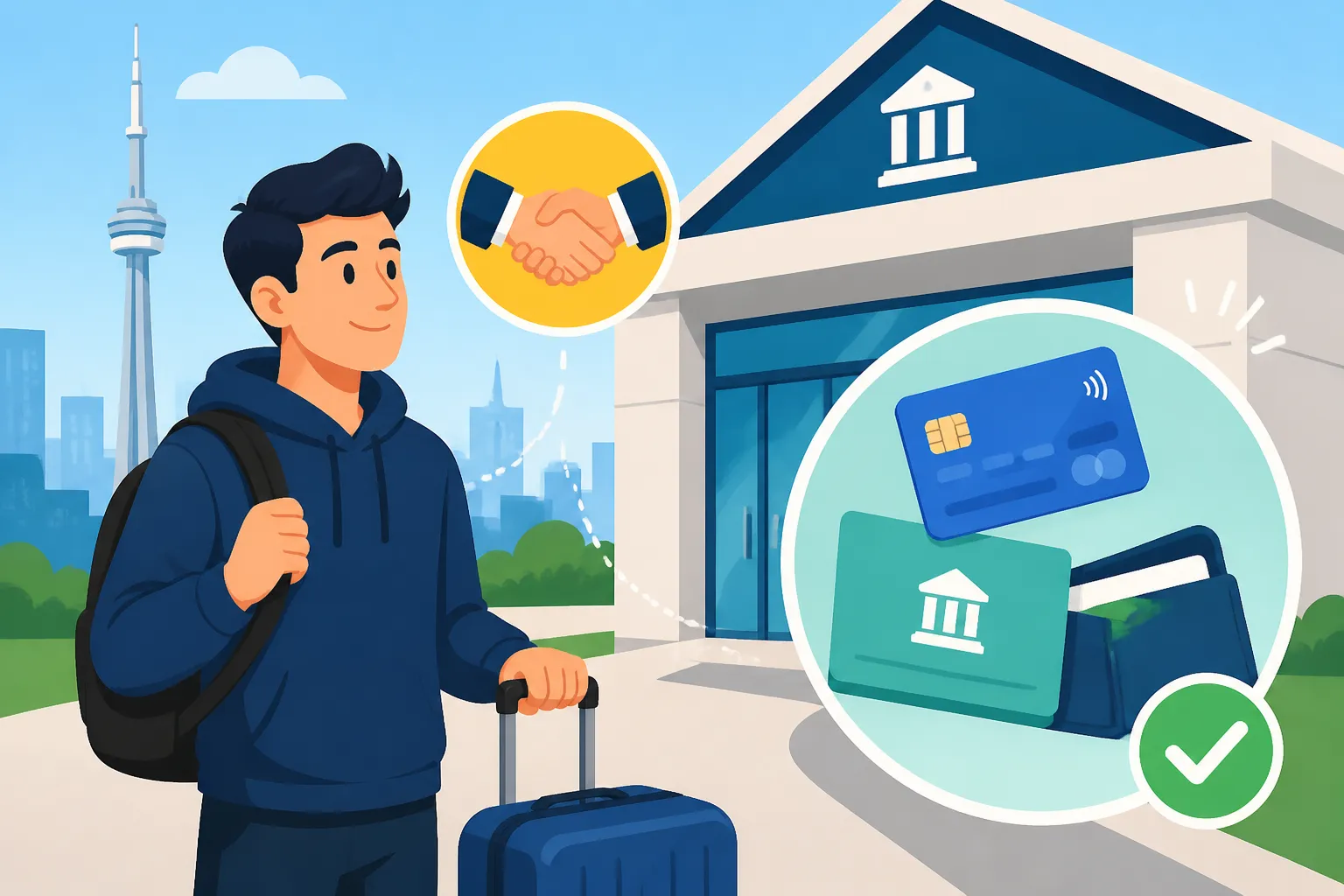
While it's possible to just walk into a bank branch and request to open an account, especially in smaller towns, for newcomers, I highly recommend making an appointment in advance. This is particularly true if you're in a major city like Toronto, Vancouver, or Montreal, where branches can be busy, and waiting times can be long. Calling ahead or booking online ensures that a banking advisor specializing in newcomer services, or at least one with ample time, will be available to assist you.
When you call or book online, mention that you are a newcomer and wish to open a new bank account. This allows the bank to prepare and potentially assign you to an advisor who is particularly adept at handling international clients. They might even provide a preliminary list of documents to bring, which you can cross-reference with your own preparations. A scheduled appointment not only saves you time but also sets a more professional tone for your initial interaction.
Before your appointment, if you haven't already, review your chosen bank's newcomer package details on their website. Jot down any specific questions you have about fees, services, credit-building programs, or international money transfers. Being prepared shows you're serious and helps you get all the information you need. You might even want to look into How to Open a Bank Account at a Canadian Bank as a Newcomer for specific bank requirements.
What to Expect During the Meeting
When you arrive for your appointment, you'll typically be greeted by a branch representative and directed to a private office with a banking advisor. This meeting will usually take anywhere from 30 minutes to an an hour, sometimes more if you have many questions or complex needs. The advisor will first ask for your identification and immigration documents to verify your identity and status. They'll scrutinize your passport, work permit, or PR card, often making copies for their records. Be patient through this verification process; it's standard procedure for security and compliance.
They'll then ask for your proof of address. If you're staying temporarily, be ready to explain your situation clearly. Following this, they'll walk you through the various account options, specifically highlighting their newcomer packages. This is your opportunity to ask all those questions you prepared. Don't hesitate to inquire about monthly fees, transaction limits, Interac e-Transfer costs, and any attached credit card offers. This is the moment to decide Which Bank Is Best for Newcomers in Canada for your needs.
The advisor will also likely discuss your need for a SIN (Social Insurance Number) if you haven't obtained one yet, as it's vital for any income-generating activities and tax purposes. They might even guide you on how to apply for your Social Insurance Number (SIN) if you're unsure. Towards the end, they’ll explain how to set up online and mobile banking, which are indispensable for managing your finances in Canada.
Activating Your Account and Services
Once all the paperwork is completed and signed, your account will typically be opened on the spot. You'll usually receive a temporary debit card or even your permanent one immediately, depending on the bank and branch. They'll help you set up your Personal Identification Number (PIN) for your debit card. You'll also be shown how to access your online banking portal and download the bank's mobile app. This is crucial as online banking will be your primary way to manage your day-to-day finances.
The banking advisor will walk you through your initial deposit options. You can usually deposit cash, or if you have a void cheque from a previous Canadian bank (unlikely for a newcomer), you could deposit via that. If you're transferring funds from abroad, they'll explain the process and any associated fees. This is a good time to remember options like Wise for potentially more cost-effective international transfers, as your bank will primarily offer wire transfers which can be more expensive. Once funds are in, you're officially ready to start banking in Canada!
Make sure you also ask about how to order cheques, though these are used less frequently for daily transactions now. Also, inquire about how to register for bill payments, set up direct deposits for your salary, and how to eventually build a credit score as a newcomer in Canada. Remember, this first account is your financial launchpad in Canada, so ensure you leave the branch feeling confident about how to use it.
Disclaimer
The information provided in this article is for general guidance only and does not constitute financial, legal, or immigration advice. While we strive to keep the information up-to-date and accurate, policies and regulations in Canada are subject to change. It is always recommended to consult with official government sources, financial institutions, and professional advisors for personalized advice regarding your specific situation as a newcomer to Canada.