Can My Children Come With Me to Canada on My Visa?
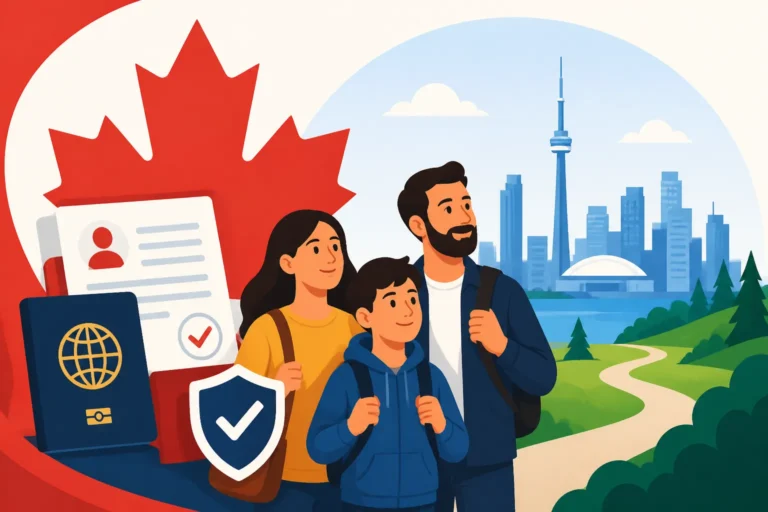
Moving to Canada is a huge undertaking, and if you're like most expats, your biggest concern probably isn't just about you – it's about your kids. You want to know if they can truly come along on this grand adventure, how to make it happen, and what life will look like for them once you arrive. This guide is here to walk you through exactly how your children can accompany you to Canada, no matter your immigration stream, and what steps you'll need to take to ensure their smooth transition.
Understanding "Dependent Child" Status in Canada
One of the first hurdles you'll encounter is understanding how Canada defines a "dependent child" for immigration purposes. It's not always as straightforward as you might think, and getting this definition right from the outset is absolutely crucial for your application's success. The Canadian government, through Immigration, Refugees and Citizenship Canada (IRCC), has specific criteria that must be met, and these criteria have seen updates over the years, so it's always worth checking the latest official guidelines.
Who Qualifies as a Dependent Child?
For your child to be considered a "dependent child" in most Canadian immigration applications, they generally need to meet a few key conditions. As of my last check, a child qualifies as a dependent if they are:
- Under 22 years old. This is the primary age cutoff.
- Do not have a spouse or common-law partner. Even if they are under 22, being married or in a common-law relationship usually disqualifies them from being considered a dependent child under most immigration streams.
- Are financially dependent on their parents. This means they rely on you for their basic needs like food, shelter, and education.
There's an important exception to the age rule: if your child is 22 years old or older but has a physical or mental condition that prevents them from being able to support themselves, and they have been financially dependent on you since before the age of 22, they might still qualify as a dependent child. This situation requires robust medical documentation and careful presentation within your application. It’s a provision designed to protect vulnerable individuals, but proving it requires thorough preparation.
When you're preparing your application, you must declare all your dependent children, even if they aren't accompanying you to Canada. Failing to declare a dependent child can have serious consequences down the line, potentially affecting their ability to be sponsored later, or even leading to misrepresentation issues for your entire family. The Canadian immigration system values honesty and completeness, so always err on the side of full disclosure.
The Importance of Accurate Documentation
Getting the right paperwork in order for your children is paramount. Without it, your application can be delayed, refused, or you might find yourself in a bureaucratic tangle that nobody wants to experience. Think of it as building a strong foundation for their new life in Canada. Every document tells a part of their story and proves their relationship to you, their identity, and their eligibility.
The most fundamental document is, of course, their birth certificate. This certifies their parentage and date of birth, which directly relates to the "dependent child" age criteria. Ensure it's the original document or a certified true copy, and if it's not in English or French, you'll need a certified translation. Don't underestimate the details here; even a small discrepancy can cause a headache.
For families where parents are separated or divorced, or if only one parent is coming to Canada, a parental consent letter is absolutely critical. This letter, usually notarized, confirms that the non-accompanying parent agrees for the child to immigrate to Canada with you. Without this, especially for minors, you might hit a roadblock at the border or during the application process. This is to protect children and prevent international child abduction, so authorities take it very seriously. Make sure this letter is comprehensive, clearly states the non-accompanying parent's consent for the child to reside in Canada, and includes their contact information.
Bringing Your Children on Different Canadian Visas
The process of bringing your children to Canada largely depends on your own immigration status – whether you're coming on a temporary visa like a work or study permit, or if you're applying for permanent residence. Each path has its own nuances, and understanding them is key to ensuring your entire family can make the move together.
Temporary Residence: Work and Study Permits
If you're coming to Canada on a work permit or a study permit, your dependent children can usually accompany you. For minor children (under 18 in most provinces, though some provinces consider 19 the age of majority), they are typically issued a visitor record upon entry. This visitor record allows them to stay in Canada for the duration of your valid permit.
However, if your children wish to attend school in Canada beyond kindergarten (or even kindergarten, depending on the province and school district), they will need a study permit. Generally, minor children accompanying a parent who holds a valid work or study permit in Canada do not need a study permit to attend primary or secondary school. This is a significant relief for many families. However, it's always best to verify specific provincial regulations and school board requirements once you know where you'll be settling, as there can be regional differences. If they're pursuing post-secondary education, they will definitely need their own study permit, just like any other international student. For more details on this, you might find our guide on How to Apply for a Study Permit for Canada particularly helpful.
For older dependent children (aged 18-21) who meet the criteria, they can also apply for their own study permit to attend post-secondary institutions, or even potentially an open work permit if their accompanying parent holds an open work permit. The rules can be a bit tricky, so make sure you confirm eligibility with IRCC. It's often the case that if you have a spouse or common-law partner accompanying you on an open work permit, they can then apply for a study or open work permit for eligible dependents.
Permanent Residence: Express Entry, PNPs, and Family Sponsorship
When applying for permanent residence (PR) through programs like Express Entry, Provincial Nominee Programs (PNPs), or even certain family sponsorship streams, the golden rule is to include all your eligible dependent children in your application from the very beginning. This is by far the simplest and most cost-effective way to bring your family to Canada.
When you include your children in your PR application, they go through the same screening process as you, the principal applicant. This means they will need to undergo medical exams, provide police certificates if they are over a certain age (typically 18, depending on the country of residence), and submit all required biographical documents. This is a critical step to ensure everyone is admissible to Canada. Our article on Understanding Medical Exams and Police Certificates for Canadian Immigration provides a comprehensive overview of these requirements.
Failing to declare or include an eligible dependent child in your initial PR application can create immense complications. If you get PR without declaring them, it might prevent you from sponsoring them later under the family class, as they would be considered "non-accompanying family members" at the time of your landing. The Canadian immigration system operates on the principle that all family members should be assessed at the same time for PR. If you're looking for detailed steps on how to bring your family along, our guide on How to Include Family in Your PR Application in Canada will walk you through it.
While this guide primarily focuses on children accompanying you, it's also worth noting that if your child is already a permanent resident or Canadian citizen, and you become a PR, you can sponsor them. Similarly, if you obtain PR and for some reason a dependent child was not included or could not be included initially, there are specific Family Sponsorship programs, such as the Understanding the Dependent Child Sponsorship Process in Canada, that you might be able to use down the line. However, this is generally more complex and time-consuming than including them in your initial application.
The Application Process for Including Your Children
Navigating the Canadian immigration system can feel like deciphering a complex puzzle, and including your children adds a few more pieces to that board. However, with careful planning and attention to detail, you can ensure their applications are as solid as yours. The key is to be meticulous with documentation and proactive in understanding each step.
Key Documents and Consent Letters
Regardless of whether your children are applying for temporary or permanent residence alongside you, you'll need to prepare a robust set of documents for each child. This isn't just about collecting papers; it's about presenting a clear, undeniable case for their eligibility and identity.
Here’s a table outlining common documents needed for minor children, which can vary based on your specific situation:
| Document Type | Scenario: Both Parents Applying | Scenario: One Parent Applying (Other Parent Not Immigrating) | Scenario: Single Parent (Sole Custody) |
|---|---|---|---|
| Birth Certificate | Required for all children | Required for all children | Required for all children |
| Valid Passport | Required for all children | Required for all children | Required for all children |
| Digital Photos | Required (IRCC specifications) | Required (IRCC specifications) | Required (IRCC specifications) |
| Custody Agreement | Not typically needed | Required (proving sole custody or joint custody arrangement) | Required (proving sole custody) |
| Parental Consent Letter | Not typically needed | Required (from non-accompanying parent, notarized) | Not typically needed (unless shared custody with non-immigrating parent) |
| Adoption Papers | If applicable | If applicable | If applicable |
| Guardianship Papers | If applicable | If applicable | If applicable |
| School Records/Enrolment | Optional, but can support age/identity | Optional, can support claims | Optional, can support claims |
| Medical Exam Results | Required for PR applications | Required for PR applications | Required for PR applications |
Remember, every document that is not in English or French must be accompanied by a certified translation, along with an affidavit from the translator. Overlooking this detail is a common mistake that can lead to delays. Additionally, IRCC often requires copies of specific pages from passports, not just the front page, so read the document checklist carefully for each application.
Submitting the Application and Biometrics
For most online applications, you'll simply add your children as "dependents" within your main application profile. This means their details, documents, and forms will be submitted concurrently with yours. It’s a unified approach, which helps process the family unit together. After submission, you'll pay the applicable fees for each dependent.
A crucial step for most applicants, including children, is the biometrics appointment. This involves providing fingerprints and a photograph. Children typically need to provide biometrics if they are over the age of 14, but again, always check the specific instructions provided by IRCC for your application. After your application is submitted and fees are paid, you'll receive a Biometrics Instruction Letter (BIL), which you'll need to take to a designated Service Canada location or a Visa Application Centre (VAC) to complete this step. This is a mandatory part of the security screening process for many Canadian visas and permanent residence applications.
Children Born During the Application Process
Life doesn't stop just because an immigration application is underway, and sometimes, a new family member arrives! If you have a child after you've submitted your application but before you receive your final decision, it's absolutely essential to inform IRCC immediately. Do not wait.
The process for adding a newborn depends on your application type:
- For Permanent Residence applications: You will need to submit a new birth certificate, passport (if applicable), and undergo a medical examination for the newborn. This can sometimes involve updating your application forms, paying additional processing fees, and even potentially slight delays as the new information is integrated into your file. The child will then be processed as an accompanying dependent.
- For Temporary Residence applications (Work/Study Permits): If your child is born in Canada, they are automatically a Canadian citizen. You don't need to apply for a visa for them. You'll need to register their birth with the provincial authorities and obtain a birth certificate. If they are born outside Canada, you would typically inform IRCC, and then apply for a visitor visa or eTA for them to join you, or if you're awaiting permanent residence, include them in that existing application as described above.
Transparency and prompt communication with IRCC are your best friends in these situations. They have specific procedures for these scenarios, and following them carefully will prevent any issues with your child's status or your overall application.
Essential Considerations for Families Moving to Canada
Moving to a new country with children isn't just about visas and paperwork; it's about building a new life. Many expats understand the sheer weight of responsibility you feel to make sure your kids are happy, healthy, and thriving. Thinking ahead about the practicalities can save you a lot of stress once you've landed.
Healthcare and Financial Planning for Children
One of the biggest concerns for any parent is healthcare, especially for their little ones. Canada boasts a fantastic public healthcare system, but there's a catch for newcomers: the waiting period. Most provinces have a three-month waiting period before you become eligible for provincial health coverage. This means that if your child gets sick or needs medical attention during those first few months, you could be facing hefty out-of-pocket costs if you don't have alternative coverage. This can be a huge shock for new families. Our comprehensive guide, The Newcomer Waiting Period for Provincial Health Coverage in Canada (2027), dives deep into this critical topic.
During this waiting period, especially if you have young children, securing private health insurance is an absolute lifesaver. Companies like Cigna Global offer comprehensive plans that can bridge the gap, covering unexpected doctor visits or even emergencies for your entire family. Investing in a good private policy like those offered by Cigna Global can provide immense peace of mind, knowing your children are protected from the moment you land. Once your provincial coverage kicks in, remember that it mostly covers medically necessary services, not things like dental, vision, or prescription drugs – these often require supplementary private insurance or employer benefits.
Financially, having children significantly impacts your cost of living. You'll need to factor in expenses for food, clothing, activities, and potentially childcare, which can be quite expensive in major Canadian cities. Planning a solid budget that accounts for these additional costs is non-negotiable. While Canada offers benefits like the Canada Child Benefit (CCB) for eligible families, these payments start after you've filed your first tax return, so don't count on them for your initial months.
Education and Childcare Options
Canada prides itself on its high-quality public education system. Most children attend public schools, which are free for residents. The exact age children start school varies by province and district, but typically, kindergarten begins around age four or five, and compulsory schooling continues until age 16 or 18. Enrolling your child is usually straightforward once you have proof of address and their immigration documents. To get a head start, check out Schools and Education in Canada: A Complete Guide for Newcomer Families.
If you prefer, there are also private and Catholic school options, though these come with tuition fees. The curriculum across all schools generally focuses on developing critical thinking, creativity, and a well-rounded education. When you arrive, one of your first tasks will be to contact your local school board to understand the enrolment process and requirements, which can be found in our detailed guide on How to Enrol Your Child in a Canadian School.
Childcare, especially for infants and toddlers, is a significant expense and often has long waiting lists. Whether you're looking for daycare centres, home-based care, or after-school programs, it's wise to research options and put your child's name on waiting lists even before you arrive, if possible. Don't be surprised by the costs; quality childcare can easily be one of your largest monthly expenses.
Navigating the Move with Your Little Ones
Moving across the world is a logistical marathon, and doing it with children adds another layer of complexity. From packing their favourite toys to keeping them entertained during long flights or road trips, every aspect requires forethought. Managing their emotional well-being through such a massive change is perhaps the most important task. Talk to them about the move, involve them in age-appropriate planning, and reassure them about the exciting new adventures ahead.
When you're packing up your life, and especially when you have little ones to consider, the logistics of an international move can be overwhelming. Services like Sirelo can connect you with reputable movers who specialize in shipping household goods to Canada, taking some of the burden off your shoulders. They can help you compare quotes and find services that understand the unique challenges of moving with a family. Planning the timing of your move is also key; try to avoid disrupting their school year too much, if possible, or time it so they can settle in before a new term begins. For a comprehensive overview of getting settled, you'll find our guide, The Complete Guide to Moving to Canada: Your First 90 Days (2027), incredibly useful.
Remember that while your visa or immigration status dictates their legal right to be in Canada, their happiness and adjustment will depend on your ability to create a nurturing and stable environment for them. It won't always be easy, but seeing your children thrive in their new Canadian home makes all the hard work worth it.
Disclaimer
The information provided in this guide is for general informational purposes only and does not constitute legal, financial, or immigration advice. While every effort has been made to ensure accuracy, immigration policies and regulations in Canada are subject to change without notice. Always consult with a regulated Canadian immigration consultant or lawyer, and refer to official government sources like Immigration, Refugees and Citizenship Canada (IRCC), for the most up-to-date and personalized information regarding your specific situation.