Understanding the School System (Public, Catholic, Private) in Canada
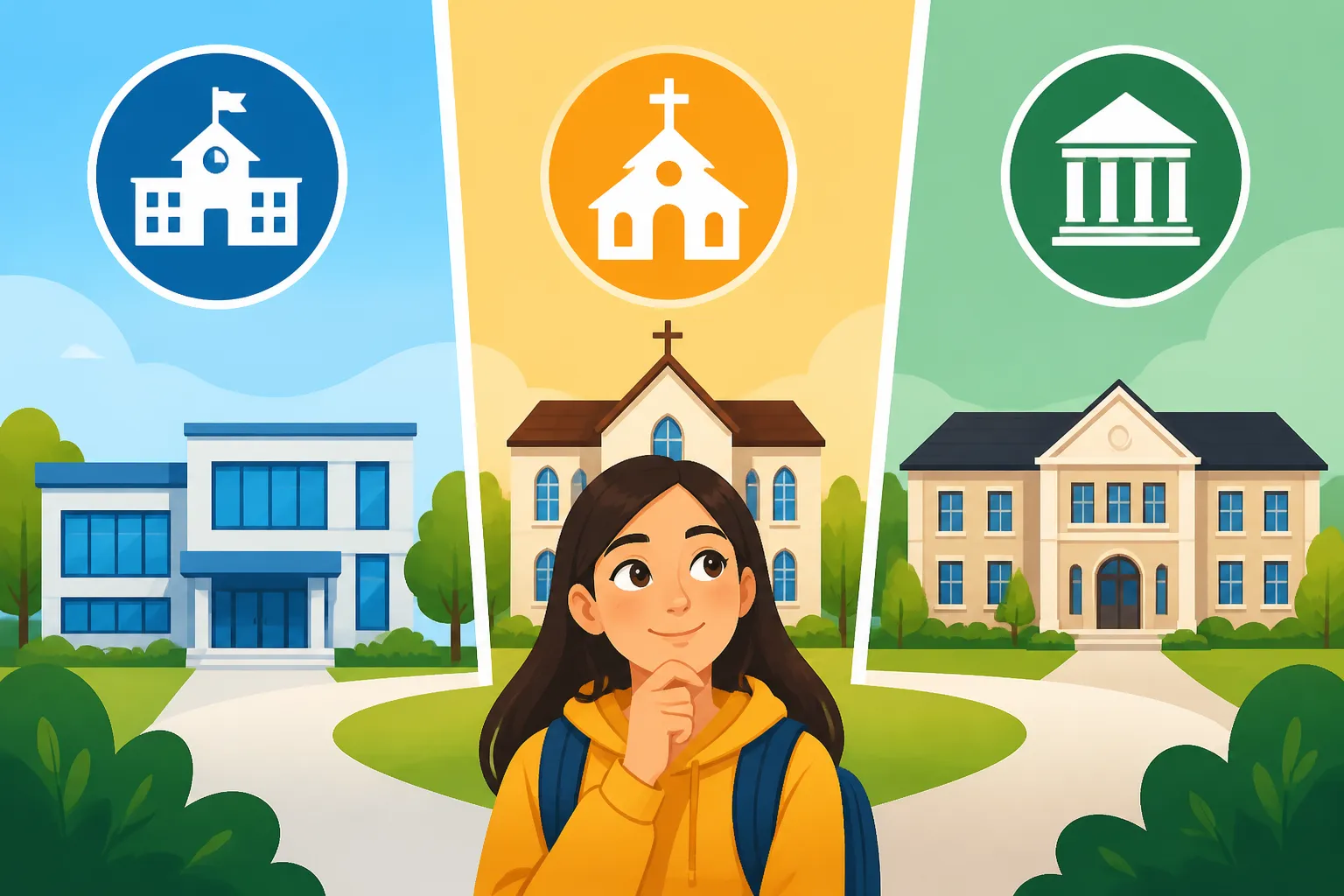
One of the most significant adjustments for families arriving in Canada is navigating the diverse and sometimes perplexing school system. It’s not simply about finding a building with classrooms; it’s about understanding the various types of schools—public, Catholic, and private—the curriculum differences, and the often-baffling enrollment procedures. This comprehensive guide will walk you through Canada’s educational landscape, offering clarity and practical advice to help you make the best choices for your children as you embark on your new life here.
An Overview of Canada's School System for Newcomers
When you first land in Canada, the school system can feel like a labyrinth, especially if you’re coming from a country with a very different educational structure. The good news is that Canada prides itself on a high standard of education, consistently ranking well globally. The system is designed to provide accessible education to all residents, but the nuances between public, Catholic, and private schools are crucial to understand.
The General Structure of Canadian Schools
Across Canada, the education system typically follows a progression from elementary to secondary school. Elementary school generally covers Kindergarten (for 4 and 5-year-olds) through to Grade 8, though some provinces or districts might have middle schools that split this into Grade 6-8. Secondary school, often called high school, runs from Grade 9 to Grade 12. After that, students can pursue post-secondary education at colleges, universities, or vocational schools. Keep in mind that while the general structure is similar, the specifics, like age cut-offs for grades or even the names of certain programs, can vary.
The school year usually runs from early September to late June, with a long summer break and shorter breaks around Christmas and in March. As a newcomer, you’ll quickly learn that these holidays are important markers in the Canadian calendar, not just for kids but for family planning too. Finding out about the academic calendar early can help you plan your family’s settlement activities.
Provincial Differences in Education
One of the biggest hurdles newcomers face is realizing that Canada doesn't have a single, unified federal education system. Instead, education falls under provincial and territorial jurisdiction. This means that while there are broad similarities, the specifics of curriculum, funding, school boards, and even religious education can differ significantly from one province to another. For instance, what's taught in Grade 5 science in Ontario might not be identical to what's taught in Alberta, although the core learning objectives are often aligned with national standards.
This provincial autonomy means that you’ll need to do your homework based on where you settle. If you're moving to Toronto, you'll be looking into the Ontario Ministry of Education guidelines and the Toronto District School Board (TDSB) or the Toronto Catholic District School Board (TCDSB). If your new home is Vancouver, you'll be dealing with British Columbia's Ministry of Education and local school districts like the Vancouver School Board. It's a localized approach, and while it can seem overwhelming at first, it also allows for tailored education that reflects regional values and priorities.
Early Learning and Childcare Options
Before your child even hits Kindergarten, Canada offers various early learning and childcare options. For infants and toddlers, regulated childcare centres and home daycares are common. These aren't typically part of the formal school system but are vital for many working parents. The cost and availability of these services can vary wildly, and waitlists are often a reality, particularly in larger urban centres. It’s worth looking into these options well in advance, even before you arrive.
Many provinces offer publicly funded Junior Kindergarten (JK) and Senior Kindergarten (SK) programs within elementary schools for 4 and 5-year-olds, respectively. These are usually full-day programs and are an excellent way for young children to transition into the school environment, develop social skills, and begin foundational learning. For newcomers, these kindergarten programs are invaluable as they help children adapt to a new language and culture in a supportive setting. They're often the first official touchpoint with the Canadian school system for many families.
Deep Dive into Public Schools in Canada
The public school system is the backbone of Canadian education, serving the vast majority of students. For most newcomers, this will be your primary entry point into Canadian schooling. It's a comprehensive, secular system funded by taxpayer dollars, making it accessible to all residents.
Funding and Access to Public Education
Public schools in Canada are free for all eligible residents, meaning you won't pay tuition if your children attend. They are funded primarily through provincial and territorial governments, which receive tax revenues. This robust public funding ensures that education is largely equitable across different neighbourhoods and socioeconomic backgrounds, though school boards in wealthier areas might still benefit from more extensive fundraising efforts by parent groups. This commitment to publicly funded education is a core Canadian value.
Access to public schools is generally determined by your residential address. Each school board has designated catchment areas, and your child will typically attend the school assigned to your home address. This can sometimes be a point of stress for newcomers who might be settling in temporary accommodation. It's important to establish a stable residential address as quickly as possible to ensure your child has a guaranteed spot in a local school. Don’t worry too much about having to move; there are provisions for mid-year transfers if your housing situation changes. When you're first doing your research on potential neighbourhoods, knowing which school boards serve those areas and their reputation can be a big factor in your decision. Platforms like Sirelo can help you plan the logistics of your move once you've pinpointed a location.
Curriculum and Offerings in Public Schools
The curriculum in public schools is set by the provincial Ministry of Education and is designed to provide a well-rounded education. This includes core subjects like English/French (depending on the province), Math, Science, and Social Studies, alongside Physical Education, Arts (music, visual arts, drama), and Health. There's a strong emphasis on critical thinking, problem-solving, and developing skills for the 21st century. Your children will be exposed to a diverse range of subjects and learning styles.
Beyond the core curriculum, public schools often offer a variety of extracurricular activities, from sports teams (soccer, basketball, track and field) to clubs (chess, drama, robotics, environmental groups). These activities are crucial for helping children integrate, make friends, and discover new interests outside of academics. For newcomer children, participating in these activities can be a fantastic way to improve language skills and understand Canadian social norms. Many schools also have support programs for English as a Second Language (ESL) or French as a Second Language (FSL) students, which are incredibly beneficial for children still developing their proficiency in Canada's official languages.
Benefits and Challenges of the Public System
The public school system offers numerous benefits, not least of which is its universal accessibility and high quality of education. It’s an incredibly diverse environment, reflecting Canada's multicultural population. Your children will learn alongside peers from all over the world, exposing them to different cultures, perspectives, and ideas. This diversity is one of its greatest strengths, preparing children for an increasingly interconnected world. The secular nature also ensures that children of all religious backgrounds feel welcome.
However, the public system isn't without its challenges. Class sizes can sometimes be larger than in private schools, and individual attention from teachers might be less frequent. Funding constraints can sometimes mean fewer specialized programs or resources compared to some private institutions. In high-demand urban areas, schools can be quite crowded. Another common frustration for parents is the feeling that they don't have much choice over which specific public school their child attends, as it's typically determined strictly by address. Despite these potential drawbacks, the Canadian public school system provides an excellent foundation and a welcoming environment for most newcomer families.
Understanding the Catholic School System
For many newcomers, especially those from countries with a strong religious education tradition, the existence of a publicly funded Catholic school system in some Canadian provinces can be quite surprising. It’s a unique aspect of Canadian education, particularly prominent in Ontario, Alberta, and Saskatchewan.
Historical Context and Funding
The presence of publicly funded Catholic schools stems from historical constitutional rights granted to religious minorities at the time of Confederation in 1867. These rights allowed for separate publicly funded schools for Catholics (and in some areas, Protestants). Over time, many Protestant separate schools merged with the public system, but Catholic separate schools largely remained. In provinces like Ontario, Catholic schools receive full public funding, similar to the secular public system. This means that, just like public schools, they are generally free for eligible students.
It's important to note that this isn't universal across Canada. In British Columbia, for instance, Catholic schools are considered independent schools and receive partial provincial funding, meaning they charge tuition. In Quebec, schools are organized by linguistic rather than religious lines (English or French), although some private Catholic schools exist. The funding model is a key differentiator, so you'll need to research the specific rules in your target province.
Admission Requirements for Catholic Schools
While publicly funded, Catholic schools often have specific admission requirements beyond just residency. The most common requirement is that at least one parent or the child themselves must be baptized Catholic. Some school boards may ask for a baptismal certificate during registration. However, policies can vary; some Catholic schools may accept non-Catholic students if space is available, especially in areas with declining Catholic populations or as part of their commitment to community outreach.
It's worth contacting the specific Catholic school board or individual schools directly to inquire about their current admission policies for newcomer families. Don’t assume they only accept Catholic students; sometimes, they are more flexible than their official rules might suggest, particularly if you are moving into an area where a specific school is close by and you want your child to have local access. This is another area where early research, possibly using your Airalo eSIM for immediate connectivity to make those important calls, can save you a lot of hassle.
Curriculum and Values in Catholic Schools
The curriculum in publicly funded Catholic schools generally follows the provincial curriculum standards, meaning your child will learn the same core subjects as their peers in the secular public system. The key difference is the integration of Catholic religious instruction and values throughout the school day. This includes prayer, religious studies courses, and an emphasis on Christian ethics and social justice within various subjects. Religious holidays are observed, and students typically participate in liturgical celebrations.
For families who value faith-based education, the Catholic system can provide a supportive environment that aligns with their spiritual beliefs. It often fosters a strong sense of community and moral development. For non-Catholic newcomers considering this option, it's important to understand and be comfortable with the religious component. The goal is not to proselytize but to provide an education rooted in Catholic teachings. Uniforms are also more common in Catholic schools than in the secular public system, which can simplify morning routines for parents and reduce peer pressure around clothing.
Exploring Private School Options in Canada
Beyond the public and Catholic systems, Canada has a vibrant private school sector. These schools offer a wide range of educational philosophies, specialized programs, and different learning environments, catering to diverse needs and preferences.
Types of Private Schools and Their Specializations
Private schools in Canada are incredibly varied. You’ll find everything from Montessori and Waldorf schools, which emphasize child-centred learning and holistic development, to schools specializing in arts, sports, or specific academic areas like STEM (Science, Technology, Engineering, Math). There are also single-sex schools, boarding schools, and schools offering international baccalaureate (IB) programs, which are highly regarded globally. Some private schools also maintain a religious affiliation (e.g., Jewish, Islamic, Protestant), offering a faith-based education similar to the Catholic system but funded differently.
This diversity means you have more choice, but it also means more research to find the perfect fit. If your child has a particular talent or learning style, a private school might offer a tailored program that the public system cannot. For example, some schools excel in providing support for students with learning disabilities, while others offer advanced placement courses for high-achieving students. These institutions often have smaller class sizes, state-of-the-art facilities, and a lower student-to-teacher ratio, which can be very appealing.
Costs and Financial Aid
The most significant difference with private schools is the cost. Since they are privately funded (though some receive partial provincial funding depending on the province), they charge tuition fees, which can range from a few thousand dollars to upwards of $30,000 or even $70,000 per year for boarding schools. These fees often don't include additional costs for uniforms, textbooks, extracurricular activities, or field trips, so it’s essential to factor in the total financial commitment.
However, many private schools understand that talent and potential aren't limited by financial means. They often offer scholarships, bursaries, and financial aid programs to help make their education accessible to a wider range of students. If you're considering a private school, don't let the sticker price deter you immediately; inquire about their financial aid options. These can be competitive but are often worth exploring if you believe a particular school would be ideal for your child. Understanding the Cost of Private and Public Schools in Canada is a crucial step for budgeting.
Advantages and Disadvantages of Private Education
The advantages of private schools often include smaller class sizes, specialized programs, enhanced facilities (like advanced labs or athletic complexes), and potentially a more rigorous academic environment. The admissions process can also be more selective, leading to a student body with specific characteristics or academic goals. For newcomer children, the smaller, more nurturing environment can sometimes ease the transition into a new country and language more smoothly. Some private schools are particularly adept at integrating international students and offer robust language support.
On the flip side, the obvious disadvantage is the high cost, which can make private education inaccessible for many families. There's also the potential for less diversity compared to public schools, depending on the school's focus and demographics. Furthermore, while many private schools are excellent, the quality can vary greatly, so thorough research and visits are essential. You'll want to ensure the school's values and academic approach align with your family's expectations.
Here’s a quick overview of the key differences:
| Feature | Public School System | Catholic School System | Private School System |
|---|---|---|---|
| Primary Funding Source | Provincial Government (Taxes) | Provincial Government (Taxes) in some provinces | Tuition Fees, Donations, Endowments |
| Religious Affiliation | Secular | Catholic (with integrated religious instruction) | Varies (secular, religious, specific philosophies like Montessori) |
| Admission Criteria | Residence-based | Residence-based, often requiring Catholic baptism of child/parent | Application, interview, academic assessment, fees |
| Tuition Fees | Free for eligible residents | Free for eligible residents in some provinces (e.g., ON, AB, SK) | Significant, ranging from a few thousand to tens of thousands annually |
| Curriculum | Provincial standard curriculum | Provincial standard curriculum + religious studies | Varies (often provincial standard with enrichments, specialized programs like IB) |
| Class Size | Regulated, can be larger in urban areas | Regulated, generally similar to public schools | Often smaller than public or Catholic schools |
| Extracurriculars | Wide range of sports, clubs | Wide range of sports, clubs | Often extensive and specialized |
| Uniforms | Generally not required | Often required or highly encouraged | Often required |
| Diversity | Highly diverse, reflecting local population | Diverse, but with a Catholic-focused community | Varies widely by school, can be less diverse geographically |
Key Considerations for Newcomer Families
Choosing the right school for your child in Canada involves more than just understanding the different types. As a newcomer, you have unique factors to weigh that can significantly impact your child’s successful integration and academic journey.
Language of Instruction and Support
Canada has two official languages: English and French. The language of instruction in schools will depend on the province and your chosen school board. In most of Canada, public education is primarily in English, with French immersion programs available. In Quebec, the primary language of instruction is French, with English schools available under certain eligibility criteria. For many newcomer families, one of the biggest challenges will be the language barrier, even if their children have some English or French proficiency.
Thankfully, Canadian schools are well-equipped to support students learning a new language. Most public and Catholic school boards offer English as a Second Language (ESL) or French as a Second Language (FSL) programs. These programs provide specialized instruction and support to help students improve their language skills, understand academic content, and integrate socially. It’s important to inquire about these programs during registration. Even if your child has some English or French, the academic language can be quite different from conversational language, so this support is invaluable. When you’re first researching schools, look for those with robust ESL/FSL programs and inquire about their track record with newcomer students.
Special Education Needs
If your child has special education needs, rest assured that Canadian schools are committed to inclusive education. Both public and Catholic school systems are legally obligated to provide appropriate support and accommodations for students with identified special needs, ranging from learning disabilities to physical or developmental challenges. This support is outlined in an Individual Education Plan (IEP), developed in consultation with parents, teachers, and specialists.
The process of assessing and identifying special needs might differ from your home country, so it’s crucial to bring all relevant documentation about your child’s diagnosis, previous support, and any existing education plans. The school system will conduct its own assessments to determine the best course of action. While the process can sometimes feel slow due to resource allocation, the commitment to providing support is strong. Private schools also offer special education programs, often with more specialized resources or a higher staff-to-student ratio, but these can come at an additional cost.
Extracurricular Activities and Social Integration
Beyond academics, extracurricular activities play a vital role in a child's development and, particularly for newcomers, in their social integration. Sports, arts, clubs, and volunteer opportunities help children make friends, develop new skills, and feel a sense of belonging. For a child grappling with a new culture and possibly a new language, these activities can be a safe and fun space to connect with peers outside the pressures of the classroom.
Encourage your children to participate! While some activities might have fees, many school-based clubs and teams are free or low-cost. Schools understand the importance of participation and often have programs to ensure all students can join. As a parent, getting involved in the school community—through parent councils, volunteer work, or attending school events—can also help you connect with other families and understand the local school culture. This engagement is a two-way street; it helps you and your children feel more at home.
Navigating the Enrollment Process
The thought of enrolling your child in a new school in a new country can feel daunting, but Canadian schools are generally very welcoming to newcomer families. They have established processes to make the transition as smooth as possible.
Required Documents for Enrollment
To enroll your child in a Canadian school, you’ll typically need to provide several key documents. These usually include:
- Proof of your child's age: This could be a birth certificate or passport.
- Proof of Canadian residency/immigration status: This is crucial. Depending on your immigration status (Permanent Resident, Temporary Resident with a Work Permit or Study Permit, Refugee Claimant), the school board will determine your eligibility for publicly funded education. This might include your PR card, work permit, or study permit for yourself and your children.
- Proof of address: This confirms you live within the school’s catchment area. This could be a utility bill, lease agreement, or property tax statement. When you’re securing your initial housing, remember to get official documents for your address.
- Child’s immunization record: Canada has vaccination schedules, and schools require proof of immunizations. If your child's records are not in English or French, you'll need certified translations. The local public health unit can help you get any missing vaccinations or translate your existing records.
- Previous school records: Report cards or transcripts from your child's previous schooling can help the school place them in the appropriate grade and understand their academic background. Again, translations may be needed.
It’s always a good idea to contact the school board or the specific school well in advance of your arrival to confirm their exact requirements. This can prevent last-minute scrambles and ensure you have everything ready.
Step-by-Step Application and Registration
The enrollment process generally starts by identifying your local school board based on your address. You can usually find this information on the municipal or provincial education websites. Once you know your school board, you can determine which school your child is designated to attend.
- Contact the School/School Board: Reach out to the school or the board's central admissions office (often called an International Student Program or Newcomer Welcome Centre) to get specific instructions and book an appointment. Many boards have dedicated staff who understand the challenges newcomers face.
- Gather Documents: Collect all the required documents listed above, ensuring they are translated if necessary.
- Assessment and Placement: Depending on their age and previous schooling, your child might undergo an assessment for language proficiency (English or French) and academic levels. This isn't a test they can fail; it's to help the school place them in the correct grade and provide appropriate support.
- Complete Registration Forms: Fill out all necessary forms, providing emergency contacts, medical information, and any other relevant details.
- Meet the School: You and your child may have an opportunity to meet the principal, teachers, and potentially tour the school. This is a great chance to ask questions and help your child feel more comfortable.
- Start School: Once all paperwork is processed and assessments are done, your child can begin attending classes.
Remember, starting school can be a stressful time for any child, let alone one in a new country. Be patient, supportive, and celebrate every small victory.
Integrating Your Child into the Canadian School Environment
The first few weeks and months are crucial for your child's integration. They'll be adapting to a new language, new friends, new teachers, and a new way of learning. It’s a lot to take in! Encourage them to talk about their day, what they learned, and any challenges they faced. Listen actively and validate their feelings.
Schools often have resources and support staff, like guidance counsellors or settlement workers, who can help newcomer students adjust. Don’t hesitate to reach out to them. Participating in school events, parent-teacher conferences, and even volunteering a little time can show your child you’re invested in their new school life. Help them understand Canadian classroom etiquette – things like asking questions, group work, and even snack time can be different. Building a routine, ensuring they get enough sleep, and providing a quiet space for homework will also go a long way. Ultimately, your support and patience will be their greatest asset in thriving within the Canadian school system.
Disclaimer
The information provided in this guide is intended for general informational purposes only and does not constitute legal, financial, or educational advice. While every effort has been made to ensure accuracy and currency, provincial and federal regulations, school board policies, and program availability can change frequently. Newcomers are strongly advised to consult official government websites, relevant provincial Ministry of Education resources, and specific school boards or private institutions for the most up-to-date and personalized information pertaining to their individual circumstances.