What Is the Tax Filing Deadline in Canada in 2026?
One of the most anxiety-inducing parts of moving to a new country, beyond finding a place to live or navigating public transit, is undoubtedly grappling with a whole new tax system. You've just settled into Canada, perhaps you've got your first job, and suddenly the calendar flips to a new year, bringing with it the looming question: when exactly do you need to file your taxes? For newcomers especially, these deadlines can feel like a moving target, so this guide is here to clarify the crucial tax filing deadlines in Canada, helping you navigate the system confidently and avoid any unwanted surprises from the Canada Revenue Agency (CRA).
The Standard Tax Filing Deadline for Most Individuals
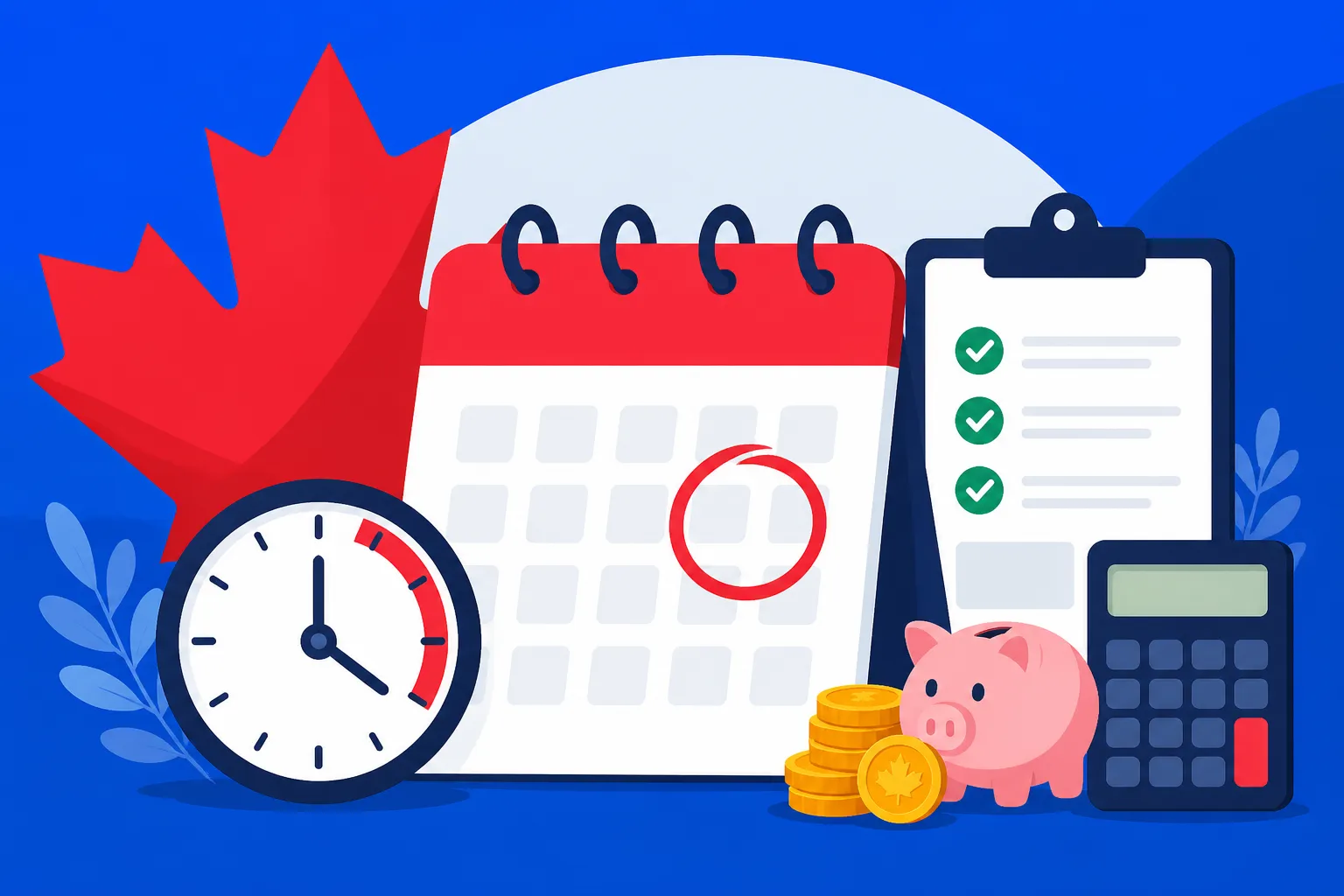
Let's get straight to the most common deadline that applies to the vast majority of Canadians, including many newcomers: April 30th. This is the big one. For the 2025 tax year (meaning the income you earned between January 1, 2025, and December 31, 2025), your income tax return is due by April 30, 2026.
This deadline applies to most individuals who earn employment income, pension income, or certain other types of income. It's the date by which your completed T1 General Income Tax and Benefit Return needs to be received by the CRA. If April 30th happens to fall on a Saturday, Sunday, or a public holiday recognized by the CRA, the deadline automatically shifts to the next business day. So, while we can't pinpoint the exact day for 2026 yet, you can bet it will be around that late April mark. Mark it in your calendar, set a reminder, and start gathering your documents well in advance!
Many folks assume that if they don't expect to owe any money, or if they're even expecting a refund, they can just casually let the deadline slide. This is a common and often costly misconception. Even if the CRA owes you money, filing your return on time is crucial. For instance, benefits like the Canada Child Benefit or the GST/HST credit are often calculated based on the income information from your tax return. If you don't file, you won't receive these entitlements, which can be a significant hit to your household budget. It's not just about avoiding penalties; it's about accessing the benefits you're due. Don't leave money on the table just because the system feels a bit daunting.
Special Deadlines for Self-Employed Individuals
Now, if you're like many ambitious newcomers who've decided to strike out on your own and become self-employed, or if you're a small business owner, there's a little bit of a different rule for you when it comes to filing your tax return. This is where it can get a bit confusing, so pay close attention.
For individuals who are self-employed, or whose spouse or common-law partner is self-employed, the tax filing deadline for the 2025 tax year is extended to June 15, 2026. This extension gives you an extra six weeks to get all your ducks in a row, reconcile your business expenses, and accurately report your income. The CRA understands that self-employment often involves more complex bookkeeping and record-keeping, so they provide this additional grace period. However, like the April 30th deadline, if June 15th falls on a weekend or a public holiday, the deadline moves to the next business day.
This extension is a huge relief for many freelancers, contractors, and small business owners who are juggling client work, invoices, and trying to keep track of every coffee and co-working space expense. You’ll want to be meticulous about keeping good records, as the CRA can be quite keen on verifying business deductions. Services like Taxes for Expats can often provide valuable insights into managing these complexities, especially if you have income streams from multiple countries. It's always a good idea to understand How to Pay Tax as a Self-Employed Person in Canada to ensure you're compliant. Remember, this filing extension is only for submitting your return; the payment deadline is a different beast entirely!
Deadlines for Paying Your Taxes: A Crucial Distinction
Here's where many people, especially newcomers unfamiliar with the Canadian system, often get tripped up: the deadline for paying any taxes you owe is not always the same as the filing deadline. For everyone, whether you're an employee, self-employed, or a combination, any outstanding balance for the 2025 tax year must be paid by April 30, 2026.
This is a critical point that cannot be stressed enough. While self-employed individuals get an extension to file their return until June 15th, they still need to pay any taxes owing by April 30th. If you fail to pay by this date, the CRA will start charging interest on your unpaid balance. This interest is compounded daily, and it can add up surprisingly quickly. So, even if you’re scrambling to finalize your self-employment income and expenses, make your best estimate and pay what you think you owe by April 30th. You can always adjust it later if your final return shows a different amount.
Imagine this scenario: you're self-employed, you've been working hard all year, and you know you'll owe some tax. You figure since your filing deadline is June 15th, you have until then to pay. You send in your return on June 1st and realize you owe $5,000. Because you missed the April 30th payment deadline, the CRA will charge you interest on that $5,000 from May 1st until June 1st, plus any subsequent days until the payment clears. It’s an unnecessary financial hit that can be easily avoided by understanding this key distinction. Many newcomers wonder, Is My Foreign Income Taxed in Canada? And if so, how does that impact payment deadlines? The answer is generally, yes, as a Canadian tax resident, your worldwide income is taxable, and all those amounts contribute to your overall tax payable by April 30th.
What Happens If You Miss a Deadline?
Missing a tax deadline in Canada isn't the end of the world, but it can certainly lead to some unwelcome financial consequences. The Canada Revenue Agency (CRA) isn't shy about imposing penalties and interest, and they can add up faster than you'd think. Understanding these repercussions is key to motivating you to get those taxes in on time.
Penalties for Late Filing
If you owe tax for the 2025 tax year and you file your return after the April 30, 2026 deadline (or June 15, 2026, for self-employed individuals), the CRA will hit you with a late-filing penalty. Ouch. The penalty is typically 5% of your 2025 balance owing, plus an additional 1% of your balance owing for each full month that your return is late, up to a maximum of 12 months.
Now, here's a kicker: if you've been charged a late-filing penalty in any of the three preceding tax years (2022, 2023, or 2024), the CRA doubles down. Your late-filing penalty becomes 10% of your 2025 balance owing, plus an additional 2% of your balance owing for each full month that your return is late, up to a maximum of 20 months. This can quickly turn a manageable tax bill into a much heavier burden. It's why it's so important to be proactive and submit your How to File Your Income Tax Return (T1) in Canada on time, every time.
Let's say you're a newcomer who struggled to understand How the Canadian Tax System (CRA) Works: Federal and Provincial Explained (2027), and you ended up filing your 2025 return two months late with a balance owing of $2,000. Your penalty would be 5% of $2,000 ($100) plus 1% for each of the two months ($20 x 2 = $40), totalling $140. That's money you could have spent on exploring Canada, not on penalties!
Interest on Unpaid Amounts
Beyond the late-filing penalty, the CRA also charges interest on any taxes you owe that are not paid by the April 30, 2026 payment deadline. This interest starts accumulating the day after the payment deadline, even if you haven't yet filed your return. The interest rate is set quarterly by the CRA and is generally higher than commercial lending rates. It's also compounded daily, which means the interest itself starts earning interest.
This is why, even if you’re a self-employed individual with a June 15th filing deadline, it's crucial to make a payment by April 30th. Even an estimated payment is better than nothing, as it minimizes the amount on which interest will accrue. You can find detailed information on Understanding CRA My Account and Online Tax Filing in Canada which allows you to view your balance and make payments online easily. If you anticipate owing a substantial amount, it might even be wise to set aside money throughout the year or consider making instalment payments. This is especially true for those with complex financial situations or those who need to address How to File Taxes If You Have Both Foreign and Canadian Income.
Important Dates to Remember for the 2025 Tax Year (Filing in 2026)
To simplify things, here's a quick rundown of the essential dates you'll want to etch into your memory for the 2025 tax year, with filing and payment happening in 2026. Keep in mind that if any of these dates fall on a weekend or public holiday, the deadline shifts to the next business day.
| Deadline Type | Tax Year 2025 (Filed in 2026) Date | Who It Applies To | Consequences of Missing |
|---|---|---|---|
| Tax Payment Deadline | April 30, 2026 | All individuals (employees, self-employed, etc.) | Interest charged on unpaid balance (compounded daily) |
| Individual Tax Filing Deadline | April 30, 2026 | Most individuals (employees, pensioners) | Late-filing penalty if tax is owing; loss of benefits/credits |
| Self-Employed Filing Deadline | June 15, 2026 | Self-employed individuals and their spouses/common-law partners | Late-filing penalty if tax is owing, plus interest from April 30 |
Beyond these dates, it's also worth noting that if you have foreign property with a total cost of more than $100,000 CAD, you'll have an additional reporting requirement through Form T1135, Statement of Foreign Property. This is another area where newcomers often need guidance, as the rules around Understanding Reporting Foreign Property (T1135) in Canada can be quite complex.
It’s always a good practice to start gathering your tax documents early in the year. This includes T4 slips from employers, T4A slips for pension or other income, T5 slips for investment income, receipts for eligible deductions (like child care expenses, medical expenses, or union dues), and any other relevant financial statements. Don't wait until the last minute – that’s a recipe for stress and potential errors.
If you find yourself in a bind, unable to pay your taxes on time, don't just ignore it. Contact the CRA to discuss potential payment arrangements. While interest will still accrue, they might be willing to work with you on a payment plan to avoid further penalties or more aggressive collection actions. Organizations like Wise can also assist with transferring funds if you have money overseas that you need to bring to Canada for tax purposes, often with better exchange rates than traditional banks.
Ultimately, staying on top of your tax obligations as a newcomer in Canada is all about understanding these key deadlines. While the system can seem daunting at first, with a bit of planning and knowledge, you can ensure a smooth tax season year after year. Always double-check the official CRA website for the most up-to-date information, as rules can occasionally change. Being informed is your best defense against tax-time headaches!
Disclaimer
The information provided in this article is for general guidance and informational purposes only and does not constitute professional tax advice. Tax laws and regulations in Canada are complex and subject to change. While we strive to provide accurate and up-to-date information, individual circumstances vary greatly, and specific advice should always be sought from a qualified tax professional or the Canada Revenue Agency (CRA) directly. We do not assume any liability for actions taken based on the information contained herein.