Understanding Federal and Provincial Tax Brackets in Canada
When you first land in Canada, the last thing on your mind might be tax brackets. But trust me, understanding how Canada's tax system works, especially the federal and provincial layers, is crucial for your financial well-being here. Many newcomers feel utterly overwhelmed by the deductions, the different levels of government claiming a slice of their income, and the varying rates across the country. This guide is here to untangle that complexity, breaking down federal and provincial tax brackets so you can confidently navigate your finances in your new Canadian home.
The Canadian Tax System: A Two-Tiered Reality for Expats
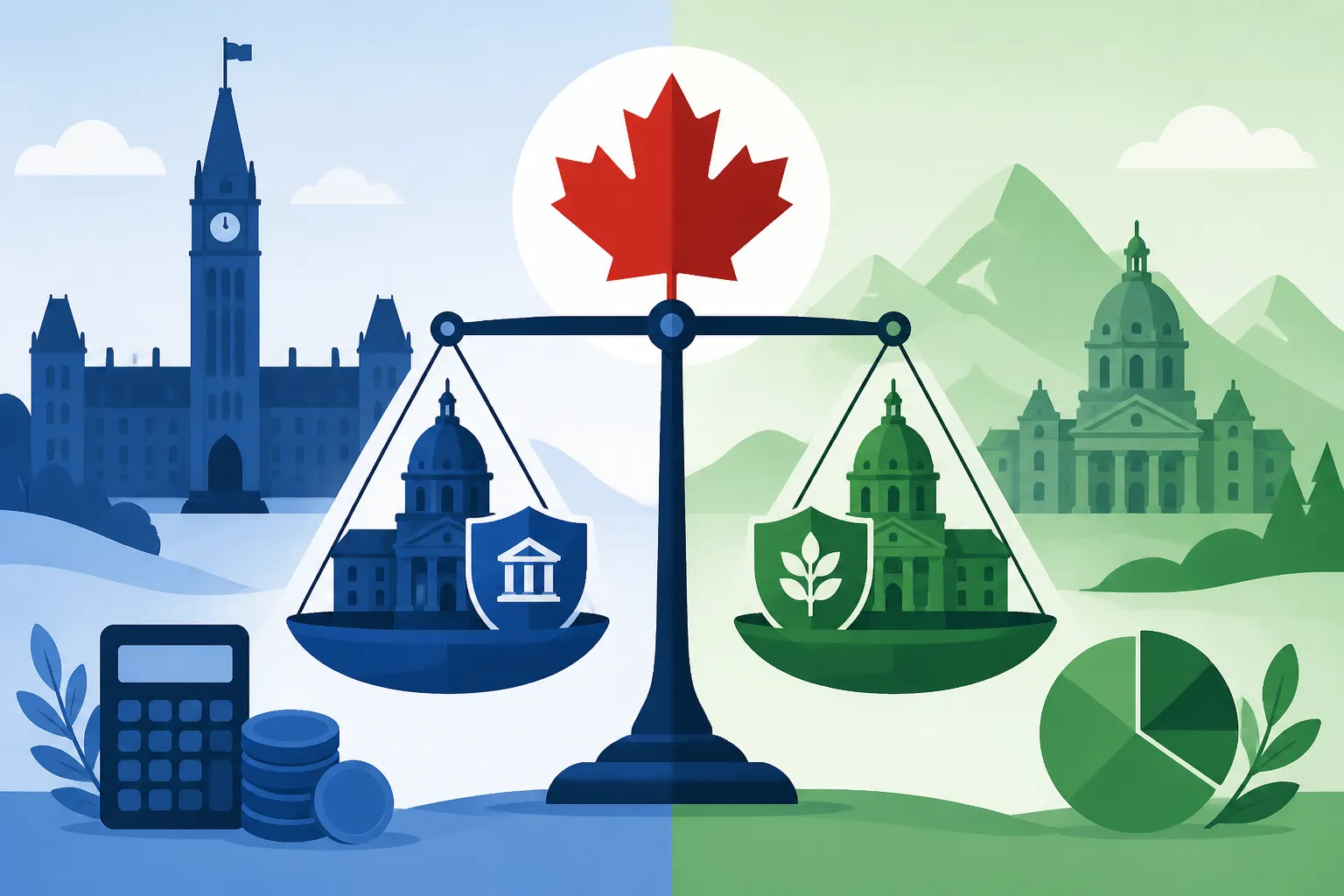
Alright, let's just get this out of the way: Canada's tax system can feel like a labyrinth, especially when you're used to a single, national income tax rate. But it's not designed to confuse you; it's a reflection of Canada's federal structure, where both the central government and individual provinces/territories have their own responsibilities and, naturally, their own ways of funding them. This means your tax bill isn't just one number; it's a combination of what the federal government takes and what your specific province or territory takes.
Federal vs. Provincial Taxes: It's Not Just One Rate
At its core, Canada operates on a progressive income tax system. What does "progressive" mean? It simply means that the more income you earn, the higher percentage of that income you're generally expected to contribute in taxes. But here's the kicker for newcomers: this progressive system plays out on two levels: federal and provincial. The federal tax rates are uniform across all of Canada, no matter if you're sipping maple syrup in Quebec or exploring the Rockies in Alberta. Everyone pays the same federal rates on the same income thresholds.
However, once you move past the federal portion, each province and territory steps in with its own set of tax rates and brackets. This is where things get really interesting – and often, a little frustrating for those trying to budget or compare job offers in different provinces. The differences can be quite substantial, directly impacting how much take-home pay you'll see at the end of the day. For example, someone earning the exact same gross salary in British Columbia might have a noticeably different net income than someone in New Brunswick, purely because of the provincial tax rates. It’s a reality that can catch many newcomers off guard, especially if they haven't done their homework on their chosen province's specific tax structure.
Understanding Taxable Income: What Goes Into the Pot?
Before we even get to those notorious brackets, we need to talk about what "taxable income" actually means in Canada. It's not simply your gross salary. Think of your taxable income as the net amount of earnings that the tax authorities actually scrutinize after certain deductions have been applied. This is a critical distinction, because understanding your deductions can significantly reduce your tax burden. Generally, your taxable income is your total income from all sources (employment, self-employment, investments, rental income, pensions, etc.) minus any eligible deductions.
Common deductions that newcomers might encounter include things like Registered Pension Plan (RPP) contributions, certain moving expenses if you moved for work, professional or union dues, and even childcare expenses. These deductions directly lower your taxable income, meaning you pay tax on a smaller chunk of your earnings. For instance, if your gross salary is $60,000, but you have $5,000 in eligible deductions, your taxable income becomes $55,000. It’s important to keep meticulous records of all your income and potential deductions throughout the year. Knowing what you can deduct is half the battle in managing your taxes effectively. For those navigating dual income streams or complex financial situations, particularly with assets or income back home, it's wise to consult with specialists like Taxes for Expats to ensure you're compliant and optimizing your situation. They can provide tailored advice on how various income sources are treated under Canadian tax law, which can differ significantly from what you might be accustomed to in your home country.
Decoding Federal Income Tax Brackets
Now that we've cleared up what constitutes taxable income, let's zoom in on the federal portion of the Canadian tax system. This is the baseline, the foundation upon which all provincial taxes are built. Understanding these federal brackets is your first step to demystifying your overall tax bill.
The Progressive System in Action
As I mentioned earlier, Canada uses a progressive tax system, and the federal income tax brackets are a prime example of this in action. What this means is that your income isn't taxed at a single, flat rate. Instead, different portions of your income are taxed at increasingly higher rates. These are called "marginal tax rates." So, if you earn, say, $70,000 a year, you don't pay the highest federal rate on your entire $70,000. Instead, the first chunk is taxed at the lowest rate, the next chunk at a slightly higher rate, and so on.
For the 2024 tax year (which you'll typically file in early 2025), the federal income tax brackets and rates are as follows:
| Taxable Income Bracket | Federal Tax Rate |
|---|---|
| Up to $53,558 | 15% |
| $53,559 to $107,117 | 20.5% |
| $107,118 to $165,430 | 26% |
| $165,431 to $235,675 | 29% |
| Over $235,675 | 33% |
(Please note: These rates are for the 2024 tax year and are subject to change by the government in subsequent years. Always refer to the official Canada Revenue Agency (CRA) website for the most up-to-date information.)
Let’s quickly illustrate this with an example. Imagine you have a taxable income of $70,000. Here’s how the federal tax calculation would break down:
- First bracket: $53,558 taxed at 15% = $8,033.70
- Second bracket: The remaining income ($70,000 – $53,558 = $16,442) taxed at 20.5% = $3,370.61
- Total Federal Tax (before credits): $8,033.70 + $3,370.61 = $11,404.31
See? It's not a flat 20.5% on the whole amount. This progressive system is designed to distribute the tax burden more equitably, ensuring those with higher incomes contribute a larger proportion. For a more comprehensive look at how these calculations fit into the broader Canadian system, you might want to check out The Complete Guide to Taxes in Canada for Newcomers (2027).
Federal Non-Refundable Tax Credits
Once you’ve calculated your federal tax using the brackets, you might think you’re done. But hold on! Canada's tax system also includes something called "non-refundable tax credits." These credits don't directly give you money back, but they significantly reduce the amount of tax you actually have to pay. They reduce your tax owing dollar for dollar. The most common and impactful of these is the Basic Personal Amount (BPA).
The Basic Personal Amount is a federal tax credit that every Canadian resident can claim, effectively allowing you to earn a certain amount of income tax-free. For 2024, the federal BPA is $15,910. This amount is indexed to inflation, so it might change slightly year to year. How does it work? Instead of directly deducting $15,910 from your income, the government converts this amount into a tax credit by multiplying it by the lowest federal tax rate (15%). So, for 2024, the BPA credit is $15,910 * 0.15 = $2,386.50. This means that after you've calculated your federal tax owing (like our $11,404.31 example above), you would subtract $2,386.50 from that amount.
There are many other non-refundable federal tax credits available, depending on your personal circumstances, such as:
- Spouse or Common-Law Partner Amount: If you support a spouse or common-law partner with little or no income.
- Amount for an Eligible Dependant: Similar to the spouse amount, but for other eligible dependants.
- Canada Pension Plan (CPP) Contributions and Employment Insurance (EI) Premiums: You get a federal tax credit for the amounts you contribute.
- Tuition, Education, and Textbook Amounts: If you're a student.
- Medical Expense Tax Credit: For eligible medical expenses.
These credits are crucial because they ensure that a significant portion of your earnings is protected from federal taxation, making the system fairer, especially for lower and middle-income earners. Understanding CPP, EI and Payroll Deductions for Employees in Canada will give you a better grasp of how these contributions play into your overall tax picture.
Navigating Provincial and Territorial Tax Brackets
Okay, you've got a handle on the federal tax side. Now, let's talk about the provincial layers, which are where things really start to diverge depending on where you've chosen to settle in Canada. It's not just a subtle difference; your take-home pay can vary quite a bit from one province to another, even with the same gross income, simply because of these provincial tax rates.
The Landscape of Provincial Variation
Imagine this: you've got two friends, both earning the same $70,000 taxable income, one living in Vancouver, British Columbia, and the other in Montreal, Quebec. While their federal tax bill (before credits) would be identical, their provincial tax bills would be distinctly different. This is because each of Canada's ten provinces and three territories has the constitutional authority to set its own income tax rates and brackets. There's no "one size fits all" provincial tax system here, and that's a key piece of information for any newcomer or expat.
These provincial differences are designed to fund specific provincial services like healthcare, education, and infrastructure. Provinces with higher social spending or more robust public services might have slightly higher tax rates to support those initiatives. Conversely, provinces like Alberta, known for its resource-based economy, traditionally have lower income tax rates. This regional variation is a significant factor in the true cost of living and the overall financial picture of living in one province versus another. It’s why you hear people talk about "high-tax" provinces and "low-tax" provinces. When you're comparing job offers or deciding where to put down roots, considering the provincial tax impact is just as important as looking at the salary itself. For a broader overview of how the two levels interact, take a look at How Canada's Health System Works: Provincial Plans Explained (2027), as provincial taxes directly fund things like healthcare.
A Deep Dive into Key Provincial Brackets (e.g., Ontario, BC, Alberta, Quebec)
To give you a clearer picture, let’s look at the provincial income tax brackets for a few of Canada’s most popular provinces for newcomers for the 2024 tax year. Remember, these are in addition to the federal rates we just discussed.
Ontario (ON) Provincial Tax Brackets (2024):
- Up to $49,231: 5.05%
- $49,232 to $98,463: 9.15%
- $98,464 to $150,000: 11.16%
- $150,001 to $220,000: 12.16%
- Over $220,000: 13.16%
Ontario also has a provincial Basic Personal Amount (BPA) which for 2024 is $12,399, providing a tax credit of $12,399 * 0.0505 = $626.15.
British Columbia (BC) Provincial Tax Brackets (2024):
- Up to $47,935: 5.06%
- $47,936 to $95,871: 7.70%
- $95,872 to $110,076: 10.50%
- $110,077 to $133,664: 12.29%
- $133,665 to $178,891: 14.70%
- Over $178,891: 20.50%
BC's provincial Basic Personal Amount (BPA) for 2024 is $12,580, giving a credit of $12,580 * 0.0506 = $636.55.
Alberta (AB) Provincial Tax Brackets (2024):
- Up to $142,297: 10%
- $142,298 to $170,757: 12%
- $170,758 to $204,908: 13%
- $204,909 to $307,363: 14%
- Over $307,363: 15%
Alberta's provincial Basic Personal Amount (BPA) for 2024 is $21,080, which translates directly to a non-refundable tax credit of $2,108 since Alberta uses a 10% rate for the lowest bracket.
Quebec (QC) Provincial Tax Brackets (2024):
- Up to $52,905: 14%
- $52,906 to $105,815: 19%
- $105,816 to $136,255: 24%
- Over $136,255: 25.75%
Quebec has its own distinct tax system, and its provincial Basic Personal Amount (BPA) for 2024 is $18,050. Unlike other provinces, Quebec collects its own provincial income tax, while other provinces have the CRA collect their provincial taxes on their behalf. This means your tax forms in Quebec will look a little different.
(Again, these rates are for the 2024 tax year and are subject to change. Always verify with official provincial government sources or the CRA.)
As you can see, the rates and brackets vary significantly. Alberta, for instance, has a much lower initial tax rate and a much higher first bracket, meaning you pay 10% on a very large chunk of income compared to other provinces. Quebec, on the other hand, starts with a higher rate. These differences stack up quickly when combined with federal taxes, making it essential to factor in provincial rates when you assess your potential earnings and cost of living. To truly understand your total income tax payment, you'll need to calculate both federal and provincial amounts. You can delve into more detail about the specific tax environment with resources like How Much Income Tax Will I Pay in Canada in 2026? to get a clearer picture of your expected financial commitments.
How Your Immigration Status and Residency Affects Tax Brackets
It’s easy to assume that if you have a visa to live and work in Canada, you’re automatically a "tax resident" and fall neatly into these brackets. But for newcomers, especially those maintaining ties to their home country, this isn't always straightforward. Canada's tax system makes a crucial distinction between immigration status and tax residency, and understanding this can save you a lot of headaches – and potentially, money.
Tax Residency vs. Immigration Status: A Crucial Distinction
Let me be super clear here: your immigration status (e.g., permanent resident, temporary work permit holder, international student) is not the sole determinant of your tax residency in Canada. While highly correlated, the Canada Revenue Agency (CRA) uses a set of criteria to determine if you are a "resident of Canada for tax purposes." This is a big deal because it dictates whether you're taxed on your worldwide income or just on income earned within Canada.
The CRA primarily looks at your "residential ties" to Canada. These ties are categorized as:
- Significant residential ties: This is the big one. Do you have a home in Canada (rented or owned)? Does your spouse or common-law partner live in Canada? Do your dependents live in Canada? If you answer yes to these, you're almost certainly considered a tax resident.
- Secondary residential ties: These are supporting factors, including personal property in Canada (like a car or furniture), Canadian bank accounts, Canadian credit cards, a Canadian driver’s license, and even membership in Canadian social organizations.
If you have established significant residential ties, you are generally considered a "factual resident" of Canada for tax purposes. This means you will pay tax on your worldwide income from the date you established those ties. Conversely, if you have not established significant ties and only visit Canada, you might be considered a "non-resident" for tax purposes, only paying tax on Canadian-source income. There's also a category called "deemed residents" for individuals who don't have significant ties but stay in Canada for 183 days or more in a year. This distinction is critical for expats who might still be earning income or holding assets in their home country. For a deeper dive into this often-confusing area, make sure to read Tax Residency in Canada: A Definitive Guide for Newcomers (2027).
Impact on Filing and Benefits
Being classified as a tax resident has profound implications beyond just which tax brackets apply to you. If you are a tax resident, you are expected to report all your income from all sources, worldwide, to the CRA. This includes income from investments, pensions, or rental properties you might still have back home. This often comes as a shock to newcomers who assume only their Canadian-earned income is relevant. It's a key difference from many other countries and necessitates careful planning.
Furthermore, your tax residency status determines your eligibility for many Canadian tax credits and government benefits. For instance, benefits like the Canada Child Benefit (CCB) and the GST/HST credit are generally only available to Canadian tax residents. If you're deemed a non-resident, you won't qualify for these. This is also where things can get incredibly complex, especially if you moved mid-year or have a complicated financial past in another country. It's not uncommon for expats to need specialized guidance in these scenarios. For complex tax situations, especially those involving foreign income, consulting with a firm like Taxes for Expats is not just helpful, it's often essential. They specialize in cross-border taxation and can help ensure you’re compliant and taking advantage of any applicable tax treaties between Canada and your home country, avoiding costly mistakes or double taxation. You'll want to avoid any misunderstandings with the CRA, trust me!
Practical Application: Calculating Your Total Tax Burden
Alright, it's time to put it all together. Understanding the federal and provincial brackets is one thing, but knowing how to calculate your actual total tax burden, complete with deductions and credits, is where the rubber meets the road. This section will walk you through a detailed example and offer some practical tips.
Step-by-Step Calculation Example
Let's imagine you're a newcomer living in Ontario, and your taxable income for 2024 is $75,000. Here’s how we’d calculate your estimated total income tax:
1. Calculate Federal Tax:
- First Federal Bracket (15%): Up to $53,558.
- Tax = $53,558 * 0.15 = $8,033.70
- Second Federal Bracket (20.5%): Income from $53,559 to $107,117. Your remaining income in this bracket is ($75,000 – $53,558) = $21,442.
- Tax = $21,442 * 0.205 = $4,395.61
- Total Federal Tax (before credits): $8,033.70 + $4,395.61 = $12,429.31
2. Apply Federal Non-Refundable Tax Credits:
- Federal Basic Personal Amount (BPA): For 2024, the BPA is $15,910, which translates to a credit of $15,910 * 0.15 = $2,386.50.
- Federal Tax After BPA: $12,429.31 – $2,386.50 = $10,042.81
(Note: Other federal credits like CPP/EI contributions would further reduce this, but for simplicity, we'll stick to BPA.)
3. Calculate Ontario Provincial Tax:
- First Ontario Bracket (5.05%): Up to $49,231.
- Tax = $49,231 * 0.0505 = $2,486.17
- Second Ontario Bracket (9.15%): Income from $49,232 to $98,463. Your remaining income in this bracket is ($75,000 – $49,231) = $25,769.
- Tax = $25,769 * 0.0915 = $2,357.75
- Total Ontario Tax (before credits): $2,486.17 + $2,357.75 = $4,843.92
4. Apply Ontario Provincial Non-Refundable Tax Credits:
- Ontario Basic Personal Amount (BPA): For 2024, the BPA is $12,399, which translates to a credit of $12,399 * 0.0505 = $626.15.
- Ontario Tax After BPA: $4,843.92 – $626.15 = $4,217.77
5. Calculate Total Estimated Income Tax:
- Total Tax: Federal Tax ($10,042.81) + Ontario Tax ($4,217.77) = $14,260.58
Your effective tax rate, in this example, would be $14,260.58 / $75,000 = 19.01%. This is a general estimation, but it gives you a solid framework for how to calculate your own tax burden. For those feeling overwhelmed by the paperwork and calculations, remember that the CRA provides plenty of guidance, and there are professionals ready to assist. If you need to file your taxes, this guide on How to File Your Income Tax Return (T1) in Canada can be a great starting point.
Important Considerations and Tools
Calculating your taxes isn't just a once-a-year scramble. Throughout the year, your employer automatically deducts amounts for income tax, Canada Pension Plan (CPP), and Employment Insurance (EI) from your paycheque. These deductions are estimates based on your stated income and credits, and they are usually pretty close, but sometimes you might get a refund or owe a little extra come tax season. Understanding these payroll deductions is key to managing your cash flow.
When it comes to filing, you don't have to do it with pen and paper (unless you want to!). The CRA works with various certified tax software providers, many of which offer free or low-cost options for simple returns. These programs guide you step-by-step and automatically calculate everything for you. Some popular options include Wealthsimple Tax (formerly SimpleTax) and TurboTax. These tools can also help you identify deductions and credits you might have missed.
For those who are self-employed or have income from abroad, managing your taxes can get more intricate. Keeping accurate records of all income and expenses is paramount. Whether you're tracking business receipts or documenting transfers from overseas, having clear documentation will make tax time much smoother. And speaking of overseas money, if you're frequently moving funds between Canada and other countries, services like Wise can be incredibly helpful for efficient and transparent transfers, ensuring you have clear records for any tax reporting requirements. They help manage currency conversions without hidden fees, which is useful when dealing with international income or transfers for tax payments.
Beyond Income Tax: Other Taxes You'll Encounter
While income tax often grabs the spotlight, it's certainly not the only tax you'll be paying in Canada. As a newcomer, it's important to be aware of other levies that will impact your budget and financial planning. Canada's tax landscape extends to consumption, property, and even specific investments.
Goods and Services Tax (GST) / Harmonized Sales Tax (HST) / Provincial Sales Tax (PST)
When you buy almost anything in Canada – be it groceries, clothes, electronics, or services – you'll likely encounter sales tax. This comes in a few flavours:
- Goods and Services Tax (GST): This is a federal sales tax of 5% applied across Canada.
- Harmonized Sales Tax (HST): In some provinces, the federal GST and the provincial sales tax (PST) have been "harmonized" into a single, combined rate. These provinces include Ontario (13%), New Brunswick (15%), Nova Scotia (15%), Prince Edward Island (15%), and Newfoundland and Labrador (15%). If you're in one of these provinces, you'll see HST charged on most goods and services.
- Provincial Sales Tax (PST): Other provinces charge GST separately from their own provincial sales tax. For instance, British Columbia has a 7% PST in addition to the 5% GST, making for a combined 12% sales tax. Saskatchewan charges 6% PST, Manitoba 7% PST, and Quebec has the Quebec Sales Tax (QST) at 9.975%. Alberta is unique in that it does not have a provincial sales tax, so you'll only pay the 5% GST there.
Understanding these sales taxes is crucial for budgeting, as they add a significant amount to your everyday purchases. Always assume the sticker price doesn't include tax, and be prepared for that extra percentage at checkout. For a deeper dive into these consumption taxes, check out The Complete Guide to GST, HST and PST in Canada (2027).
Property Tax and Other Levies
If you eventually decide to buy a home in Canada, you'll quickly become acquainted with property taxes. These are levied by municipal governments (cities and towns) to fund local services like schools, roads, public transit, police, and fire departments. Property tax rates vary wildly depending on the municipality and the assessed value of your home. It's a continuous expense, usually paid annually or in installments, and it can be a substantial part of homeownership costs.
Beyond property tax, you might also encounter other levies depending on your financial activities:
- Capital Gains Tax: If you sell an investment (like stocks, mutual funds, or real estate that isn't your primary residence) for a profit, 50% of that profit is added to your taxable income and taxed at your marginal income tax rate. This is called a capital gain. For more details, explore Understanding Tax on Investment Income and Capital Gains in Canada.
- Land Transfer Tax: When you buy a property, many provinces and municipalities (like Toronto) charge a one-time land transfer tax based on the purchase price. This can be a significant closing cost. You can learn more about this in Understanding Property Tax for Homeowners in Canada.
- Fuel Tax: Taxes are included in the price of gasoline and diesel.
- Sin Taxes: Additional taxes are applied to products like tobacco and alcohol.
As you can see, the Canadian tax system is multi-faceted. It's not just about what you earn, but also what you buy, what you own, and how you invest. Keeping an eye on these various taxes will help you better manage your finances and avoid any unwelcome surprises as you settle into Canadian life.
Disclaimer
The information provided in this guide is for general informational purposes only and does not constitute professional tax advice. Tax laws and rates in Canada, both federal and provincial, are complex and subject to change. While efforts have been made to ensure accuracy for the 2024 tax year, individual circumstances may vary. It is highly recommended to consult with a qualified tax professional or the Canada Revenue Agency (CRA) for personalized advice regarding your specific tax situation. Reliance on any information in this guide is solely at your own risk.