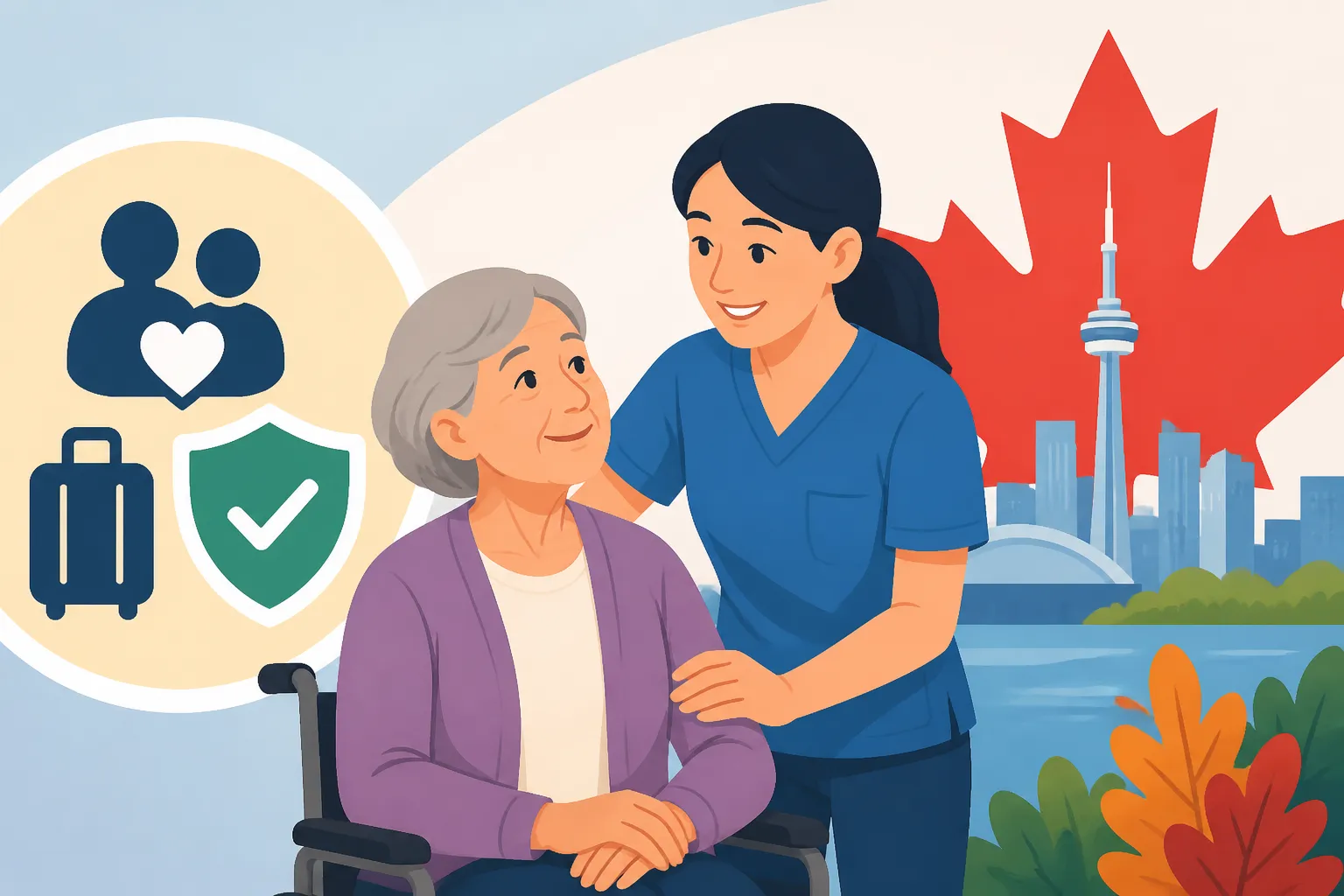
How Do I Bring a Caregiver to Canada?
Finding reliable, compassionate care for your children or an elderly family member here in Canada can be an absolute minefield, can't it? As an expat, you might find yourself navigating this challenge while also dealing with all the other hurdles of setting up a new life. It's perfectly natural to consider bringing someone you trust, perhaps even a family member or a professional from back home, to provide that essential support. This comprehensive guide will walk you through the various pathways and complexities involved in bringing a caregiver to Canada, focusing on current immigration programs and the practical steps you'll need to take.
Understanding Canada's Caregiver Immigration Programs
For years, Canada has had various programs designed to bring foreign caregivers to the country, acknowledging the critical role they play in supporting Canadian families. The landscape has evolved, moving from older Live-in Caregiver Programs to more flexible pathways. It's not a simple process, and the rules can feel like they're constantly shifting, but understanding the main federal initiatives is your first crucial step.
The Home Child Care Provider Pilot and Home Support Worker Pilot
These two federal pilot programs, introduced in 2019, are currently the primary routes for bringing caregivers to Canada with a pathway to permanent residence. They were designed to offer caregivers a more straightforward path to settling here permanently, addressing some of the challenges of older programs. The beauty of these pilots is that they allow caregivers to apply for permanent residence directly, or obtain a work permit to gain the required Canadian work experience first.
Under these pilots, the caregiver applies for permanent residence based on a qualifying job offer, or they apply for an occupation-specific work permit to gain 12 months of eligible Canadian work experience. Once they have that 12 months of full-time work experience in Canada, they can apply for permanent residence, assuming they meet all other criteria. This means they don't necessarily have to "live-in" with the family they work for, offering much-needed flexibility and protection.
Eligibility for Caregivers: To be considered for these pilots, a caregiver generally needs to meet several key criteria:
- Language Proficiency: You'll need to demonstrate your ability in English or French by achieving a minimum Canadian Language Benchmark (CLB) level 5. This is essential for integrating into Canadian society and effectively communicating in a caregiving role.
- Education: You must have the equivalent of a Canadian post-secondary education credential of at least one year. If your education was obtained outside Canada, you'll need an Educational Credential Assessment (ECA) to prove its Canadian equivalency. This can be a hurdle for many, as getting your foreign credentials recognized in Canada often involves navigating specific assessment bodies.
- Work Experience: This is where the two programs diverge slightly. The Home Child Care Provider stream requires work experience in caring for children, while the Home Support Worker stream requires experience in providing care for seniors or persons with disabilities. The specific duties performed under these roles must align with the National Occupational Classification (NOC) codes 44100 (Home Child Care Providers) or 44101 (Home Support Workers, Caregivers and Related Occupations).
- Job Offer: A genuine job offer from a Canadian employer is a cornerstone of these programs. This offer must be for full-time employment (at least 30 hours per week) outside of Quebec, and it cannot be from an embassy, high commission, or consulate. The job offer is crucial as it demonstrates a real need for your skills in Canada.
Eligibility for Employers: As an employer, you also have responsibilities. You need to ensure the job offer is legitimate and meets program requirements, including offering competitive wages and safe working conditions. Unlike some older programs, you generally don't need a Labour Market Impact Assessment (LMIA) if your caregiver is applying directly for permanent residence under these pilots or for an occupation-specific work permit through them, as long as the job offer is valid. However, understanding Canadian work permits: LMIA and exempt explained can still be beneficial to grasp the broader immigration context.
Provincial Nominee Programs (PNPs) for Caregivers
While the federal pilot programs are broad, some provinces and territories also have their own Provincial Nominee Programs (PNPs) that might offer pathways for caregivers. These programs are designed to address specific labour market needs within a particular province, and sometimes, caregiving roles fall under "in-demand occupations."
For instance, a province might have a stream for in-demand occupations that includes certain caregiving roles, especially those supporting seniors or individuals with complex medical needs. British Columbia, Ontario, and Manitoba are examples of provinces that have, at various times, had streams or components within their PNPs that could be relevant to caregivers. It's critical to check the specific requirements of each provincial program, as they can vary significantly. Some might require a job offer in a specific location within the province, while others might focus on prior work experience in certain sectors.
The main difference between PNPs and the federal pilots is that PNPs often require you to first be nominated by a province, which then allows you to apply for permanent residence through the federal Express Entry system or as a non-Express Entry application. This adds an extra layer to the application process, but it can be a viable route if you meet a specific provincial need. Keep in mind that these provincial streams can open and close based on labour market demands, so staying informed is key. Always check the official provincial immigration websites for the most up-to-date information.
Navigating the Application Process: Step-by-Step for Employers and Caregivers
Once you've wrapped your head around the different programs, the real work begins: the application itself. This isn't a simple task, and it often feels like an endless pile of paperwork and detailed instructions. Both the employer and the caregiver have specific roles and responsibilities to ensure the application moves forward smoothly.
Employer Responsibilities: What You Need to Do
As a Canadian employer, your first and most crucial step is to prepare a compelling and compliant job offer. This isn't just a casual letter; it needs to be detailed and meet the specific criteria of the chosen caregiver program.
- Crafting a Compliant Job Offer: The job offer must be in writing and signed by you and the caregiver. It needs to specify the job duties (aligned with NOC 44100 or 44101), the wage you'll be paying, the work schedule (must be full-time, at least 30 hours per week), and details about vacation, statutory holidays, and any other benefits. The wage offered must meet or exceed the provincial or territorial median wage for the specific occupation and location where the work will be performed. You'll need to look up these median wages through government resources.
- Understanding the LMIA (or lack thereof): For the Home Child Care Provider and Home Support Worker Pilots, an LMIA is generally not required for the caregiver's work permit if they have a valid job offer and meet the other program criteria. This is a huge relief compared to older programs! However, if you're exploring other pathways (like a general temporary foreign worker program that might apply to caregivers, though less common now for these specific roles), you might still encounter LMIA requirements. An LMIA is a document from Employment and Social Development Canada (ESDC) that proves there's a need for a foreign worker because no Canadian citizen or permanent resident is available to do the job. It’s a rigorous process, so the pilot programs' exemption is a significant advantage.
- Provincial Requirements: If you're going through a Provincial Nominee Program, there might be additional steps on your end. For example, some PNPs require employers to register with the province, demonstrate recruitment efforts to hire Canadians first, or show a clear business need for the foreign worker. You might need to submit documentation to the provincial government to support the caregiver's nomination application. Remember, provincial programs have their own unique set of forms and supporting documents, adding another layer to the process.
Caregiver Responsibilities: Your Pathway to Canada
For the caregiver, the application journey is about compiling personal documentation, proving eligibility, and diligently following the application instructions provided by Immigration, Refugees and Citizenship Canada (IRCC).
- Language Proficiency: As mentioned, achieving CLB 5 is non-negotiable. You'll need to take an approved language test (IELTS General Training, CELPIP General, or TEF Canada/TCF Canada) and include the results with your application. This can be one of the most challenging requirements, as language skills are rigorously assessed.
- Education and Credential Assessment: If you obtained your education outside Canada, you’ll need an Educational Credential Assessment (ECA) from an organization designated by IRCC. World Education Services (WES) is a commonly used organization for this. The ECA report confirms that your foreign credential is valid and equal to a Canadian one-year post-secondary credential. Getting your foreign credentials assessed (ECA / WES) in Canada can take time, so start this process early.
- Work Experience Documentation: You'll need to provide detailed documentation of your past caregiving work experience, including letters from previous employers, job descriptions, and proof of duties performed. The more thorough and specific you are, the better. This experience must align with the NOC codes for home child care provider or home support worker, depending on the stream you're applying under.
- Medical Exams and Police Certificates: As part of any long-term immigration application to Canada, you will need to undergo a medical examination by an IRCC-approved panel physician. You'll also need to provide police certificates from any country or territory where you've lived for six months or more since the age of 18. Understanding medical exams and police certificates for Canadian immigration is crucial for preparing these sensitive documents.
- Applying for a Work Permit and PR: Depending on your situation, you'll either apply directly for permanent residence with a job offer, or you'll apply for an occupation-specific work permit first to gain the required Canadian work experience. If applying for the work permit route, once you have your 12 months of qualifying work experience, you can then submit your permanent residence application. The complete guide to getting permanent residence in Canada (2026) offers further insights into this broader process. It's a two-stage process for many, ensuring that caregivers are successfully integrated into the Canadian workforce before becoming permanent residents.
The application portal is generally online, but it requires careful attention to detail. Any missing documents or inconsistencies can lead to delays or even refusal. This is not a process to rush.
Essential Considerations and Potential Hurdles
Moving to Canada to work as a caregiver isn't just about the paperwork; it's about navigating an entirely new life. There are practicalities, waiting times, and financial considerations that can be incredibly stressful for both the caregiver and the employer.
The Waiting Game and Interim Measures
Immigration processing times in Canada can feel like an eternity, and caregiver programs are no exception. The announced processing times by IRCC are just estimates and can fluctuate significantly depending on the volume of applications, the complexity of individual cases, and global events.
- Processing Times: You might be waiting months, or even over a year, for your work permit or permanent residence application to be processed. This "waiting game" can be incredibly frustrating and nerve-wracking. It’s important to manage expectations and plan accordingly.
- Bridging Open Work Permits: If you're already in Canada on a valid work permit and have applied for permanent residence under one of the caregiver pilots, you might be eligible for a bridging open work permit. This allows you to continue working legally while your PR application is being processed, providing immense relief. This is a critical safety net that wasn't always available in previous caregiver programs.
- Health Coverage Gap: One of the most significant concerns for newcomers, including caregivers, is the waiting period for provincial health coverage. Most provinces have a three-month waiting period before you become eligible for their public health insurance plan, such as OHIP in Ontario or MSP in British Columbia. This means that for your first three months (or sometimes longer, depending on your arrival date and province), you won't be covered by the "free" healthcare system. This is a huge risk, as a single emergency room visit could cost thousands of dollars out of pocket. This is where private health insurance becomes essential. Organizations like Cigna Global offer comprehensive private health insurance plans that can cover you during this critical waiting period, protecting you from unexpected medical expenses. It’s absolutely vital to arrange this before you arrive. Learn more about the newcomer waiting period for provincial health coverage in Canada (2026) and how to get private health insurance to cover the waiting period in Canada.
Financial Preparedness and Relocation Logistics
Bringing a caregiver to Canada involves various costs and logistical challenges for both parties. Being financially prepared and understanding the relocation process can reduce a lot of stress.
- Costs for Employers: While you might not need an LMIA fee for the federal pilots, you still have recruitment costs, potential legal/consultant fees if you hire help, and the responsibility of paying a competitive wage. You also need to consider if you'll be assisting with the caregiver's travel costs, though this isn't strictly mandated by all programs.
- Costs for Caregivers: For caregivers, the costs include application fees for the work permit and permanent residence, language test fees, educational credential assessment fees, medical exam fees, police certificate fees, and potentially travel costs. Beyond that, there are initial settlement costs: food, transportation, housing until they secure their own place, and those essential first three months of private health insurance. These can add up quickly, so having a financial buffer is crucial when understanding how to immigrate to Canada from abroad.
- Relocation Services: If the caregiver is coming from abroad, especially with personal belongings, professional relocation services can be a huge help. Companies like Sirelo can assist with comparing moving quotes and coordinating the shipment of personal effects, making the transition smoother. Having a clear plan for moving to Canada: your first 90 days can make a world of difference.
- Employer-Employee Relationship: It's important for both parties to clearly define the terms of employment, including duties, hours, wages, and expectations, ideally in a comprehensive employment contract. Canada has strong labour laws, and caregivers are entitled to the same worker rights and protections as any other employee in Canada. This includes minimum wage, overtime pay, and safe working conditions. Understanding Canadian employment standards and worker rights (2026) is vital for both employers and caregivers to avoid misunderstandings and ensure a fair working relationship.
Bringing a caregiver to Canada is a significant undertaking, requiring patience, meticulous planning, and a deep understanding of the immigration process. But with careful preparation, it offers a pathway to much-needed care for families and a fulfilling opportunity for caregivers seeking a new life in Canada.
Disclaimer
The information provided in this guide is for general informational purposes only and does not constitute legal advice. Immigration policies and program requirements can change frequently. Always refer to the official Immigration, Refugees and Citizenship Canada (IRCC) website and consult with a regulated Canadian immigration consultant or lawyer for personalized advice based on your specific situation.