Can I Bring My Family When I Move to Canada for Work?
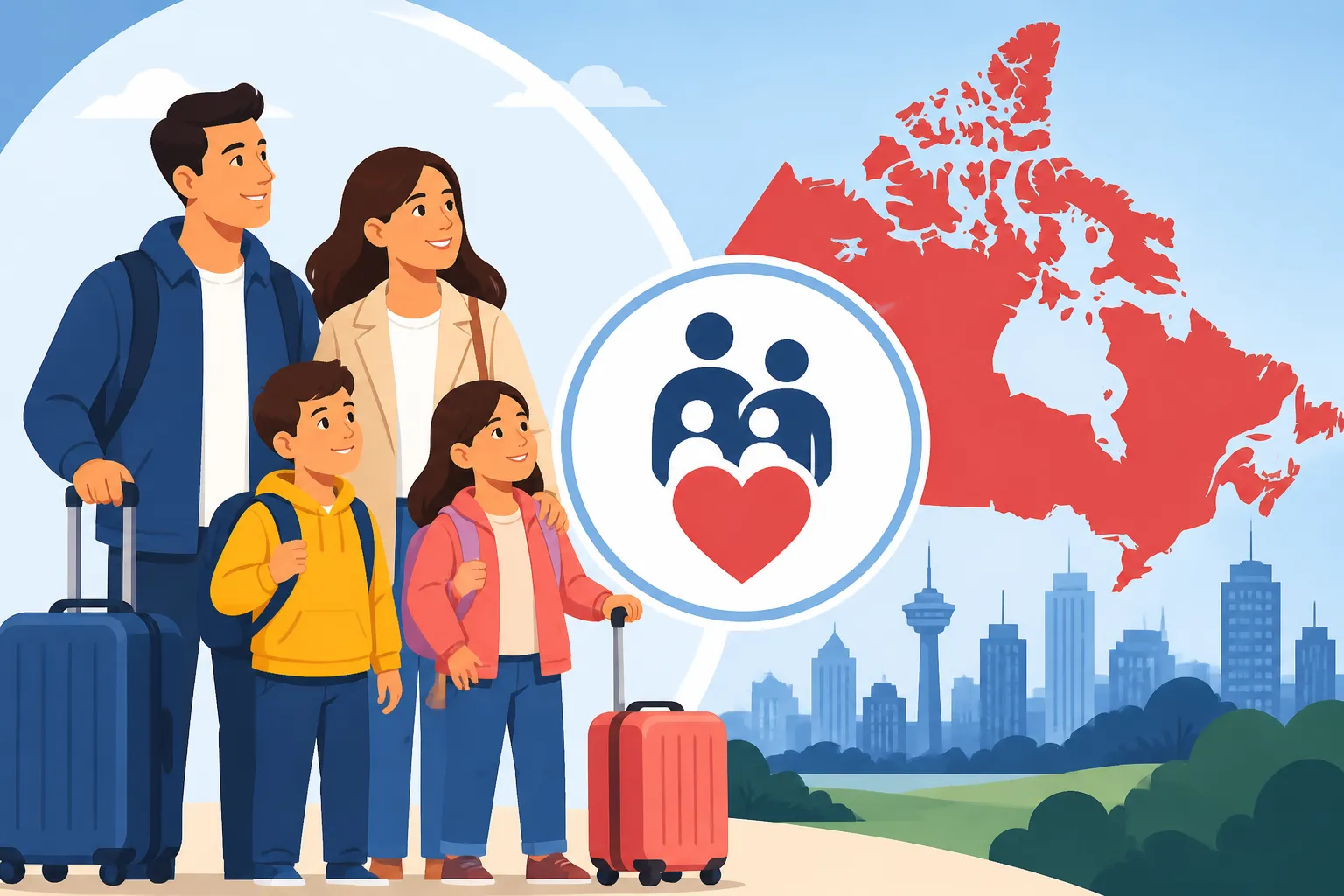
The thought of moving to Canada for work is exciting, isn't it? A new adventure, new opportunities, a fresh start. But let's be honest, the idea of doing it alone, leaving your loved ones behind, can cast a long shadow over that excitement. The good news is, for many, Canada's immigration policies are designed to keep families together. This guide will walk you through the often-confusing process of bringing your spouse, common-law partner, and dependent children with you when you move to Canada for your work stint, making sure you understand the nuances and how to navigate the system effectively.
Understanding Your Eligibility to Bring Family to Canada
First things first, let's get a clear picture of who can actually come with you, and under what conditions. Canada’s immigration system has specific definitions for family members, and it’s crucial to understand these right from the start.
Who Qualifies as 'Family' for Immigration Purposes?
When we talk about "family" in the context of Canadian immigration, we're not just talking about anyone you consider close. The government has very clear, often rigid, definitions. Typically, this includes your spouse, your common-law partner, and your dependent children.
Your spouse needs to be legally married to you. A marriage certificate is going to be your absolute best friend here. For common-law partners, it gets a bit trickier but is still very doable. You need to prove that you’ve been living together in a conjugal relationship for at least one continuous year. This means sharing a home, bank accounts, responsibilities – essentially, living as if you were married. Gather documents like joint lease agreements, utility bills in both names, shared bank statements, and even photos of you together over time. These aren't just suggestions; they're essential proofs to avoid frustrating delays.
Now, for dependent children, the rules have seen some changes over the years, so it's important to be up-to-date. As of my last check, a child is considered dependent if they are under 22 years old and do not have a spouse or common-law partner. If your child is 22 or older, they might still be considered a dependent if they have a physical or mental condition that prevents them from being able to support themselves, and they have been financially dependent on you since before the age of 22. This is a critical distinction and often requires extensive medical documentation and proof of ongoing financial reliance. Imagine you have a child who turned 23 last year but has a lifelong disability that requires your constant care and financial support. Even though they are over 22, they would likely still qualify as a dependent, but you would need to provide very specific medical evidence and financial records to IRCC.
How Your Work Permit Affects Family Eligibility
The type of work permit you, as the principal applicant, receive plays a significant role in whether your family can easily join you and what kind of status they will have. This is where many newcomers face their first real administrative hurdle.
If you have an employer-specific work permit, which ties you to a particular employer, job, and location, the ability for your spouse to get an open work permit usually depends on your job's National Occupational Classification (NOC) TEER category. Generally, if your job falls into NOC TEER 0, 1, 2, or 3 (managerial, professional, technical/skilled trades, or intermediate occupations), your spouse or common-law partner will often be eligible for an open work permit. An open work permit is a fantastic thing because it means your partner can work for almost any employer in Canada, in almost any occupation. This greatly eases the financial and psychological burden of moving.
However, if your work permit is for a job in a lower-skilled category (NOC TEER 4 or 5), your spouse might not be automatically eligible for an open work permit. In such cases, they might need to secure their own job offer and Labour Market Impact Assessment (LMIA), which can be a much more complex and time-consuming process. It's a frustrating reality for many, as it feels like the system is saying your family isn't as 'important' if your job isn't considered 'high-skilled' enough. So, before you even apply for your own work permit, research your job's NOC TEER category to manage expectations for your family.
Even if you have an open work permit yourself (for example, a Post-Graduation Work Permit or a Bridging Open Work Permit), your spouse's eligibility for an open work permit will still usually hinge on your NOC TEER category if you are currently employed in Canada. If you are not yet employed, or your employment is in a lower NOC TEER category, it might be challenging for your spouse to secure an open work permit based solely on your status. In these scenarios, having robust financial proof becomes even more critical for all family members. For a deeper dive into the different types of work permits, you might find guides like Understanding Canadian Work Permits: LMIA and Exempt Explained (2026) incredibly useful.
The Application Process for Family Members
Once you’ve established who can come with you, the next step is navigating the actual application process. This can feel like a mountain of paperwork, but breaking it down makes it much more manageable.
Open Work Permits for Spouses/Common-Law Partners
Bringing your spouse or common-law partner on an open work permit is one of the most common and advantageous pathways. It allows them to contribute to the household income and build their own career in Canada without needing a specific job offer first.
The application for an open work permit for your spouse or common-law partner is usually submitted concurrently with your own work permit application, or shortly after yours is approved. This typically happens online through the IRCC portal. The key here is proving the genuineness of your relationship and your eligibility as the principal applicant. You'll need documents like your marriage certificate (if applicable), proof of common-law relationship (as discussed above), copies of your passport and immigration documents, and, crucially, a copy of your work permit and an employment letter from your Canadian employer (if you have an employer-specific work permit). The letter should confirm your employment, your salary, and your NOC TEER code.
A common scenario is a spouse arriving on an open work permit, keen to start their new life and contribute. They might quickly find employment and begin earning. It's important to remember that now you'll have two incomes, potentially from different sources, and possibly different provinces. This adds a layer of complexity to your annual tax filings. Services like Taxes for Expats can be incredibly helpful in ensuring both you and your partner are compliant with Canadian tax laws, especially if you have foreign income or assets to report. For a full breakdown of the tax system, check out The Complete Guide to Taxes in Canada for Newcomers (2026).
Study or Visitor Status for Dependent Children
Dependent children have slightly different pathways depending on their age and your family's plans. Children who are below the age of majority in their province of residence (usually 18 or 19, depending on the province) and attending elementary or secondary school in Canada generally do not need a study permit. However, it's always recommended to confirm this with the specific provincial guidelines. They are often allowed to attend school simply as accompanying family members.
For children who are older, say, a 16-year-old who wants to attend high school in Canada, while they may not require a study permit in some provinces, obtaining one can sometimes streamline their entry and status. If your child is planning to pursue post-secondary education (college or university), they will definitely need a study permit, regardless of their age. The application process for a study permit for a dependent child typically requires a letter of acceptance from a Designated Learning Institution (DLI) in Canada. You'll also need to demonstrate you have sufficient funds to support their education and living expenses, alongside proof of your own work permit and financial stability. If you're pondering the educational journey for your kids, our guide on Schools and Education in Canada: A Complete Guide for Newcomer Families will be a treasure trove of information.
If your children are younger and won't be in school yet, or if they are only joining you for a shorter period, they can come as visitors. However, if they are visitors, they generally can't attend school unless specifically authorized, which usually means applying for a study permit. So, if you're planning a longer stay, or want them to integrate into the school system, plan for study permits.
Essential Documentation and Medical Exams
Regardless of whether your family members are applying for open work permits, study permits, or visitor records, a core set of documents will be required. This isn't just a list; it’s a detailed dossier you'll need to prepare meticulously.
Here's a snapshot of common documents:
- Passports: Valid passports for all family members. Ensure they have at least six months validity beyond your intended stay.
- Birth Certificates: For all family members, especially children, to prove age and parentage.
- Marriage Certificate: For spouses, to prove legal marital status.
- Proof of Common-Law Relationship: Statutory declarations, joint utility bills, shared bank accounts, and other documents proving you've lived together for at least a year.
- Police Certificates: For any family member aged 18 or older who has lived in a country for six months or more since turning 18. This can be a major headache, as obtaining these from various countries can be time-consuming and sometimes costly. Start this process early!
- Medical Exam Results: All accompanying family members will likely need to undergo an Immigration Medical Examination (IME) with a panel physician approved by IRCC. These exams assess whether anyone has a condition that could pose a risk to public health or safety, or cause excessive demand on Canada's health or social services. You’ll receive specific instructions on how and where to complete these. You can learn more about this in Medical Exams and Police Certificates for Canadian Immigration.
Markdown Table: Key Documents for Accompanying Family Members
| Document Type | Required For | Purpose | Important Notes |
|---|---|---|---|
| Valid Passports | All Family Members | Identity and Travel Authorization | Must be valid for at least six months beyond your intended stay. Copies of all stamped pages. |
| Birth Certificates | All Family Members | Proof of Identity, Age, and Parentage (for children) | Certified copies are often required. |
| Marriage Certificate | Spouses | Proof of Legal Marital Status | Essential for spousal open work permit applications. |
| Proof of Common-Law | Common-Law Partners | Evidence of Conjugal Relationship (1+ year cohabitation) | Joint leases, utility bills, bank statements, affidavits from friends/family, photographs, etc. |
| Police Certificates | All 18+ (past 6 months in a country) | Criminality Check | Must be obtained from every country where an individual has resided for 6+ months since turning 18. Can be a lengthy process. |
| Medical Exam Results | All Family Members | Health Assessment for Immigration | Completed by an IRCC-approved panel physician. Instructions will be provided by IRCC. |
| Education Documents | Children applying for Study Permit | Proof of Acceptance to a DLI | Letter of Acceptance (LOA) from a Canadian Designated Learning Institution (DLI) is mandatory. |
| Funds Proof | All Family Members | Demonstrate Financial Ability to Support Selves | Bank statements, investment portfolios, employment letters for principal applicant, etc. |
| Relationship Proof | All Family Members | Establish bona fide family ties | Marriage certificates, birth certificates, photos, communication records, joint documents. |
| Principal Applicant's Work Permit | Spouses/Children | Establish Basis for Family's Dependent Status | Copy of your valid Canadian work permit. |
| Principal Applicant's Job Offer/Employment Letter | Spouses applying for OWP | Validate Principal Applicant's NOC TEER | Required if your spouse is applying for an open work permit based on your skilled employment. Must state NOC TEER and salary. |
Submitting incomplete documentation is one of the quickest ways to get your application delayed or, worse, refused. Double-check every single item on the checklist provided by IRCC for your specific application stream.
Practical Considerations for Family Integration
Beyond the paperwork, bringing your family to Canada involves a lot of practical planning. This isn't just about getting them here; it's about helping them settle in and thrive in their new home.
Financial Preparedness: It's More Than Just Flights!
You've probably already factored in your own moving costs, but bringing a whole family multiplies everything. While IRCC often asks for proof of funds to ensure you won't be a burden on the Canadian social system, the real cost of living is often a rude awakening for newcomers. You need to show you have enough money to support everyone, not just for the first few weeks, but for the initial months until everyone, or at least your spouse, potentially finds employment.
Think about initial settlement costs: temporary accommodation upon arrival (hotels or short-term rentals can be surprisingly expensive), rental deposits (first and last month's rent are standard in most provinces like Ontario), furnishing an apartment, public transit passes for everyone, and, of course, groceries, which can be pricier than you expect depending on where you're coming from. For a typical family of four settling in a city like Toronto or Vancouver, you could be looking at needing C$15,000-C$25,000 just for the first couple of months, even before factoring in school supplies or winter clothing. To help budget for this massive undertaking, make sure you reference guides like The Complete Guide to Cost of Living in Canada for Newcomers (2026).
Also, consider health insurance. While Canada boasts a public healthcare system, most provinces have a waiting period for provincial health coverage for newcomers, often three months. During this period, you and your family are not covered. This means that if anyone gets sick or needs medical attention, you'll be paying out of pocket, and a simple doctor's visit can cost hundreds of dollars, while an emergency room visit can easily run into thousands. It's highly advisable to purchase private health insurance to cover this waiting period. You can find more specific details about this in Understanding the Three-Month Waiting Period for Health Coverage in Canada.
Navigating Schools and Childcare
One of the biggest concerns for parents is often their children's education and care. Canada's public school system is generally excellent, but enrolling your child is another process entirely.
First, you'll need to register your child at the local school board based on your residential address. This typically requires proof of address, your children's birth certificates, your immigration documents (work permits, study permits, visitor records), and sometimes immunization records. Don't be surprised if there are forms to fill out regarding previous schooling and language abilities. Depending on the province, children usually start kindergarten around age four or five. For more details on this, How to Enrol Your Child in a Canadian School is an excellent resource.
Childcare for younger children (infants to preschoolers) is a completely different beast. It is expensive and often has long waiting lists, especially in major urban centers. Costs can range anywhere from C$800 to C$2,000+ per child per month, depending on the city and the type of care (daycare centre vs. home daycare). Many parents find themselves on waitlists for a year or more. It’s a significant financial and logistical challenge that many newcomers underestimate. Start researching childcare options and getting on waitlists as soon as you have a confirmed address, if not before.
Cultural Adaptation and Support Systems
Moving to a new country is a huge life event, not just for you but for every member of your family. The emotional and psychological toll of adapting to a new culture, language, and social norms can be immense.
Children, especially teenagers, can struggle with leaving friends, familiar schools, and their established routines. Be patient, communicate openly, and seek out resources that can help them adjust. Many schools offer programs for newcomer students. As adults, you and your spouse will also face challenges, from figuring out the grocery store aisles to understanding social cues in the workplace. Learning about the nuances of Canadian workplace culture can prevent awkward situations and help you integrate smoothly; our guide on Learning About the Canadian Workplace Culture: A Complete Guide for Newcomers is a great starting point.
Language can also be a barrier, even if you speak English or French. There are regional accents, slang, and subtle differences in communication styles. Encouraging your family to practice their English or French can make a huge difference. Platforms like iTalki can be invaluable for connecting with native speakers for lessons, whether for your spouse brushing up on business English or your children needing extra help with French for school. Finding local community centres, libraries, or expat groups can provide a vital support network for everyone, offering a sense of belonging and practical advice from those who've been through it.
Maintaining Family Status and Future Pathways
Your arrival in Canada with your family is just the beginning. It's crucial to understand how to maintain everyone's legal status and what options might be available for making Canada your permanent home.
Renewing Permits and Maintaining Status
Immigration documents have expiry dates, and missing these can lead to serious complications. It's your responsibility to track the expiry dates of your own work permit, your spouse's open work permit, and any study or visitor permits your children might have.
Applications for extensions (renewals) should always be submitted before the current permit expires. If you apply for an extension before your permit expires, you typically receive "implied status," meaning you can continue working or studying under the conditions of your expired permit until a decision is made on your new application. If you let a permit expire without applying for an extension, you risk losing your legal status in Canada and may have to apply for restoration of status, which is more complicated, costly, and isn't guaranteed. Imagine you're busy with your new job, and suddenly realize your spouse's open work permit expires next week. Rushing the application now means potential delays and stress. Stay on top of those dates!
What if your job changes? If you, the principal applicant, are on an employer-specific work permit and decide to change employers, you'll generally need a new LMIA and a new work permit for yourself. This change could also impact your spouse's open work permit, as their eligibility is tied to your status. It’s always best to consult IRCC guidelines or an immigration professional before making significant changes to your employment if your family’s permits are dependent on yours.
Transitioning to Permanent Residence as a Family
Many people who come to Canada on work permits eventually hope to become permanent residents. The good news is that work experience gained in Canada and educational qualifications can significantly boost your eligibility for various permanent residence programs.
The most popular route for skilled workers is Express Entry, which manages applications for three federal economic immigration programs: the Federal Skilled Worker Program, the Federal Skilled Trades Program, and the Canadian Experience Class. If you, as the primary applicant, gain enough skilled work experience, you might become eligible. Crucially, when you apply for permanent residence through programs like Express Entry or a Provincial Nominee Program (PNP), your eligible family members (spouse, common-law partner, and dependent children) are included in the same application. This means if you get approved for permanent residence, they do too! It's a true family affair. To understand the points system and how to qualify, our guide on How Express Entry Works for Permanent Residence in Canada (2026) is a must-read. If you're considering a move towards permanent residency, make sure you also explore The Complete Guide to Getting Permanent Residence in Canada (2026) for a full overview of your options and the intricate steps involved.
Navigating Canada's immigration system with your family can feel overwhelming, but with careful planning, meticulous documentation, and a good understanding of the processes involved, it’s absolutely achievable. Don't be afraid to ask for help, whether from official government resources, community organizations, or experienced immigration consultants. Canada values family reunification, and with a little perseverance, you can build your new life here together.
Disclaimer
The information provided in this article is for general guidance and informational purposes only, and does not constitute legal or professional advice. Immigration laws and policies in Canada can change frequently and vary based on individual circumstances. We strongly recommend consulting with an authorized Canadian immigration consultant or lawyer for advice tailored to your specific situation before making any decisions related to your immigration or work permit applications.