Understanding Permanent Resident Status and the PR Card in Canada
Moving to a new country like Canada is exhilarating, but the administrative maze can feel like navigating a dense forest in a blizzard, especially when it comes to understanding your legal status. So many newcomers grapple with the complexities of permanent residency, often confusing it with temporary permits or even full citizenship. This comprehensive guide is here to untangle the jargon, demystify what it truly means to be a Permanent Resident (PR) in Canada, and walk you through everything you need to know about your all-important PR card, from obtaining it to maintaining it, and eventually, renewing it.
Demystifying Permanent Resident Status in Canada
When you first arrive in Canada, whether it's through Express Entry or a Provincial Nominee Program, the term "Permanent Resident" is thrown around a lot. But what does it truly signify? It's not just a fancy title; it's a foundational legal status that grants you certain rights and responsibilities, setting the stage for your new life here. It is common to see confusion at immigration offices, so it helps to know that getting this straight from the start saves a lot of headaches later on.
What "Permanent Resident" Truly Means
At its core, being a Permanent Resident means you have the right to live, work, and study anywhere in Canada. Sounds fantastic, right? And it truly is! Unlike temporary statuses like work permits or study permits, your PR status doesn't have an expiry date in terms of your right to remain in Canada. You're no longer tied to a specific employer or educational institution; you have the freedom to move between provinces, change jobs, or pursue further education without needing to reapply for a new permit.
However, it’s crucial to understand that "permanent" doesn't mean "forever" without any conditions. Your PR status can be revoked under certain circumstances, mainly if you fail to meet your residency obligation or if you commit a serious crime. Think of it like owning a house: you have the deed, but you still need to pay property taxes and maintain it. This fundamental understanding is key to building a secure future here. For a broader overview, you might want to check out The Complete Guide to Canadian Visas and Immigration for Newcomers (2027).
Differentiating PR from Other Immigration Statuses
This is where many newcomers often get tripped up. Canada offers a spectrum of immigration statuses, and knowing the differences is vital.
- Temporary Resident: This includes visitors, international students, and temporary foreign workers. If you're on a work permit or a study permit, you are a temporary resident. Your stay in Canada is for a fixed period, and your ability to work or study is usually tied to specific conditions (e.g., a specific employer, a designated learning institution). Your future in Canada beyond your permit's expiry is uncertain unless you successfully transition to another status. Understanding Canadian Work Permits: LMIA and Exempt Explained (2027) offers more insights into temporary work arrangements.
- Permanent Resident (PR): As discussed, you have the right to live indefinitely in Canada, access most social benefits (including healthcare, after any provincial waiting periods), and apply for Canadian citizenship. You are not a citizen yet, which means you cannot vote, run for political office, or hold a Canadian passport. You also remain a citizen of your home country, and your PR status can be lost if you don't meet the residency obligations.
- Canadian Citizen: This is the ultimate status for many newcomers. As a citizen, you have all the rights and responsibilities of someone born in Canada, including voting, holding a Canadian passport, and never losing your status (unless you choose to renounce it). Once you become a citizen, you are no longer subject to the residency obligation that PRs face.
Here's a quick comparison table to help clarify:
| Feature | Temporary Resident (e.g., Work Permit Holder) | Permanent Resident (PR) | Canadian Citizen |
|---|---|---|---|
| Right to Live in Canada | Limited duration, specific conditions | Indefinite, subject to residency obligation | Indefinite, no conditions |
| Right to Work/Study | Specific to permit conditions | Anywhere in Canada, any job/school | Anywhere in Canada, any job/school |
| Healthcare Access | Often requires private insurance initially | Provincial health coverage (after waiting period) | Provincial health coverage |
| Social Benefits | Limited access | Most social benefits | All social benefits |
| Voting Rights | No | No | Yes |
| Canadian Passport | No | No (requires PR Card for travel) | Yes |
| Deportation Risk | High, if conditions violated or permit expires | Yes, if residency obligation not met or serious crime committed | Extremely low, only if citizenship revoked due to fraud etc. |
| Residency Obligation | N/A | Yes (must be physically present for 730 days in 5 years) | No |
| Ability to Sponsor Family | Limited | Yes, broader categories | Yes, broader categories |
The Path to Becoming a Permanent Resident
The journey to PR status can feel like a marathon, often spanning years for many. There are numerous immigration programs designed to welcome skilled workers, business people, and families to Canada. You've likely heard of some of the major pathways, and each has its own set of criteria, processing times, and eligibility requirements.
Many people arrive via federal programs like Express Entry. This system manages applications for programs such as the Federal Skilled Worker Program, Canadian Experience Class, and Federal Skilled Trades Program. You create a profile, get a score based on factors like age, education, language proficiency, and work experience, and if your score is high enough, you might receive an Invitation to Apply (ITA). It's highly competitive, but a direct route for many skilled professionals. For a deep dive, see How Express Entry Works for Permanent Residence in Canada (2027).
Then there are Provincial Nominee Programs (PNPs), where provinces and territories can nominate individuals who meet their specific labour market needs. This is a fantastic avenue if you have a connection to a particular province, or if your occupation is in high demand there. Getting a provincial nomination significantly boosts your Express Entry Comprehensive Ranking System (CRS) score, often guaranteeing an ITA. Learning How to Apply Through a Provincial Nominee Program in Canada can open up additional opportunities. Regardless of the specific stream, the ultimate goal is to receive confirmation of your PR status, which often involves an initial landing in Canada to finalize the process. Planning that initial move can be daunting, but services like Sirelo can help organize your international move, making sure your belongings arrive safely as you embark on this new chapter.
Your Key to Canada: The Permanent Resident Card
Once you've been granted Permanent Resident status, you'll receive a physical document: the Permanent Resident Card, or PR Card. This isn't just a pretty piece of plastic; it's your official proof of status and absolutely essential for travel. Without it, re-entering Canada can become a logistical nightmare, and believe me, you do not want to experience that stress.
The Importance of Your PR Card
Imagine this scenario: you're a Canadian Permanent Resident, you decide to take a short trip to the US, maybe a weekend getaway to Seattle. You pack your bags, head to the border, and when the agent asks for your identification, you realize your PR Card is still on your kitchen counter back home. What now? Well, without that little card, you'll likely be facing significant delays and potentially a stressful application process for a Permanent Resident Travel Document (PRTD) just to get back into the country that is now your home.
Your PR Card is the primary document proving your status when you travel outside Canada and want to return. It's required by commercial carriers (airlines, buses, boats) to board flights or other transport bound for Canada. It acts as your official government-issued ID that clearly states your immigration status. While you don't need it for daily life within Canada – your driver's license or provincial ID card will suffice for most things – its importance for international travel cannot be overstated.
What Your PR Card Looks Like and What Information It Contains
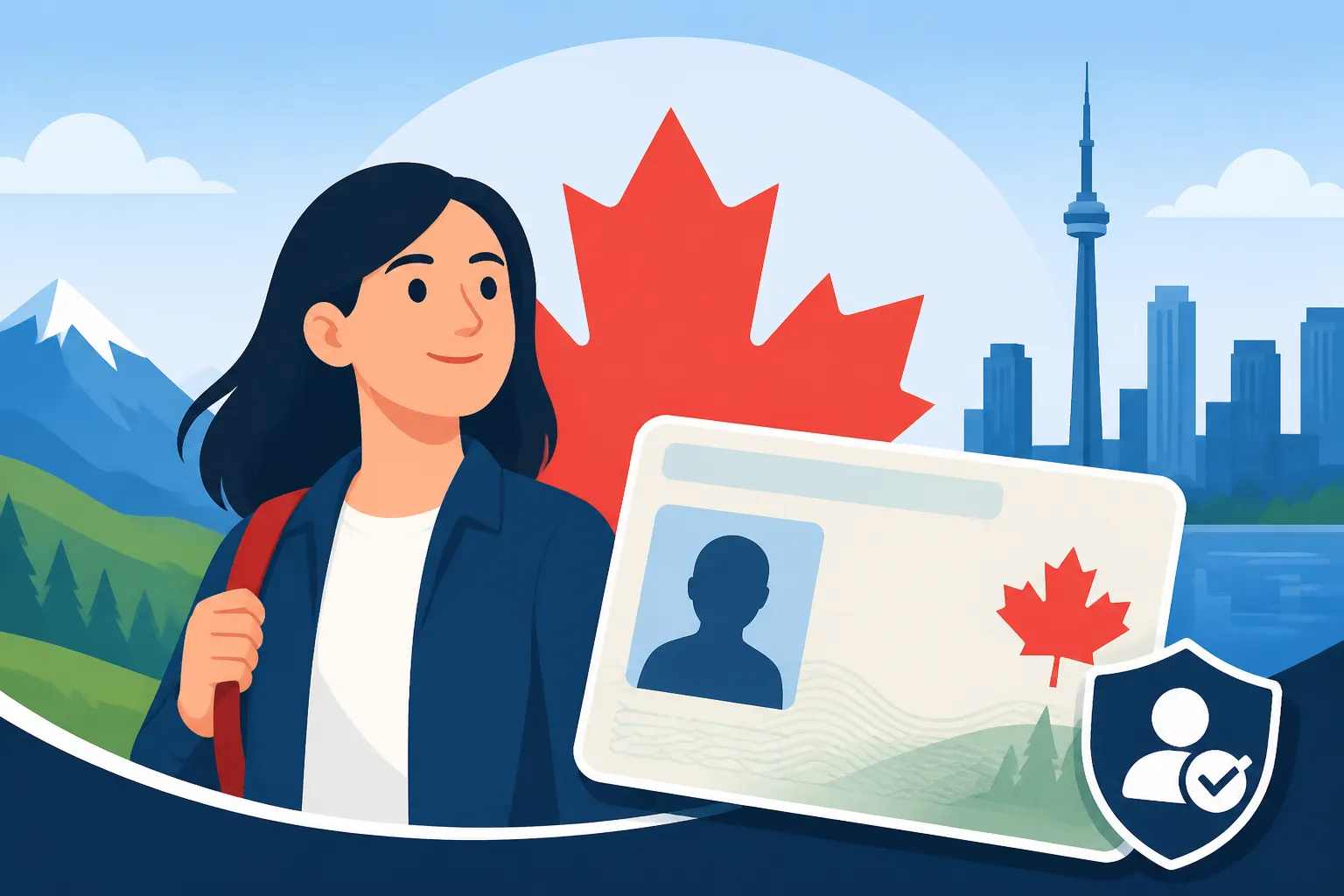
The Canadian PR Card is similar in size and appearance to a driver's license or a credit card, usually a light blue and white design. It’s issued by Immigration, Refugees and Citizenship Canada (IRCC). Each card is highly secure, incorporating various anti-fraud features, much like a passport or national ID card.
Key information you'll find on your PR Card includes:
- Your Photo: A clear, recent photograph of yourself.
- Personal Details: Your full name, gender, height, and date of birth.
- Unique Identification Number: Your Client ID (also known as your UCI – Unique Client Identifier), which is a unique number assigned to you by IRCC.
- PR Status Date: The date you became a permanent resident.
- Expiry Date: This is super important! While your PR status itself doesn't expire, the physical card does, typically every five years. We'll talk more about renewal later, but always keep an eye on this date.
- Barcode: For scanning purposes at points of entry.
It doesn't contain your Social Insurance Number (SIN) or your address, which are separate pieces of identification and information. Familiarize yourself with the details on your card, especially the expiry date, to avoid any last-minute panic.
Safeguarding Your PR Card
Treat your PR Card with the same care you would your passport. It’s an official government document and highly valuable. Losing it or having it stolen can lead to a considerable amount of stress, paperwork, and potential travel delays.
Here are some tips to safeguard it:
- Keep it Secure: Donore carry it around in your wallet or purse every single day unless you absolutely need it. For routine errands or within Canada travel, your provincial ID or driver's license is sufficient. Keep your PR Card in a safe, locked place at home, like a fireproof safe or a secure document holder.
- Make Copies: Before you put it away, make photocopies (front and back) and take digital photos of both sides. Store these copies separately from the actual card – perhaps in a cloud drive and a secure email account. These copies won't replace the original but will be invaluable if you ever need to apply for a replacement, as they contain all the necessary details.
- Report Loss/Theft Immediately: If your PR Card is lost or stolen, it's crucial to report it to the police and then to IRCC as soon as possible. This helps prevent fraudulent use and starts the process for applying for a replacement. We'll get into the replacement process in more detail later, but early reporting is key.
- Avoid Lamination: Never laminate your PR Card. This can damage security features and invalidate the card.
It’s truly your lifeline when travelling internationally, so treat it with the respect it deserves.
The Residency Obligation: Maintaining Your PR Status
This is arguably the most critical and often misunderstood aspect of being a Permanent Resident in Canada. Many newcomers assume "permanent" means you can come and go as you please forever, but that's simply not the case. Canada requires its PRs to maintain a significant physical presence in the country. Fail to meet this "residency obligation," and you could risk losing your PR status altogether. It's a tough lesson many learn the hard way, so let's make sure you don't. This is covered in much more detail in Understanding How to Maintain Your Permanent Resident Status in Canada.
Understanding the 730-Day Rule
The core of the residency obligation is often referred to as the "730-day rule." To maintain your Permanent Resident status, you must be physically present in Canada for at least 730 days (which is two full years) within every five-year period. This doesn't have to be continuous, mind you. You can accumulate these days over the five-year span.
Let's break down how this five-year period works:
- Fixed vs. Rolling: The five-year period is a "rolling" window. This means that for any given five-year span, you must have been physically present in Canada for at least 730 days. For example, if you are assessed on January 1, 2026, IRCC will look back from that date to January 1, 2021. If you haven't been in Canada for 730 days during that specific window, you might be found in breach. This can be tricky, so it's vital to keep a meticulous record of your travel dates.
- Calculating Days: Each day, or part of a day, you are physically present in Canada counts towards your 730 days. So, if you fly in on Monday and leave on Friday, that's five days. It might seem tedious, but keeping a travel log is highly recommended.
- When It Matters: This obligation typically comes into play when you apply to renew your PR Card, apply for Canadian citizenship, or attempt to re-enter Canada at a port of entry (border crossing or airport). Border agents have the right to question you about your residency history.
It's a strict rule, but it’s there to ensure that Permanent Residents are genuinely contributing to and engaging with Canadian society.
Exceptions and Special Circumstances
Now, before you panic about needing to cancel all your travel plans, there are specific situations where time spent outside Canada can count towards your 730 days, or where the obligation is modified. These are important exceptions, so pay close attention:
- Accompanying a Canadian Citizen Spouse/Partner: If you leave Canada to accompany a Canadian citizen spouse, common-law partner, or in some cases, your parent (if you're a child), those days spent outside Canada can count towards your residency obligation. The key here is that the person you are accompanying must be a Canadian citizen, not another Permanent Resident.
- Working for a Canadian Business Abroad: If you are employed on a full-time basis by a Canadian business or the Canadian public service, and are assigned to a position outside Canada, the days you spend abroad while employed in that capacity can count. This must be a legitimate Canadian enterprise.
- Accompanying a PR Spouse/Partner Working for a Canadian Business Abroad: Similar to the above, if you accompany a spouse, common-law partner, or parent who is themselves a Permanent Resident and is working full-time for a Canadian business outside Canada, your days abroad can count.
It's important to remember that these exceptions are specific and require strong documentation. You'll need proof of your spouse's citizenship, employment letters, pay stubs, and clear records of your dates abroad. Don't assume anything; always consult IRCC's official guidelines or seek legal advice if your situation is complex. For example, if you are temporarily outside Canada and need health coverage, Cigna Global offers international health insurance plans that might be suitable for your situation, ensuring you're covered even when away.
Consequences of Not Meeting the Residency Obligation
If you fail to meet your residency obligation and none of the exceptions apply to you, you face serious consequences. The most significant one is the loss of your Permanent Resident status.
This can happen in a few ways:
- At a Port of Entry: When you attempt to re-enter Canada, a border services officer might determine that you don't meet the obligation. They can report you to an immigration officer, who could then make a decision to revoke your PR status.
- During a PR Card Renewal Application: If you apply to renew your PR Card and IRCC assesses that you haven't met the 730-day rule, your application will be refused, and they may initiate proceedings to revoke your status.
If your PR status is revoked, you would likely become a foreign national with no right to remain in Canada. You would then need to leave the country or apply for a temporary permit (like a visitor visa or work permit) if eligible, essentially starting your immigration journey from scratch. This is a nightmare scenario, so tracking your days and understanding the rules is paramount. It can also impact future attempts to apply for Canadian citizenship.
Rights, Responsibilities, and Life as a Canadian PR
Becoming a Permanent Resident isn't just about meeting obligations; it's about embracing a new life with an incredible set of rights and a few key responsibilities. It’s like being invited to a fantastic club – you get all the perks, but you also have to follow the club rules.
What Rights Come with PR Status?
The list of rights you gain as a Permanent Resident is extensive and significantly enhances your life in Canada:
- Live, Work, and Study Anywhere in Canada: This is huge! No more needing specific permits for specific jobs or schools. You can freely move provinces, change careers, or pursue any education you wish. This flexibility allows you to truly integrate and build a life that suits you.
- Access to Social Benefits: After any provincial waiting periods, you're eligible for most social benefits, including public healthcare services. This means doctor's visits, hospital stays, and many medical procedures are covered by your provincial health plan. To understand the ins and outs of healthcare, including any waiting periods, checking out articles like How Your Immigration Status Affects Health Coverage in Canada and The Newcomer Waiting Period for Provincial Health Coverage in Canada (2027) is highly recommended.
- Protection Under Canadian Law: You are protected by the Canadian Charter of Rights and Freedoms, and by all Canadian laws, just like a citizen. This includes legal due process, freedom of speech, and protection from discrimination.
- Sponsor Family Members: Once you meet certain criteria, you can sponsor eligible family members (like spouses, common-law partners, dependent children, and sometimes parents and grandparents) to come to Canada as Permanent Residents. This is a cornerstone of Canadian immigration policy.
- Apply for Canadian Citizenship: After living in Canada for a certain period and meeting other requirements, you become eligible to apply to become a Canadian citizen. This is the ultimate goal for many.
These rights fundamentally change your position in Canada, moving you from a guest to a long-term resident with deep ties to the country.
Your Responsibilities as a Permanent Resident
With great rights come great responsibilities, as they say. As a PR, you have a duty to uphold Canadian laws and values:
- Obey Canadian Laws: This is non-negotiable. You must respect and abide by all federal, provincial, and municipal laws. Committing serious crimes can lead to deportation and the loss of your PR status.
- Pay Taxes: Like all residents, you are obligated to file income taxes and pay any taxes owed to the Canadian government. This contributes to the public services that benefit everyone.
- Maintain Your Residency Obligation: As we've extensively discussed, this is a continuous responsibility. Keep track of your time in and out of Canada.
- Update IRCC on Address Changes: If you move, it's crucial to inform IRCC of your new address. Important documents, including your new PR Card, might be sent to you, and you don't want to miss them. You can usually update your address online through your IRCC account.
These responsibilities are generally straightforward and are essentially what any law-abiding resident of Canada would undertake. They ensure that you remain a contributing and welcome member of Canadian society.
Travel and International Considerations for PRs
While your PR status grants you tremendous freedom within Canada, international travel requires a bit more thought than it would for a Canadian citizen.
- Entering Canada: Your PR Card is paramount for re-entry. Always carry it when travelling outside Canada. Without it, you may face significant delays or require a Permanent Resident Travel Document (PRTD) from a Canadian visa office abroad, which can take weeks to process and seriously disrupt your travel plans.
- Entering Other Countries: Your PR Card is not a travel document for other countries. You will still need your passport from your country of citizenship to enter any country other than Canada. Before travelling to other nations, check their visa requirements for citizens of your home country.
- Healthcare Abroad: Your provincial health insurance plan has limitations when you travel outside Canada, even for short trips. While some emergency coverage might be provided, it's often minimal and might not cover the full cost of medical emergencies. It is highly, highly recommended to purchase private travel insurance every time you leave Canada. Companies like Cigna Global offer comprehensive international health insurance policies that can provide peace of mind for frequent travelers or those on longer trips, covering what your provincial plan won't. This can be a lifesaver if you encounter a medical emergency overseas. For more on this, consider How to Get Private Health Insurance to Cover the Waiting Period in Canada, which, while focused on the initial waiting period, touches on the broader need for private coverage.
Renewing and Replacing Your PR Card
Just like your driver's license or passport, your PR Card has an expiry date, usually five years from its issue. While your Permanent Resident status itself doesn't expire, your card does. An expired card is a problem if you plan to travel outside Canada and return, as commercial carriers won't let you board flights to Canada without a valid one. Don't let your card expire before you need it – it's a common oversight that leads to unnecessary stress.
When and How to Renew Your PR Card
The general advice is to apply to renew your PR Card approximately nine months before its expiry date. This gives IRCC ample time to process your application without leaving you in limbo or unable to travel.
The application process typically involves:
- Gathering Documents: You'll need copies of your current PR Card, passport, records of your travel history (e.g., plane tickets, passport stamps, declarations), proof of your address, and any documents related to name changes if applicable. This is where those meticulous travel records come in handy!
- Filling Out the Application Form: You'll complete the "Application for a Permanent Resident Card" (IMM 5444) form. Be thorough and honest. Any discrepancies with your travel history or personal details could cause delays or lead to questions about your residency obligation.
- Providing Photos: You'll need two recent passport-style photos that meet IRCC's strict specifications.
- Paying the Fee: There's a government processing fee for PR Card renewal.
- Submitting the Application: You generally mail your complete application package to the IRCC processing centre.
It’s a straightforward process if your residency obligation is clearly met and all your documents are in order. The IRCC website has detailed guides and checklists to walk you through each step. If you're looking for more specific guidance on this process, How to Renew Your PR Card or Maintain Status in Canada is a great resource.
What to Do If Your PR Card is Lost, Stolen, or Damaged
Life happens. Wallets get misplaced, bags get snatched, or cards simply go through the wash. If your PR Card is lost, stolen, or damaged, don't panic, but do act quickly.
- Report to Police (if stolen): If your card was stolen, file a police report. This is important for your records and can be helpful when you apply for a replacement.
- Notify IRCC: You must inform IRCC immediately that your card is lost, stolen, or destroyed. You can often do this through your online IRCC account.
- Apply for a Replacement: The process for replacing a lost, stolen, or damaged PR Card is essentially the same as applying for a renewal. You'll use the same IMM 5444 form and follow similar steps for documentation, photos, and fees. You'll also need to provide a clear explanation of how your card was lost, stolen, or damaged.
- Travel Considerations: If you need to travel outside Canada before you receive your replacement card, you will need to apply for a Permanent Resident Travel Document (PRTD) at a Canadian visa office abroad to be allowed to board a commercial carrier back to Canada. This is why having those copies and reporting immediately is so crucial! The processing time for a PRTD can vary greatly depending on the office and demand.
Again, meticulous record-keeping and swift action are your best friends in these situations.
Navigating the Application Process
Whether you’re renewing or replacing, navigating the IRCC application process requires patience and precision. Here are some seasoned expat tips:
- Read Instructions Carefully: IRCC provides detailed instruction guides for every application. Read them line by line, several times if necessary. Missing a signature, an attachment, or incorrectly filling a field can lead to your application being returned, causing significant delays.
- Organize Your Documents: Use dividers, sticky notes, and a checklist. Make sure all your supporting documents are clearly labelled, organized, and meet the specified requirements (e.g., certified translations, clear photocopies).
- Keep a Copy of Your Application: Before mailing, make a complete copy of your entire application package for your own records. This includes all forms, supporting documents, and proof of payment.
- Track Your Application: Once submitted, you can often link your paper application to your online IRCC account to track its status. This allows you to see when it's received, when processing begins, and if any additional information is required.
- Be Patient, But Proactive: Processing times can fluctuate. While you need to be patient, if you notice unusually long delays beyond the posted processing times, you can contact IRCC for an update.
The process can feel bureaucratic, but countless newcomers successfully navigate it every day. Just take a deep breath and go step-by-step.
The Next Chapter: From PR to Canadian Citizen
For many Permanent Residents, Canadian citizenship is the ultimate goal. It's the final step in truly cementing your place in this incredible country, offering a sense of belonging and even greater freedoms. It removes the residency obligation entirely and provides the coveted Canadian passport.
Eligibility Requirements for Citizenship
While being a Permanent Resident is the foundational requirement, there are several other key criteria you must meet before you can apply for citizenship:
- Residency Period: You must have been physically present in Canada for at least 1,095 days (three out of five years) in the five years immediately before applying. Note that this is different from the PR residency obligation of 730 days in five years. You must also have filed income taxes for at least three of those five years.
- Language Ability: If you're aged 18 to 54, you need to demonstrate adequate knowledge of English or French. This usually means providing proof of language proficiency from an approved test or certain educational qualifications.
- Knowledge of Canada: You'll need to pass a citizenship test, which assesses your knowledge of Canada's history, geography, economy, government, laws, and the rights and responsibilities of citizenship. There are many study guides available!
- Prohibitions: You must not have a criminal record that would prevent you from becoming a citizen, and you must not be under a removal order from Canada.
These requirements ensure that new citizens are well-integrated, understand Canadian society, and are committed to its values. For a comprehensive overview, read Understanding the Residency Requirement for Canadian Citizenship.
The Citizenship Application Process
Applying for citizenship is another multi-step process with IRCC:
- Gather Documents: Similar to PR Card renewal, you'll need various identification documents, proof of your PR status, language proficiency evidence, and detailed residency calculations.
- Complete the Application Form: Fill out the "Application for Canadian Citizenship" form. Again, accuracy and completeness are crucial.
- Pay Fees: There are application fees, including a processing fee and a Right of Citizenship fee.
- Submit Application: Mail your complete package to IRCC.
- Citizenship Test and Interview: If eligible, you'll be invited to take the citizenship test. Some applicants may also be called for an interview with a citizenship official to verify information or assess language skills.
- Citizenship Ceremony: If your application is approved, the final step is to attend a citizenship ceremony, where you take the Oath of Citizenship and officially become a Canadian citizen. This is a truly special and memorable day for many.
More detailed steps and requirements can be found in Canadian Citizenship: How to Apply After Permanent Residence (2027).
The Benefits of Becoming a Canadian Citizen
Beyond the emotional connection and sense of belonging, Canadian citizenship comes with tangible benefits that enhance your security and opportunities:
- The Canadian Passport: This is a powerful travel document, opening doors to visa-free travel to numerous countries around the world. No more PR Card worries at the border!
- Voting Rights: You gain the right to vote in federal, provincial, and municipal elections, and to run for political office. This allows you to actively participate in shaping the future of your community and country.
- Immunity from Deportation: As a citizen, you cannot be deported from Canada, except in extremely rare cases where citizenship was obtained fraudulently. This provides ultimate security and peace of mind.
- No Residency Obligation: The continuous stress of tracking your 730 days disappears. You can travel outside Canada for extended periods without worrying about losing your status.
- Eligibility for More Jobs: Certain government jobs, especially those requiring high-level security clearances, are only open to Canadian citizens.
Becoming a citizen is a deeply personal choice, but for many, it's the natural and rewarding culmination of their immigration journey to Canada. It signifies a full commitment to, and full integration into, Canadian society.
Disclaimer
The information provided in this guide is intended for general informational purposes only and does not constitute legal advice. While we strive to keep the content up-to-date and accurate, immigration policies and regulations in Canada are complex and subject to change without notice. Always consult the official websites of Immigration, Refugees and Citizenship Canada (IRCC) or a qualified Canadian immigration lawyer or consultant for advice specific to your situation. Reliance on any information provided in this guide is solely at your own risk.