What Are the Hidden Costs of Buying a House in Canada?
So, you’ve decided to take the plunge and buy a home in Canada? Congratulations! It's a massive step, especially as a newcomer, and it truly marks a new chapter. Many of us arrive here with dreams of homeownership, picturing the moment we get the keys and step into our very own Canadian pad. But let me tell you, as someone who’s been through it and seen countless others navigate the housing market, that down payment you’ve meticulously saved for is just the tip of the iceberg. This guide is here to pull back the curtain on all those sneaky, often overlooked expenses that can pop up when you're buying a house in Canada, so you can budget smarter and avoid those gut-wrenching financial surprises.
Before Closing: The Upfront Surprises
Before you even get to sign on the dotted line, there are several crucial expenses that most people don't fully account for, and they can seriously deplete your initial savings if you're not prepared. These aren't just minor fees; they're essential investments to protect your future home and financial well-being.
Home Inspection and Appraisal Fees
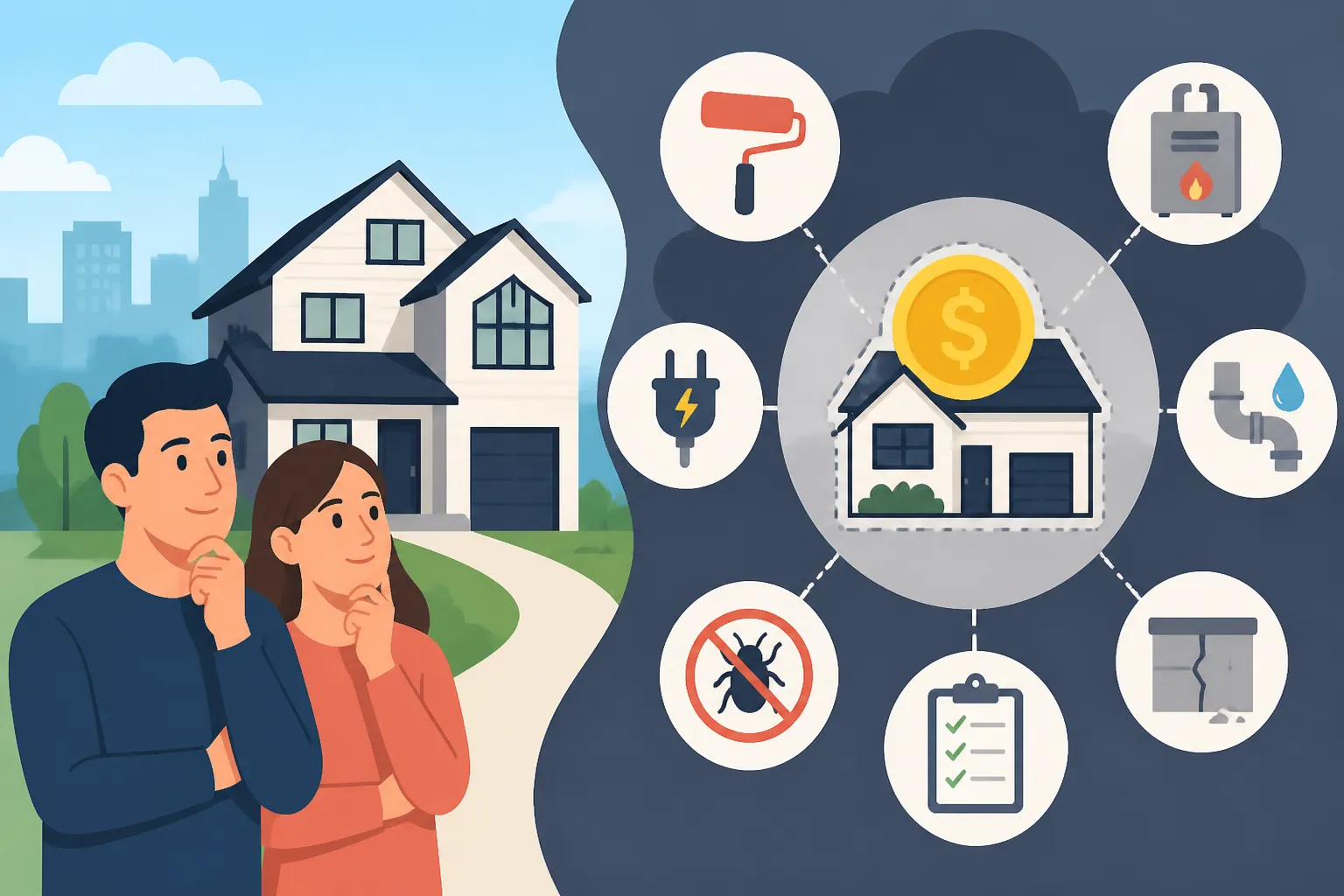
When you find a house you love and put in an offer, one of the first things you'll typically do is make that offer conditional on a satisfactory home inspection. And for good reason! A professional home inspection isn't just a suggestion; it's practically a lifeline. This is where a qualified inspector meticulously goes through the property, from the roof to the foundation, checking for structural integrity, plumbing, electrical systems, HVAC, insulation, and potential issues like water damage, mould, or pest infestations. Imagine buying a beautiful older home in Vancouver, only to discover a crumbling foundation or an ancient furnace that needs replacing the moment you move in. A good inspector will uncover these hidden nightmares before you're committed.
The cost for a home inspection typically ranges from $400 to $800, but it can vary based on the size, age, and type of property, as well as its location. For a larger or older home, especially in a metropolitan area like Toronto or Montreal, expect to be on the higher end. It’s an upfront cost you pay out of pocket, whether you end up buying that specific house or not, so be prepared to shell out a few inspection fees if your first few offers fall through. Think of it as an insurance policy that can save you tens of thousands of dollars down the line.
Then there’s the appraisal. Your mortgage lender isn't just going to hand over a massive loan without ensuring the property is actually worth what you're paying for it. That's where a property appraisal comes in. An independent appraiser will assess the home's value based on its condition, features, and recent sales of comparable properties in the area. This protects the lender, ensuring that if you default on your mortgage, they can recoup their investment. The cost for an appraisal typically runs between $300 and $500. Sometimes the lender might absorb this cost, but often, it's passed on to the buyer. This fee is usually paid as part of your mortgage application process. If you’re trying to get your head around the initial steps of securing funds, you might find our guide on How to Get a Mortgage to Buy a Home in Canada incredibly useful.
Legal Fees and Disbursements
Buying a home involves a stack of legal documents thicker than a phone book (remember those?). You simply cannot, and should not, navigate this without a real estate lawyer. They're the ones who ensure the title is clear, review the purchase agreement, prepare all necessary legal documents, register the property in your name, and facilitate the transfer of funds. Their role is absolutely critical in protecting your interests and ensuring everything is above board.
Legal fees for a home purchase typically range from $1,000 to $2,000, but this can fluctuate based on the complexity of the transaction and where you are in Canada. A straightforward condo purchase in Calgary might be on the lower end, while a complex rural property sale with well and septic tank considerations in Nova Scotia will likely be higher. But here's the kicker: beyond their professional fees, lawyers also charge for "disbursements." These are actual out-of-pocket expenses they incur on your behalf during the process. We're talking about things like title searches, property certificates, zoning inquiries, land registration fees, photocopying, postage, and courier services. These disbursements can easily add another $300 to $700 (or more) to your legal bill, and they are non-negotiable costs for a secure transaction. You might be focused on the big numbers, but these smaller, essential payments really add up.
Mortgage Application and Broker Fees
When it comes to getting a mortgage, many newcomers breathe a sigh of relief because mortgage brokers often don't charge the buyer directly. Instead, they earn a commission from the lender once the mortgage closes. This is fantastic news and makes their expertise highly accessible. However, it's not always entirely free for you.
Some lenders might charge an application fee, particularly for non-standard mortgages or if your financial profile as a newcomer is a bit complex. While major banks often waive these for standard residential mortgages, it's always worth confirming. You might also encounter a small fee for credit reports, though this is usually minimal. If you decide to work with a mortgage broker, especially one who specializes in helping newcomers, they are generally transparent about their fee structure. In some very specific cases, if you have unique financial circumstances or are seeking a niche mortgage product, a broker might charge a direct fee, but this should always be discussed and agreed upon upfront. Don't be shy to ask them to walk you through all potential costs involved in securing your loan. Understanding how lenders assess you as a new resident can be confusing, so take a look at our article, Can I Get a Mortgage as a Newcomer in Canada?, for a deeper dive.
On Closing Day: Fees That Add Up Fast
This is the day you officially become a homeowner, and while it's exciting, it's also when some of the biggest "hidden" costs hit you squarely in the wallet. Many people assume they just need to bring their down payment and signed papers, but oh, how wrong they can be!
Land Transfer Tax: The Big One
The Land Transfer Tax (LTT) is, without a doubt, one of the largest and most frequently underestimated closing costs. This is a provincial (and in some cases, municipal) tax levied on property purchases. It's essentially a tax on the transfer of ownership of land. The amount you pay depends entirely on the purchase price of your home and the province you're buying in.
Let me give you a stark example: If you're buying a home in Ontario, you'll pay the provincial Land Transfer Tax. But if that home is in Toronto, you’ll also pay a municipal Land Transfer Tax. This effectively doubles the LTT for properties within the City of Toronto, making it a significantly higher closing cost than almost anywhere else in Canada. For a $1,000,000 home in Toronto, you could be looking at over $30,000 in Land Transfer Tax alone, whereas the same priced home outside Toronto (but still in Ontario) would be around half that. Other provinces have their own rates, some lower, some structured differently. For example, British Columbia has a Property Transfer Tax, and while it's also based on value, the rates and thresholds vary.
The good news? Many provinces offer a Land Transfer Tax rebate for eligible first-time home buyers. However, eligibility often has strict criteria regarding residency status, previous homeownership, and the value of the property. Always check the specific provincial and municipal government websites for the most up-to-date information and to see if you qualify. This is one area where a good lawyer will be indispensable, but you need to be aware of the potential impact on your budget. For a detailed breakdown of how this works across the country, check out [Understanding Property Tax and Land Transfer Tax in Canada].
Title Insurance and Adjustments
We briefly mentioned title insurance as a disbursement, but it deserves a bit more attention as a closing cost. While your lawyer handles the legal work, title insurance offers protection against unforeseen issues that could affect your property title, even after the sale has closed. This could include things like title fraud (someone impersonating you to sell your house!), unknown liens on the property (e.g., unpaid contractor bills from a previous owner), survey errors, or even unapproved renovations by previous owners that could lead to future issues with the municipality. It's a one-time fee, typically ranging from $200 to $400, but it provides incredible peace of mind. Without it, resolving such issues could become your incredibly expensive problem. The nuances of owning property, especially for those new to Canada, are many. Our guide Understanding Property Ownership and the Foreign Buyer Ban in Canada can offer further clarity on this.
"Adjustments" are another common closing cost that can catch buyers off guard. These are essentially prorated expenses that the seller has already paid but cover a period after the closing date. Common adjustments include property taxes, condominium fees, pre-paid utility bills (like heating oil in older homes), or even municipal water and waste charges. For instance, if the seller paid their property taxes for the entire quarter, and you're closing halfway through, you’ll owe them for your half. The amounts might seem small individually, but they are added up and factored into the final amount due on closing. Your lawyer will calculate all these adjustments and present them in a statement of adjustments.
Harmonized Sales Tax HST on New Homes
Here's a cost that can be a colossal shock for anyone buying a brand-new home directly from a builder: HST (Harmonized Sales Tax) or GST/PST. While resale homes are generally exempt from sales tax, newly constructed properties in Canada are subject to either the federal Goods and Services Tax (GST) plus provincial sales tax (PST) or the Harmonized Sales Tax (HST), which combines both.
In provinces like Ontario, where HST is 13%, this can be a massive additional cost on top of the purchase price. For example, on a $700,000 new build, 13% HST is an additional $91,000! However, there's a significant saving grace: the federal new housing rebate and potentially provincial new housing rebates. If the new home is going to be your primary residence, you may be eligible for a rebate on a portion of the HST, often applied directly by the builder. The federal rebate applies to homes purchased for under $450,000 (though you still pay the full HST upfront on higher-priced homes and claim a portion back), and some provinces have their own thresholds and rebates. It's absolutely crucial to understand the HST implications and available rebates if you're eyeing new construction. Always ask the builder or your lawyer how the HST is handled and what rebates you qualify for, as this can dramatically impact your final cost.
After Closing: The Ongoing Financial Realities
Once the keys are in your hand, and the euphoria of moving in settles, the reality of ongoing homeownership costs quickly sets in. These aren't hidden in the sense of being a surprise on closing day, but they are often severely underestimated in monthly budgeting by newcomers focusing heavily on mortgage payments.
Property Taxes and Utility Bills
This is where the rubber meets the road. Property taxes are an unavoidable annual expense, paid to your municipality to fund local services like schools, roads, public transit, and emergency services. The amount you pay is based on the assessed value of your home and the municipal tax rate. This means it varies significantly depending on where you live. A home in a bustling city centre like Toronto or Vancouver will likely incur much higher property taxes than a similar-sized home in a smaller town, simply due to property values and municipal needs. You'll typically pay these monthly or quarterly, often bundled with your mortgage payments if you choose to. Staying on top of these is crucial, as unpaid property taxes can lead to serious consequences. For more insights into these recurring payments, refer to our guide, How Much Is Property Tax on a House in Canada?.
Then there are the utility bills – hydro (electricity), natural gas (for heating and hot water), water, and waste management. Unlike some places where these might be included in rent or a single bill, in Canada, you'll typically set up separate accounts for each of these services. The costs can fluctuate significantly based on seasonal usage. In winter, your natural gas bill will spike due to heating, while in summer, your hydro bill might climb if you use air conditioning. If you’re coming from a warmer climate, the sheer cost of keeping a Canadian home warm through several months of winter can be a real eye-opener. Water and waste bills are usually consistent but add another layer to your monthly expenses. For a detailed walkthrough on setting these up, check out The Newcomer Guide to Setting Up Utilities (Hydro, Gas, Internet) in Canada and Understanding Heating, Gas and Utility Bills in Canada.
Home Insurance and Maintenance
Securing home insurance is not optional if you have a mortgage – your lender will require it. This insurance protects the structure of your home and your belongings against perils like fire, theft, and natural disasters. The cost varies based on factors like your home's age, construction, location, the value of your belongings, and your claims history. Expect to pay anywhere from $80 to $150 or more per month. It's a critical safety net, but another line item in your monthly budget.
Now, let's talk about maintenance. This is the truly "hidden" ongoing cost that consistently catches homeowners off guard. When you rent, your landlord handles repairs. When you own, you are the landlord. The roof needs replacing every 20-30 years, the furnace gives up the ghost after 15-20 years, the hot water tank bursts, appliances break down, the driveway cracks, landscaping needs tending, and snow needs shoveling (or paying someone to shovel). These are not small, one-off fixes; they are often thousands of dollars. A general rule of thumb is to budget 1% to 3% of your home's value annually for maintenance and repairs. So, for a $700,000 home, you should realistically be setting aside $7,000 to $21,000 each year for home upkeep and emergency repairs. Neglecting maintenance now only leads to more expensive problems later. It’s an essential part of the true cost of homeownership.
Condo Fees and Special Assessments
If you've bought a condominium or a townhouse with shared common elements, you'll be paying "condo fees" (also known as strata fees in British Columbia). These are regular monthly payments to the condo corporation that cover the maintenance and repair of common areas (like hallways, elevators, gyms, pools, parking garages), building insurance, and contributions to a reserve fund for future major repairs. They also typically cover water, and sometimes even heating/cooling. The amount of condo fees can vary wildly, from a few hundred dollars to well over a thousand, depending on the building's age, amenities, and location.
The real hidden menace here can be "special assessments." These are one-time, additional payments levied on unit owners when the condo corporation's reserve fund is insufficient to cover a major, unexpected repair or upgrade (e.g., a new roof, façade repair, major plumbing overhaul). Special assessments can range from a few thousand dollars to tens of thousands per unit, and they are mandatory. This is why it's absolutely critical to review the condo's status certificate and financial statements very carefully before buying. A well-managed condo will have a healthy reserve fund and clear maintenance plan, reducing the risk of sudden special assessments. Understanding these fees is paramount, and our article, Understanding Condo Fees and Maintenance in Canada, delves deeper into this often-complex topic.
Moving Expenses and Furnishing
The actual move itself can be a hefty expense, whether you're moving across the city or across the country. Professional moving companies charge by weight, distance, and the amount of packing services you need. Even if you rent a truck and do it yourself, you're looking at rental fees, gas, packing supplies, and potentially helping hands. Getting a quote from a few different movers is a wise idea. For international relocations or even complex local moves, services like Sirelo can be really helpful for comparing moving companies and getting a handle on logistics, making sure your budget doesn't get blindsided by unforeseen transit costs.
Once you’re in your new place, you’ll likely face furnishing costs. Even if you're bringing most of your furniture, there are always items specific to a new home. Perhaps the window sizes are different and you need new curtains, or you need to buy specific appliances, light fixtures, or storage solutions. And if you're moving from a vastly different climate, you might discover you need to invest in things like humidifiers for Canada's dry winters or specific winterizing items for your home. It all adds up! Having reliable mobile data during this chaotic period is invaluable for coordinating with movers, utilities, or finding local hardware stores. An eSIM from Airalo can keep you connected from day one without the hassle of setting up a local SIM.
Here’s a quick overview of some of those costs:
| Cost Category | Type of Expense | Estimated Range (CAD) | Frequency |
|---|---|---|---|
| Before Closing | Home Inspection | $400 – $800 | One-time per property inspected |
| Property Appraisal | $300 – $500 | One-time per property | |
| Legal Fees & Disbursements | $1,300 – $2,700 | One-time on closing | |
| On Closing Day | Land Transfer Tax | Varies widely | One-time on closing |
| Title Insurance | $200 – $400 | One-time on closing | |
| Adjustments (Utilities, Taxes) | $100 – $1,000+ | One-time on closing | |
| HST on New Homes | 5% – 15% of price | One-time on new builds (rebates apply) | |
| After Closing (Ongoing) | Property Taxes | $2,000 – $8,000+ | Annually (often paid monthly/quarterly) |
| Utilities (Hydro, Gas, Water) | $200 – $600+ /month | Monthly | |
| Home Insurance | $80 – $150+ /month | Monthly/Annually | |
| Maintenance & Repairs | 1% – 3% of home value/year | As needed | |
| Condo Fees (if applicable) | $250 – $1,000+ /month | Monthly | |
| Special Assessments (Condo) | $1,000 – $20,000+ | Irregular, as needed (if applicable) | |
| Moving Expenses | $500 – $5,000+ | One-time | |
| Furnishing | Varies widely | As needed |
Navigating the Canadian housing market as a newcomer requires more than just finding the right property and securing a mortgage. It demands a thorough understanding of all the costs involved, both upfront and ongoing. By being aware of these hidden costs of buying a house in Canada, you can approach homeownership with confidence and avoid nasty surprises. It’s a big, exciting journey, but it pays to be fully prepared for every financial bump along the way. If you’re considering the full scope of moving, our comprehensive guide on How to Buy a Home in Canada as a Newcomer: The Full Guide could be an invaluable resource. Knowing the full The Complete Guide to Cost of Living in Canada for Newcomers also helps put housing expenses into perspective.
Disclaimer
Please remember that the information provided in this guide is for general informational purposes only and does not constitute financial, legal, or real estate advice. Real estate laws, tax regulations, and market conditions in Canada can change rapidly and vary significantly by province and municipality. It is always recommended to consult with qualified Canadian professionals, such as a real estate agent, lawyer, mortgage broker, and financial advisor, for advice tailored to your specific situation.